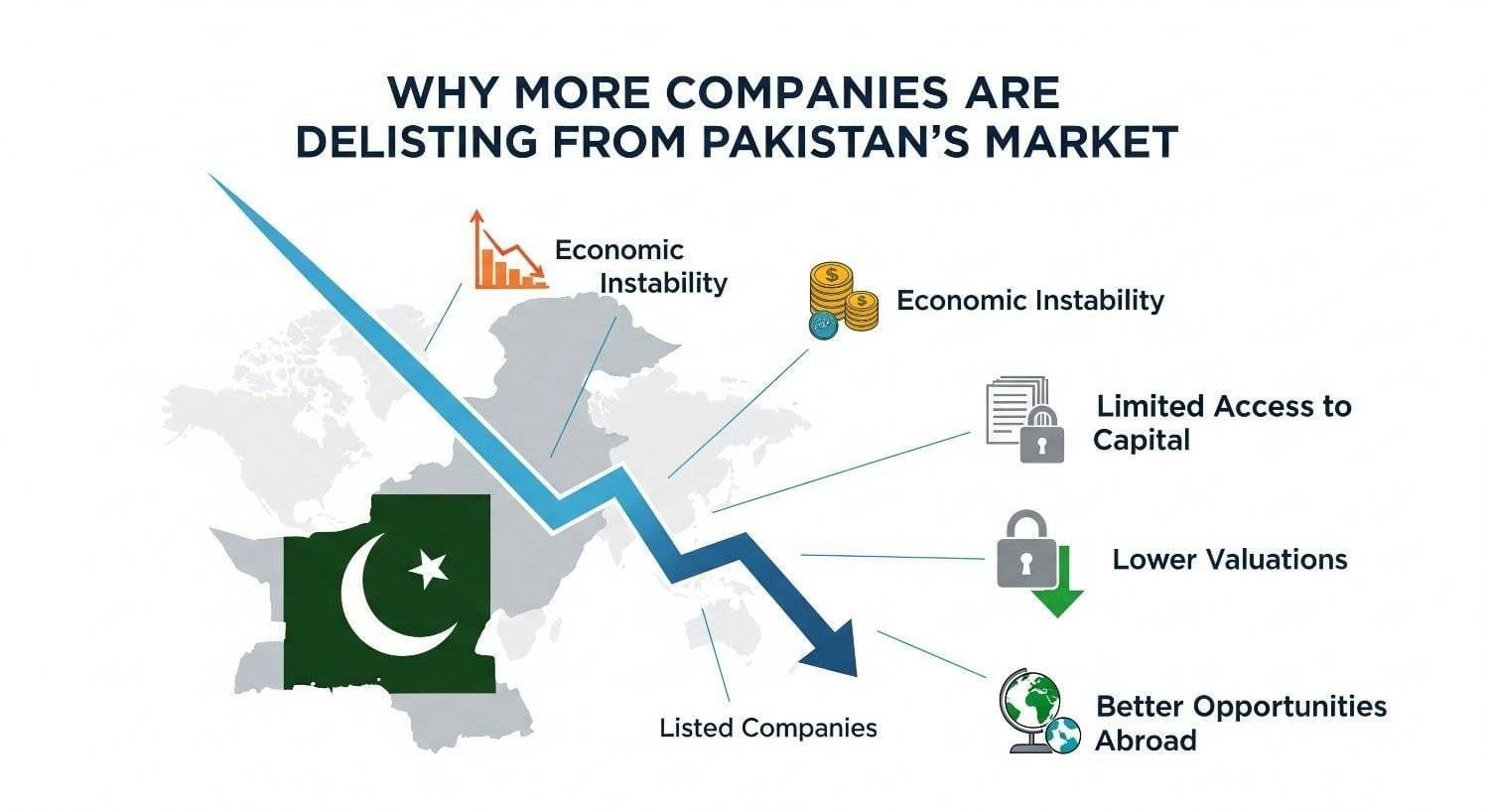
Why Companies Delist in Pakistan
The decision of companies to delist from the Pakistan Stock Exchange (PSX) has become a noticeable trend, with well-known names like Shield Corporation, Gillette, and Philip Morris recently choosing this path. This action prompts questions about the factors driving businesses to withdraw their shares from public trading.
Declining Incentives and the Rise of Privately Held Businesses
In the 1980s, the PSX offered a 5% tax advantage to listed companies. This incentive significantly encouraged numerous family-owned businesses to go public. However, the subsequent removal of this tax break diminished the appeal of public listing for many firms. Without the financial benefit, some companies opted to buy back their shares, reduce their free float, and essentially return to operating as private family businesses.
Transparency, Taxation, and Regulatory Scrutiny
One of the primary reasons for delisting involves the increased transparency, reporting obligations, and tax scrutiny that come with being listed. According to Asad Ali Shah, former managing partner of Deloitte, “When you’re listed, you become transparent. If you delist, these requirements go away.” The need for greater transparency can limit operation in Pakistan’s largely undocumented economy.
Transfer Pricing and Profit Maximization
Multinational corporations often prefer to book profits in lower-tax jurisdictions, a practice that listing can complicate. Public shareholders can question intercompany transactions, import pricing, margins, and royalties. SindhNews.com reports that Pakistan’s regulatory oversight of transfer pricing is not robust. For example, “Not a single transfer pricing case has been pursued to conclusion,” according to Mr Shah. Companies can then exploit this by showing thin margins or even losses, which can then be carried forward for years as tax shields.
Inheritance, Family Businesses, and Stock Manipulation
Listing on the PSX can also aid families in managing inheritance across generations and provides liquidity, inheritance planning, and the ability to monetize a small portion of shares. Sayyid Babar Ali’s autobiography touches upon this matter, as pointed out by Mr. Khwaja. In family-run businesses, it allows for easy distribution of wealth while enabling the businesses to remain intact. However, some families may use strategic manipulation. Notices on the PSX often show independent directors and family members selling and buying back small percentages.
The Financial Implications of Delisting
Delisting is not without cost. Public shareholders must be bought out at a premium, which can reach several times the share price. The stock of Pak Suzuki Motors, for example, saw an increase from around Rs100 to Rs900 before its delisting. Gillette’s stock also rose significantly upon news of its delisting. M. Farid Alam of AKD Securities indicates that delisting also influences price discovery and competitive pressures.
The Future of Listing in Pakistan
Currently, most listed companies in Pakistan are tightly held, with sponsors often owning 90–95% of shares. If tax rates remain high, more large companies will consider leaving the stock market. However, with delisting being complex and expensive, many companies stay listed by default, even if it is no longer their preference.
Conclusion
Companies delist in Pakistan for varied reasons, including the weakening of incentives, the desire for reduced transparency, and tax optimization strategies. While delisting offers certain advantages, such as simplifying operations and avoiding regulatory scrutiny, it often comes at a significant financial cost. Whether the trend continues depends on future tax policies and the broader economic landscape.