Summary:
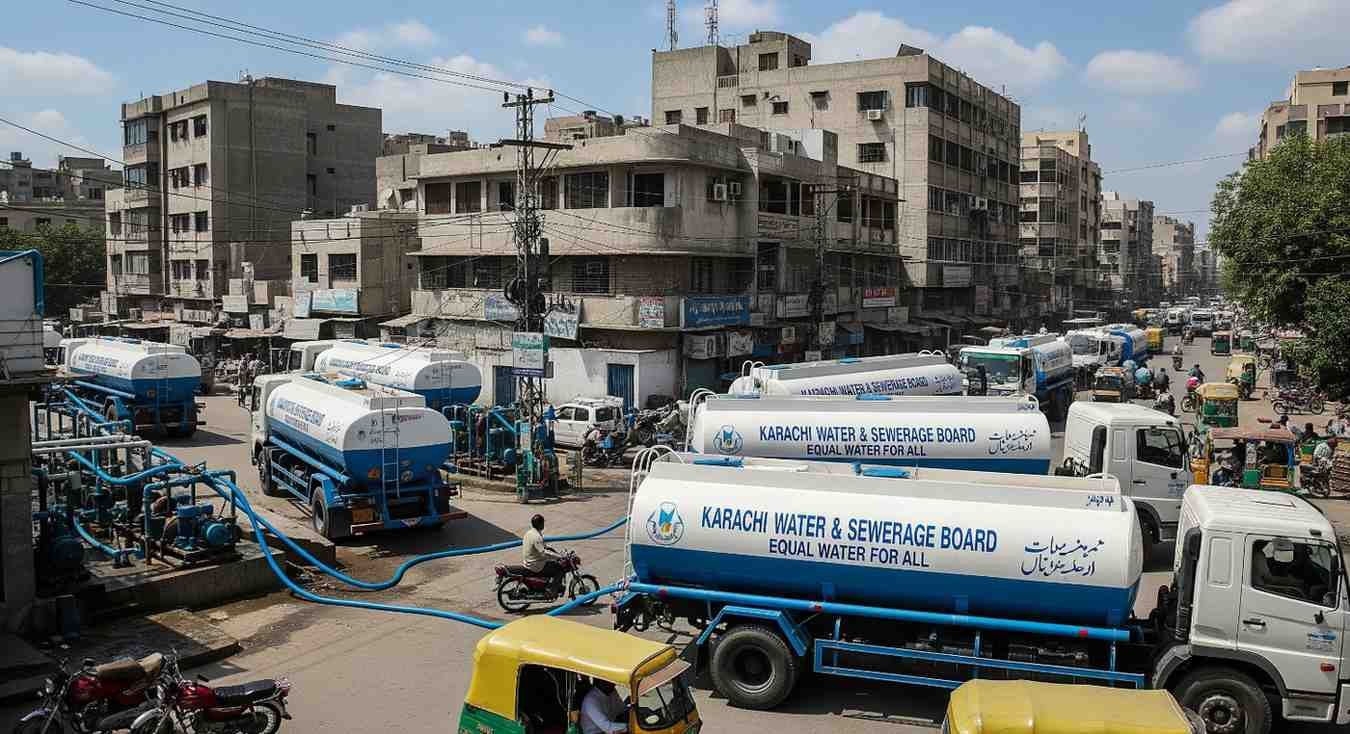
Karachi Mayor Murtaza Wahab has expressed confidence in his plan to gradually dismantle the city’s long-standing water tanker network, aiming for equitable water distribution. Despite scepticism from Karachi Water and Sewerage Corporation officials regarding the feasibility of closing hydrants, the Mayor insists on a comprehensive alternative plan before phasing out tanker services.
The plan to dismantle Karachi’s decades-old water tanker network has been outlined by Mayor Murtaza Wahab, though officials from the Karachi Water and Sewerage Corporation (KWSC) express significant scepticism regarding its feasibility. Speaking after inaugurating the Jehangir Road rehabilitation project on Wednesday, Mayor Wahab, who also chairs the KWSC board, highlighted that these systems traditionally bridge gaps where piped water supply is inadequate.
However, the Mayor stressed that this established system, the water tanker network, fosters inequities, benefiting specific groups while unfairly burdening the city administration with blame. “There is water in the city, but the real issue is its unjust distribution,” he stated, confirming that his administration has already closed several illegal hydrants. With the contracts of seven legal hydrants now expired, the city faces a crucial decision.
Phasing Out the Water Tanker Network Responsibly
Mayor Wahab proposed a gradual dismantling of the hydrant and water tanker network, contingent on a comprehensive alternative strategy. He emphasized that rash closures are not an option. “If hydrants are closed, how will water reach areas that depend on tankers? I have asked officials of the KWSC to develop a practical and citywide water supply strategy. We want to end this system, but responsibly.” SindhNews.com reports extensively on this development.
Once the KWSC finalizes its proposal, it will proceed to the City Council for approval. Only after this formal endorsement will tanker services be phased out. The Mayor dismissed political motivations, stating this inherited hydrant system benefits others, yet accusations fall on his party. He reiterated that equitable distribution remains the primary objective, acknowledging Karachi’s genuine water shortage.
Inside sources at the water utility reveal that senior management informed the Mayor that closing hydrants might not significantly improve the city’s overall water supply. Tankers currently deliver only 15-20 million gallons daily (MGD), representing approximately 3.5% of the total 650 MGD supply.
Concerns were raised that the proposed closure of hydrants would severely impact Defence Housing Authority (DHA) phases 5, 6, 7, and 8. These areas reportedly rely almost entirely on tanker deliveries for their daily water needs. A resident from DHA confirmed that limited line supply already forces them to purchase water from tankers, predicting a worsening situation if hydrants ceased operation.
Conclusion:
Mayor Wahab’s initiative to phase out Karachi’s water tanker network marks a significant policy shift aimed at achieving equitable water distribution. While facing operational scepticism from KWSC and concerns from affected areas like DHA, the administration remains committed to a strategic, phased approach, pending the development of a robust citywide water supply plan. The success of this ambitious goal hinges on the practical implementation of the alternative strategy.