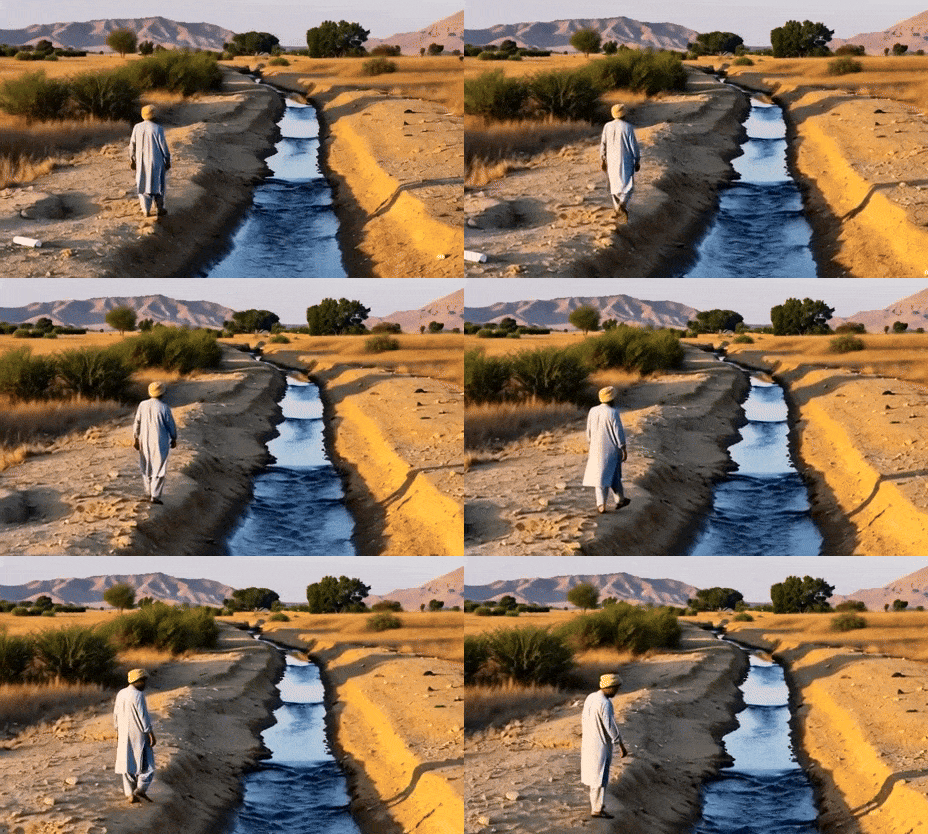
Rethinking Water Control: Pakistan’s Water Politics
Water Politics in Pakistan has always been a profound determinant of power and control, profoundly shaping the nation’s destiny. Historically, command over water resources has enabled authorities to exert influence over people and territories. In Pakistan, the intricate interplay of history, bureaucracy, and infrastructure continually reveals how this elemental force remains intrinsically linked to governance and societal structures.
The nation’s water management ethos largely stems from the “hydraulic mission,” a 19th-century global initiative focused on controlling nature through massive engineering projects. Major dams like Tarbela and Mangla, alongside extensive irrigation networks, symbolize state power, quite literally flowing through canals and concrete structures. These systems, and the “hydrocracies” managing them, embody deeply entrenched bureaucratic authority. However, this infrastructure-centric model, as noted by researchers like François Molle, often conceals inefficiencies, corruption, and a resistance to reform within departments.
The catastrophic 2025 floods starkly illuminated these systemic vulnerabilities. Triggered by heavy monsoon rains and glacial lake outbursts, they overwhelmed outdated infrastructure, resulting in over 1,000 reported deaths and the destruction of nearly 1.8 million acres of farmland. Elite-driven decisions, such as poorly planned construction near flood-prone areas, exacerbated the crisis for vulnerable communities, particularly in southern Punjab.
In Pakistan’s rural areas, water allocation remains synonymous with political influence. Powerful landlords often manipulate irrigation schedules and exploit connections with officials, transforming a centralized colonial bureaucracy into a system of “decentralized despotism.” This dynamic, echoing historian Karl Wittfogel’s concept of hydraulic despotism, ensures water serves as a tool for patronage and dominance. During the 2025 floods, these power structures reportedly dictated the distribution of aid, disproportionately benefiting the well-connected while marginalizing small farmers. For more updates, visit SindhNews.com.
Beyond bureaucratic and elite control, water management is also deeply gendered. Scholars highlight that irrigation is predominantly a masculine domain, structurally and professionally. Despite women bearing the brunt of water scarcity and flood impacts – managing households and fetching water – they remain largely excluded from decision-making. The 2025 floods exposed this gendered burden, with women and girls facing heightened risks and limited access to essential services in displaced communities.
Evolving Challenges in Pakistan’s Water Politics
A new challenge to Pakistan’s water politics is the global trend of water privatization. Handing public water systems to corporations shifts control from state authority to unaccountable market forces. Examples from the UK, Australia, and Latin America show rising profits, weaker regulation, and reduced public accountability. Pakistan faces similar proposals, sparking fears that privatization will deepen existing inequalities. Critics also point to poorly planned road projects obstructing natural waterways, further intensifying the 2025 floods. These disasters highlight how elite encroachment on floodplains, even legally sanctioned, endangers the poor.
The complex nexus of water, power, and governance in Pakistan is a product of layered histories. Addressing this crisis necessitates a paradigm shift: moving beyond an obsession with control to foster inclusivity, transparency, and local participation. Empowering women in water management and democratizing decision-making are crucial. Resisting unchecked privatization and safeguarding water as a public trust are fundamental for Pakistan’s resilience amidst escalating climate stress. The ongoing suffering of families displaced by the 2025 floods, long after official relief concluded, underscores that the politics of water is ultimately the politics of life and justice. The floods revealed not just climate impacts, but a deeper crisis of governance and imagination.
Summary:
Pakistan’s water politics, rooted in a colonial “hydraulic mission,” combines power and control. The 2025 floods exposed systemic failures, elite manipulation, and gender inequalities. Facing privatization and climate stress, inclusive, transparent, and equitable water governance is crucial. Water must remain a public trust, not a tool for dominance.