Sindh Government to Fill Death Quota Posts by Merit, Following SC Orders
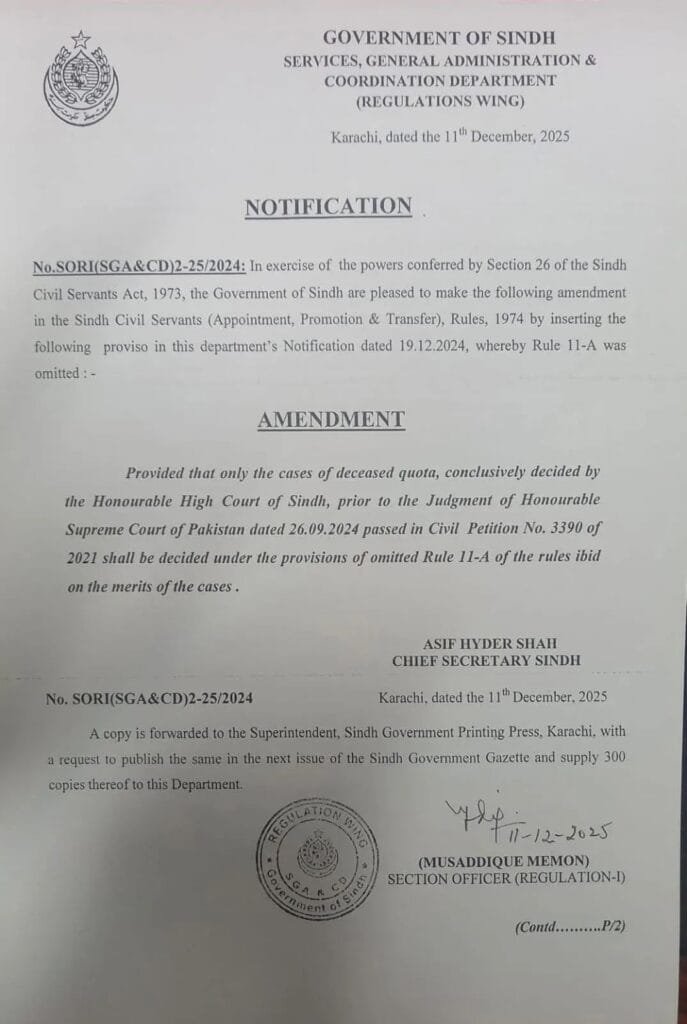
The Sindh government has officially decided to fill vacant posts under the death quota on the basis of merit, strictly adhering to the directives issued by the Supreme Court of Pakistan. This crucial decision aims to bring transparency and fairness to the recruitment process for positions earmarked under this category within the provincial public sector.
This move follows a series of Supreme Court orders that emphasized the importance of merit-based appointments across all government departments. By implementing these directives, the Sindh government seeks to eliminate any discretion and ensure that qualified individuals are selected for public service roles. SindhNews.com highlights that this is a significant step towards good governance.
Ensuring Merit-Based Death Quota Appointments
Officials involved in the process confirmed that comprehensive criteria will be established, and selection will involve a rigorous process, mirroring those for regular recruitments. A provincial government spokesperson stated, “Our commitment is to fully comply with the Supreme Court’s mandate, ensuring every appointment under the death quota is purely merit-based and transparent.”
This policy adjustment is anticipated to enhance both the efficiency and integrity of government institutions. By upholding the principles of merit and transparency, the Sindh government aims to instill greater public confidence in its administrative processes and improve the overall quality of its civil service. The shift signifies a resolute effort to reform recruitment practices in line with judicial oversight.
Summary: The Sindh government has adopted a merit-based approach to fill vacant posts under the death quota, in compliance with Supreme Court orders. This initiative aims to ensure transparency and fairness in public sector recruitments, enhancing governance and public trust.