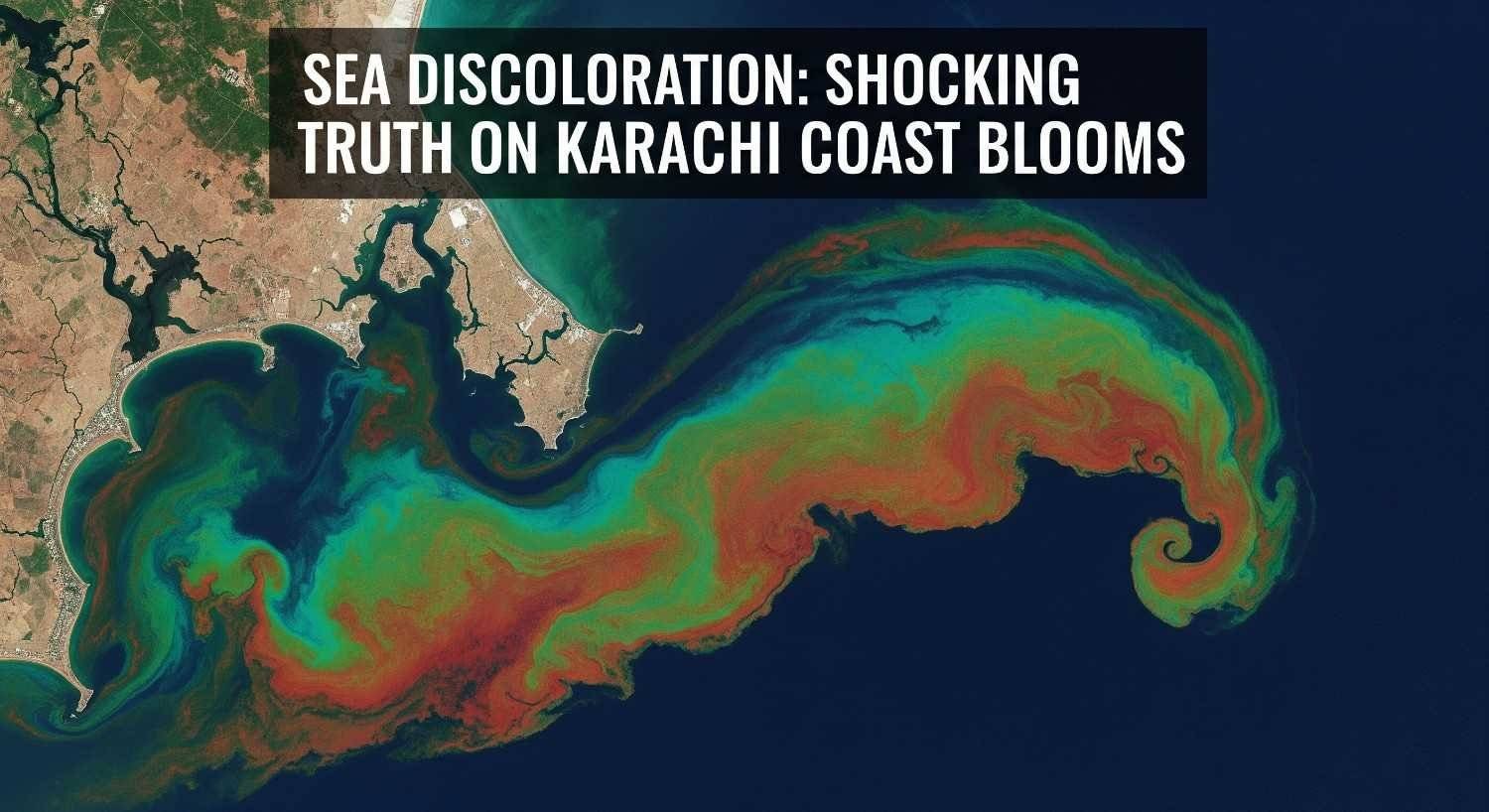
Sea Discolouration
The recent instances of sea discolouration along the coasts of Karachi and Balochistan have raised concerns among fishermen and coastal communities. However, the World Wide Fund for Nature-Pakistan (WWF-P) clarified that the phenomenon is not linked to pollution. The organization attributes the changes to a natural occurrence. SindhNews.com
Understanding the Cause of Sea Discolouration
WWF-P has identified the cause as a bloom of Noctiluca scintillans, commonly known as sea sparkle. This small, free-floating organism is non-toxic and can appear in various colours, including green and orange. According to WWF-P, these blooms are common along Pakistan’s coast, depending on seasonal conditions.
WWF-P Explains the Glowing Phenomenon
The organization explained that while Noctiluca is not green itself, its internal symbiont, Protoeuglena noctilucae, allows it to photosynthesize, leading to rapid growth. The bioluminescent nature of Noctiluca is responsible for the glittering glow observed at night. Sindhnews.com
Similar Blooms in the Region
Similar seasonal blooms of Noctiluca scintillans have been documented across the coasts of Yemen, Oman, Iran, and western India, alongside Pakistan. This highlights the natural and widespread nature of the phenomenon.
Conclusion
The sea discolouration and night-time bioluminescence are attributed to naturally occurring blooms of sea sparkle, which has no link to pollution. The WWF-P has emphasized that these events are not harmful and are a seasonal occurrence in the region.