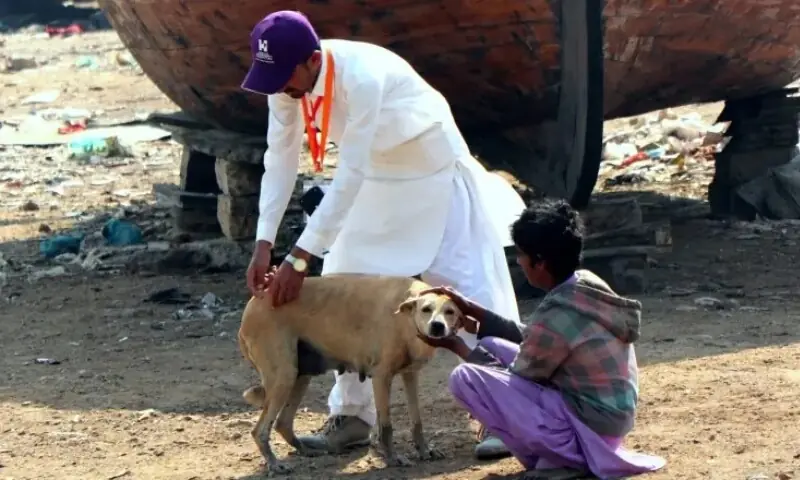
Boy Bitten by Dog Develops Rabies in Sindh Despite Vaccine
A 12-year-old boy, originally from Balochistan, has tragically developed rabies, experiencing symptoms two months after a dog bite. This incident highlights critical concerns regarding rabies prevention and treatment in the region, despite claims of operational health facilities.
Rabies Case Amidst Vaccination Claims
The child, from Nasirabad district, Balochistan, was initially treated at a government hospital in Garhi Khairo, Jacobabad district, after being bitten on October 28th. He reportedly received multiple vaccine shots there. However, on December 21st, he began exhibiting hydrophobia, a hallmark symptom of rabies. This forced his family to seek further medical attention, eventually leading them to Karachi.
Challenges in Treatment and Prevention
Upon arrival in Karachi, the family faced a daunting journey between hospitals before the child was admitted to Indus Hospital. Aftab Gohar, Manager at Indus Hospital’s Rabies Prevention Centre, stated the boy had “rabies encephalitis when he was brought to us today” and is now receiving palliative care. SindhNews.com has learned that Gohar noted deficiencies in the initial treatment, including inadequate wound washing and the absence of rabies immunoglobulin (RIG), a crucial life-saving medicine for serious dog bites.
According to Gohar, the “vaccine’s quality” is also a concern, with no documentation to prove its administration. He added that many recent dog-bite cases in the area were from a rabid dog.
Urgent Need for Improved Healthcare
Dr. Abdul Ghafoor Shoro of the Pakistan Medical Association urged the government to equip all hospitals with RIG and relevant vaccines, along with training healthcare providers. He warned that reported cases are “just the tip of the iceberg,” with many dog-bite victims not reaching hospitals. This year alone, over 42,000 dog-bite cases have been reported in Karachi’s tertiary care hospitals, with at least 22 deaths from rabies, predominantly children.
The boy’s harrowing experience underscores the urgent need for robust public health interventions and accessible, quality rabies post-exposure prophylaxis to prevent such preventable tragedies.