Summary:
Pakistan is actively seeking 20,000 PhD scholarships from China and the United States, aiming to significantly enhance its human resource capabilities and foster knowledge-driven economic growth. This initiative is part of a broader strategy to globalize Pakistani academia and address demographic challenges, as articulated by Planning Minister Ahsan Iqbal.
Seeking 20,000 PhD Scholarships for Knowledge-Driven Growth
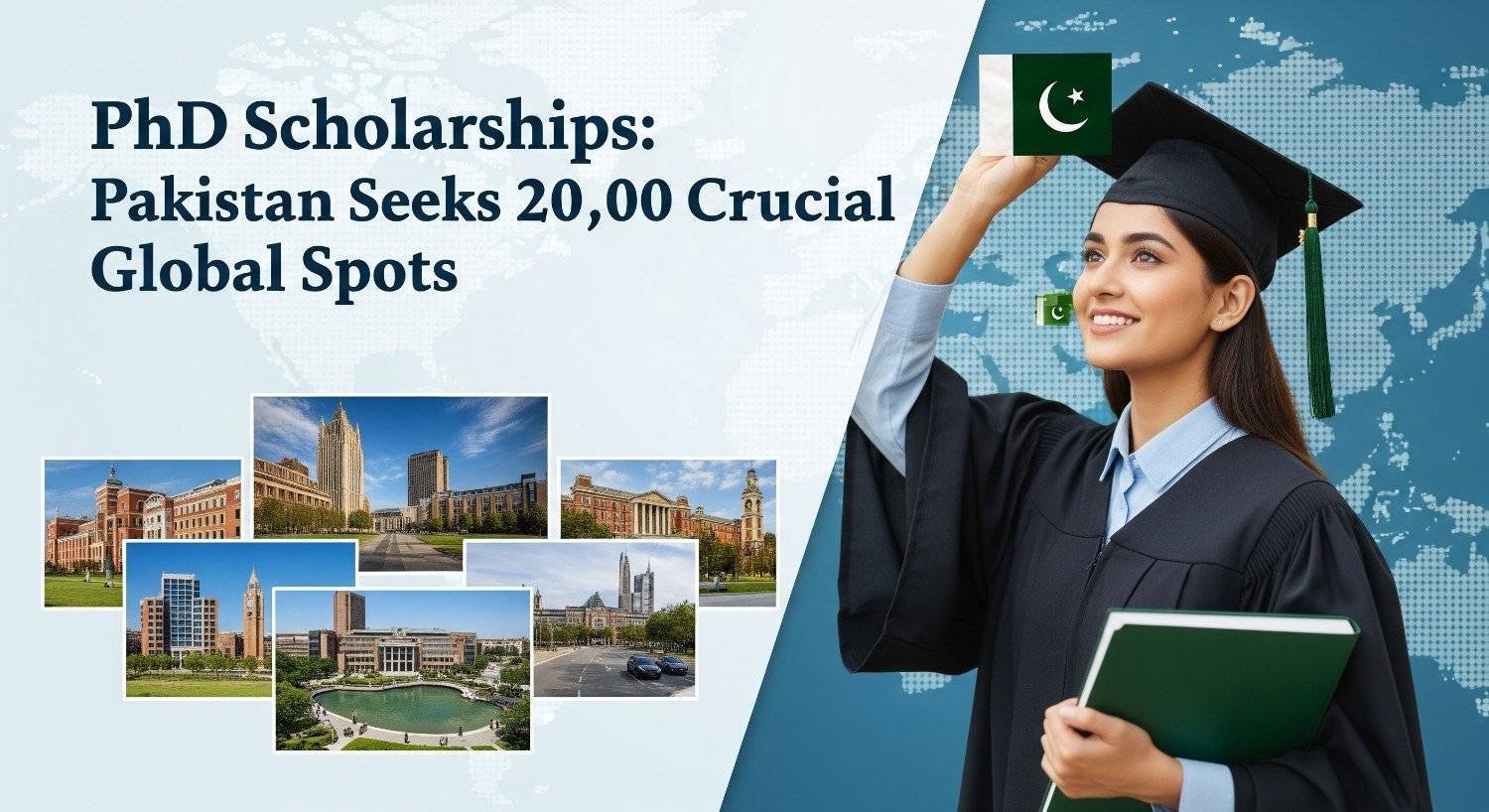
Pakistan seeks 20,000 PhD scholarships from China and the United States, a strategic move aimed at developing a robust human resource base essential for knowledge-driven national growth. Planning Minister Ahsan Iqbal announced this ambitious plan on Friday, October 25, 2025, during a news conference to launch the monthly Development Update. The initiative involves securing 10,000 scholarships from each country, focusing on critical, future-oriented disciplines.
The government, as stated by Minister Iqbal, is actively working with relevant stakeholders to develop a multi-criteria framework for ranking Pakistani universities. This seven-point framework is designed to align with global practices, ensuring that the country’s higher education institutions achieve international recognition and prestige. Such recognition is vital for attracting talent and fostering a high-quality academic environment.
Boosting Human Capital with 20,000 PhD Scholarships
A key component of this strategy involves targeted academic collaboration. China has been requested to allocate 10,000 PhD scholarships over the next decade, with a focus on artificial intelligence, engineering, and emerging sciences, to be pursued at China’s leading universities. Furthermore, plans are underway to secure an additional 10,000 PhD scholarships from top American universities.
This push for advanced education is particularly pertinent given Pakistan’s demographic landscape. Approximately 60% of the country’s population is under the age of 30. Minister Iqbal underscored the necessity of upgrading their knowledge base to harness this youth bulge effectively, while also addressing concerns regarding population growth. Unchecked, the national population could reach 380 million by 2047, when Pakistan commemorates its centenary.
Economic Resilience Amidst Climate Challenges
Despite facing significant challenges, including two successive floods in 2022 and 2025 – the latter uniquely impacting Punjab since 1988 – Pakistan’s macroeconomic indicators have shown an upward trajectory. The government’s proactive interventions, led by the National Disaster Management Authority (NDMA), included timely evacuations, coordinated relief operations, and proactive contingency planning. These efforts ensured continuity in critical sectors and safeguarded livelihoods, reflecting the nation’s commitment to sustainable economic recovery. SindhNews.com reported extensively on these recovery efforts.
The resilience demonstrated in managing climate-induced disasters complements the long-term vision for human resource development. This collective effort highlights a dual approach: immediate crisis management alongside strategic investments in future growth.
In conclusion, Pakistan’s proactive pursuit of 20,000 PhD scholarships from leading global powers marks a significant step towards building a formidable knowledge economy. This initiative, coupled with efforts to globally rank universities and manage population dynamics, underscores a comprehensive vision for national development and future prosperity.