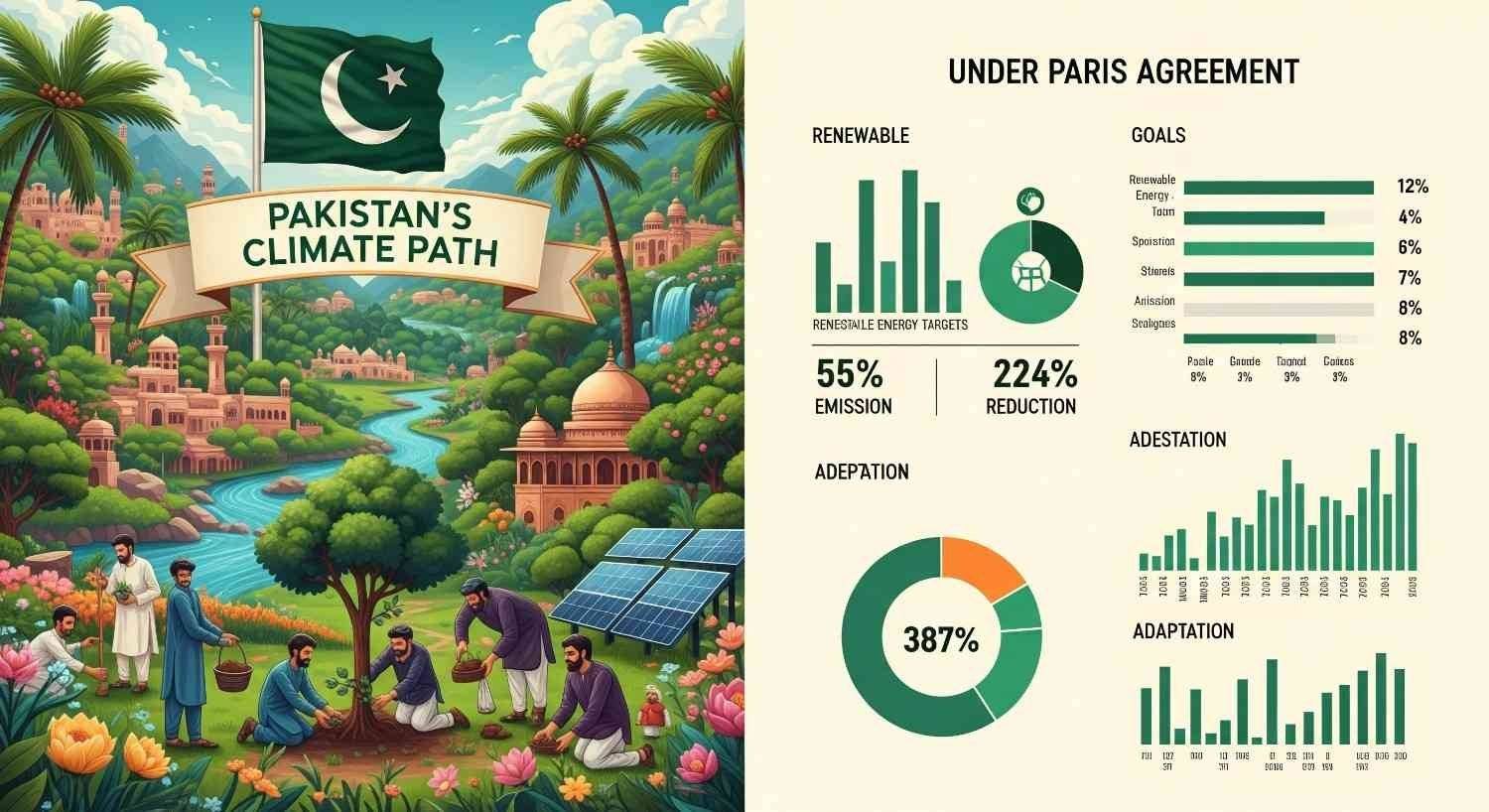
In the decade since the signing of the landmark Paris Agreement, Pakistan finds itself at a critical juncture: facing the harsh realities of climate change and the urgent need for decisive action. The country, along with other nations, pledged to limit global warming to well below 2 degrees Celsius, preferably to 1.5 degrees Celsius, above pre-industrial levels. However, as the world grapples with escalating temperatures and climate-related disasters, Pakistan’s path forward requires a significant shift in strategy. SindhNews.com
For years, Pakistan’s approach to the annual UN climate summits, known as COPs, has primarily revolved around securing financial aid from developed nations. While the establishment of the Loss and Damage Fund at COP27 was hailed as a diplomatic triumph, the focus on financial compensation overlooks the critical need to curb emissions—a challenge exacerbated by Pakistan’s vulnerability to climate impacts.
The Impact of Staying Above the Paris Promise
Pakistan is among the countries most vulnerable to the effects of climate change. Already, the nation is experiencing a cascade of climate-induced disasters, including devastating floods, droughts, and prolonged heatwaves. Furthermore, the retreat of glaciers in the north and rising sea levels along the coast are critical threats. Every fraction of a degree increase beyond the 1.5-degree limit translates into tangible losses to the country’s economy, ecosystems, and human lives.
Since the Paris Agreement, the world has seen mixed results. Although the agreement triggered a historic shift in investment trends, global ambition still falls short of what is required. Even if all current national pledges are achieved, the planet is on course for warming between 2.3 and 2.5 degrees Celsius, according to scientific projections.
Pakistan’s Stance and the Need for a New Direction
Despite its vulnerability, Pakistan’s stance on climate action has been ambiguous, shaped more by geopolitical alliances than by scientific urgency. As a member of the Like-Minded Developing Countries group, Pakistan has often echoed the priorities of economies reliant on fossil fuels, hindering the collective ambition required to limit global warming. This approach has led to continued investments in coal and imported liquefied natural gas, locking the energy system into dependence on polluting fuels.
However, Pakistan is witnessing a positive trend as ordinary citizens are embracing solar energy. Policymakers should support this progress instead of impeding it, as this is a step towards a sustainable future.
The nation must transition climate action from a diplomatic bargaining chip to a matter of survival. This includes reclaiming climate leadership, not solely as an aid recipient, but as a country ready to act. It requires aligning domestic energy policies with the goal of limiting warming to 1.5 degrees Celsius. SindhNews.com
Conclusion
Pakistan stands to endure great hardship if the global temperature targets from the Paris Agreement are not met. The path to safety necessitates more than just financial compensation; it demands Pakistan’s bold efforts in emission mitigation and strategic domestic policy shifts. The nation’s ability to navigate this pivotal moment will determine its success in safeguarding its citizens from the harsh consequences of climate change.