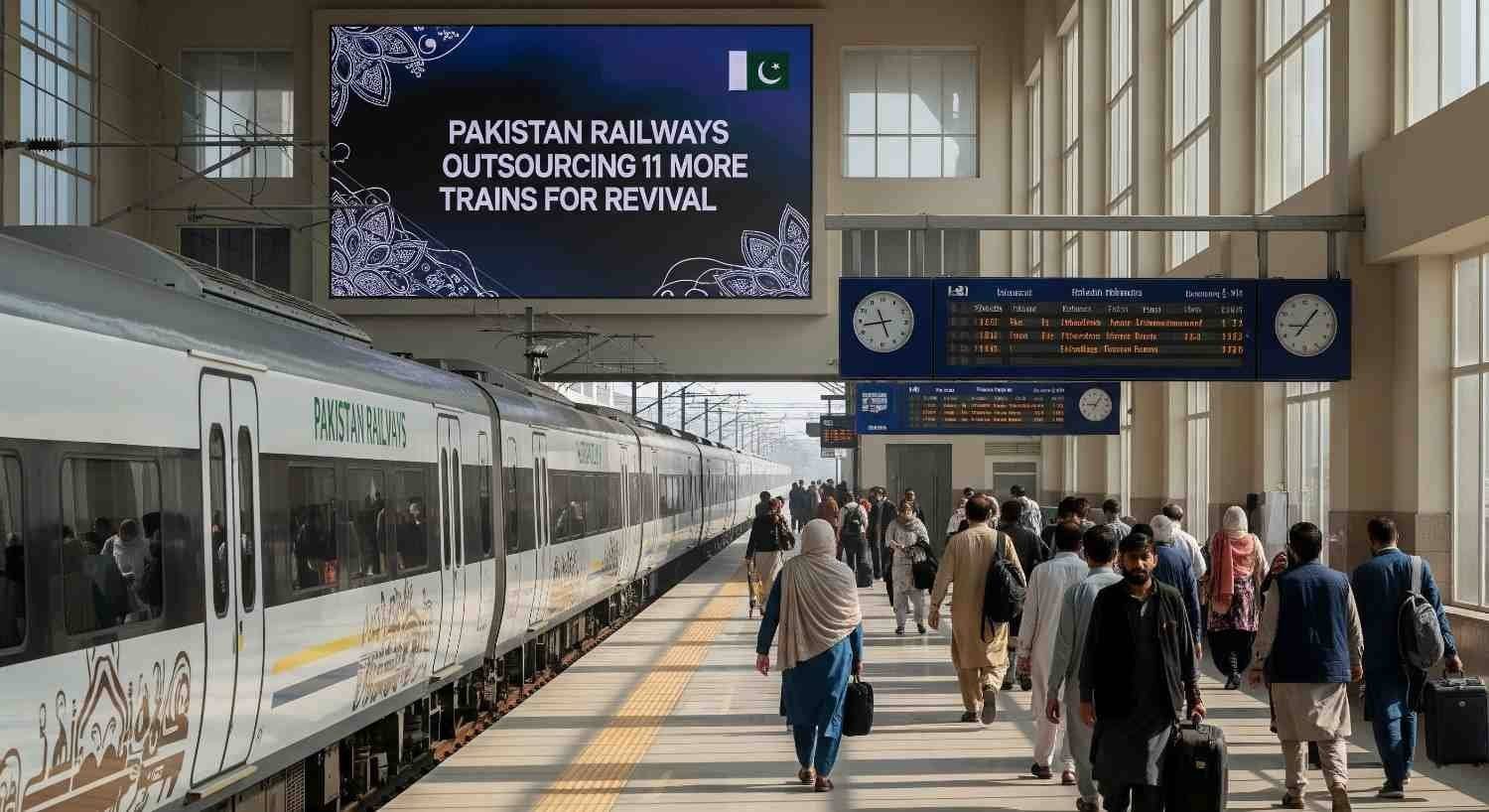
Pakistan Railways Embarks on Further Outsourcing to Boost Revenue
Pakistan Railways is taking significant steps to modernize and increase its revenue streams through strategic outsourcing initiatives. This move, part of a larger Railway Improvement Project, aims to enhance efficiency and improve services across the railway network. With the Asian Development Bank providing $10 million in support, the state-owned railway operator is poised for significant transformation. SindhNews.com
The government has already outsourced several aspects of the railway system. Prime Minister Shehbaz Sharif chaired a meeting on the topic on Saturday. He received briefings on the progress of various projects.
Outsourcing Initiatives and Revenue Projections
The plan to outsource an additional 11 passenger trains to the private sector is underway, following the earlier outsourcing of four trains. Tenders have been floated for the new outsourcing phase. This strategic move is expected to generate an additional Rs8.5 billion for Pakistan Railways. Moreover, 40 luggage and brake vans have been outsourced. This segment alone is anticipated to bring in an additional Rs820 million.
The outsourcing is not limited to passenger trains and luggage vans. The process for two cargo express trains is in progress, projected to generate Rs6.3 billion in additional revenue. Furthermore, railway hospitals in several major cities like Lahore, Karachi, Multan, Peshawar, Quetta, and Sukkur are being outsourced. Additionally, railway schools, colleges, and rest houses are already under outsourcing. Dry ports in Islamabad, Lahore, and Azakhail will also be handed over to private operators.
Prime Minister’s Vision for Pakistan Railways
Prime Minister Shehbaz Sharif emphasized the importance of adopting a public-private partnership model in managing Pakistan Railways, particularly concerning land and property. He highlighted that the railway system is a critical component of the country’s economy. The Prime Minister called for engaging top-tier legal and economic experts, especially for projects related to regional connectivity and cross-border rail links. He acknowledged the ongoing initiatives to revive the railway system and commended Railways Minister Hanif Abbasi and his team.
Modernization and Expansion of Services
The meeting also discussed several modernization and expansion projects. The Islamabad-Tehran-Istanbul train service is expected to resume soon. Preliminary work on the Kazakhstan-Uzbekistan-Afghanistan-Pakistan rail corridor is also in progress. In addition, plans are being developed to upgrade the Karachi–Kotri section of Main Line-1 and Main Line-3.
The government is also upgrading existing facilities. So far, 155 railway stations have been equipped with solar power. Under the ‘Rabta’ initiative, seven digital portals are operational. 56 trains have been shifted onto the new system, and 54 stations have been digitized. Free Wi-Fi service has been provided at major stations, namely Karachi, Lahore, Rawalpindi, and Faisalabad. An online freight booking system has been launched, and a pilot digital weighing bridge has been installed at Karachi City Railway Station. SindhNews.com
To enhance security, 148 AI-powered surveillance cameras have been installed. ATM machines are also being set up at railway stations. Furthermore, cleanliness services have been outsourced, which shows the multi-faceted approach to improving the overall user experience.
Conclusion
With ambitious outsourcing plans, network modernization, and a focus on regional connectivity, Pakistan Railways is striving to become more efficient and profitable. The government’s commitment to these initiatives, along with the support from the Asian Development Bank, indicates a promising future for the country’s railway system. These developments signify a proactive approach to improving infrastructure and enhancing services for the benefit of both commuters and the national economy.