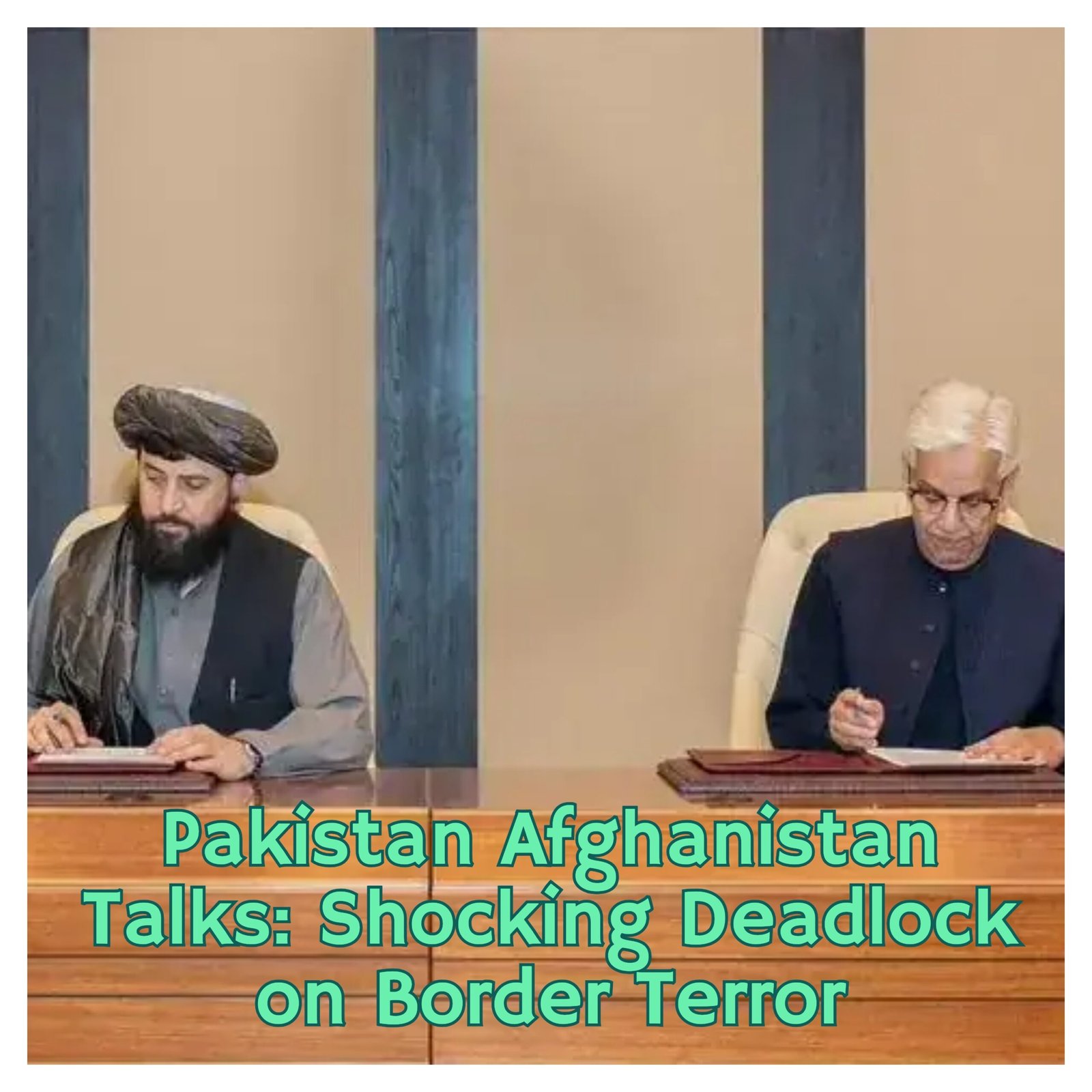
Pakistan-Afghanistan Talks Conclude Without Agreement in Istanbul
Agreement eludes Pakistan and Afghanistan despite three days of intensive discussions in Istanbul, as both sides failed to finalize a mechanism to curb cross-border terrorism. The latest round of talks, held in the Turkish capital through Monday, saw delegations grapple with significant differences, leaving officials hesitant yet unwilling to abandon hope for future breakthroughs. Despite earlier optimism, efforts to bridge the gap on verifiable actions against militant groups operating from Afghan territory remained the primary sticking point.
Sources privy to the closed-door proceedings indicated that while progress was made on numerous points, the structure for credible enforcement against terrorist entities proved insurmountable. “We had hoped to sign a mutual document with Afghanistan, followed by a joint statement, but it remains out of reach,” one Pakistani source expressed, reflecting the mounting frustration. This critical element for verifiable action against groups like the Tehreek-i-Taliban Pakistan (TTP) continues to be the central issue between Islamabad and Kabul.
Sticking Point: Verifiable Action Against Cross-Border Terrorism
Early Monday saw a notably positive atmosphere, with participants describing “encouraging progress” and serious engagement from both delegations. However, as the day progressed and discussions extended into the evening, the initial optimism began to wane. Reports suggested a growing sense of frustration, with the process hitting another roadblock by nightfall. The Afghan Taliban delegation reportedly resisted committing anything to paper, particularly concerning specific guarantees to end support for outlawed groups. Mediators from Turkiye and Qatar were actively involved, striving to facilitate a resolution.
Pakistani officials highlighted their consistent stance: Afghan territory must not be used for terrorist activities against Pakistan, and the Taliban must cease patronage of the TTP. “The hosts understand Pakistan’s concerns,” a Pakistani official noted, indicating mediator comprehension, “but commitments from Kabul and Kandahar remain elusive.” This hesitation leaves the Pakistani side increasingly concerned. External influences, thought to be a reference to India, were acknowledged, but participating countries reportedly remained sincere in their mediation efforts.
The Significance of Continued Engagement
The tone on Monday morning contrasted sharply with the pessimism following Sunday’s session, when Pakistani officials presented what was widely interpreted as Islamabad’s final position. In contrast, Afghan negotiators maintained optimism, viewing disagreements as “few” and “resolvable.” “Tensions benefit no one,” an Afghan delegate stated, emphasizing the desire for a positive outcome. This sentiment was echoed by Turkish and Qatari mediators, who stressed the importance of sustained engagement to prevent the process from collapsing, as reported by SindhNews.com.
Despite the prevailing stalemate, diplomatic sources underscored the significance of the three-day talks themselves. “Even without a breakthrough, the fact that both sides remained engaged for three straight days is important,” a mediator observed, emphasizing that neither party wished for the dialogue to unravel. As late evening approached, negotiators in Istanbul were contemplating an extension into a fourth day, underscoring the gravity and complexity of forging a lasting peace and security agreement.
Conclusion:
The Istanbul discussions ended without a finalized agreement, primarily due to an impasse over a verifiable mechanism to combat cross-border terrorism. While no breakthrough was achieved, the sustained engagement for three days indicates a mutual desire to continue dialogue and avoid a complete breakdown of negotiations. The challenge remains to secure concrete, written commitments for verifiable action from the Afghan side, a crucial step for regional security and for resolving long-standing tensions.Pakistan and Afghanistan Talks Conclude Without Agreement on Counter-Terrorism Measures
A critical cross-border terrorism mechanism remains elusive following three days of intensive talks between Pakistan and Afghanistan in Istanbul, Turkiye. Despite sustained diplomatic engagement from February 19-21, 2024, both delegations failed to formalize a mutually acceptable framework to address militant groups operating from Afghan territory. This outcome, confirmed by officials late Monday, highlights persistent challenges in regional security cooperation.
Challenges in Finalizing the Cross-Border Terrorism Mechanism
The discussions, which spanned Monday’s session and the preceding weekend, saw moments of both optimism and frustration. Sources familiar with the closed-door proceedings noted that while significant common ground was established on many points, the core sticking point centered on a verifiable cross-border terrorism mechanism. Specifically, Pakistan pressed for concrete, written guarantees against the outlawed Tehreek-i-Taliban Pakistan (TTP), which it asserts poses a threat from Afghanistan. SindhNews.com reported on the day-to-day fluctuations in optimism.
Pakistani security officials reiterated Islamabad’s clear stance: Afghan authorities must prevent their territory from being used for attacks against Pakistan and cease patronage of the TTP. “Pakistan’s principled stance has been clear from the outset,” a security source emphasized, “The Taliban must end their patronage of the TTP…”
Afghan Resistance to Written Commitments
The Afghan Taliban delegation, however, reportedly resisted committing to written guarantees, particularly concerning the verifiable actions against the TTP. “People in Kabul and Kandahar are not willing to commit,” disclosed a Pakistani official, indicating deep-seated reluctance from the Afghan side to formalize such undertakings on paper. Despite this, Turkish and Qatari mediators expressed hope for continued dialogue, stressing the importance of sustained engagement to prevent a complete collapse of the process.
The atmosphere on Monday morning had initially shown promise, with participants describing “encouraging progress.” Yet, as the day stretched into evening, this optimism waned, giving way to frustration among negotiators. Mediators acknowledged the process was “not without significance,” noting that both sides remained engaged for three consecutive days, which itself was an important indicator of a desire to avoid a complete breakdown.
Conclusion
Ultimately, the three days of talks concluded without a signed agreement or a joint statement on a cross-border terrorism mechanism. While immediate breakthroughs remain out of reach, the continuation of dialogue despite significant differences underscores the complex nature of regional security. The inability to finalize verifiable actions against militant groups operating across the border ensures that the delicate security situation between Pakistan and Afghanistan will continue to require sustained diplomatic efforts.
Summary:
Three days of talks between Pakistan and Afghanistan in Istanbul concluded without a formal agreement on a cross-border terrorism mechanism. Pakistan sought verifiable guarantees against groups like the TTP, but the Afghan delegation resisted written commitments. Despite the stalemate, mediators highlighted the significance of continued engagement, keeping open the possibility of future discussions on this critical security issue.