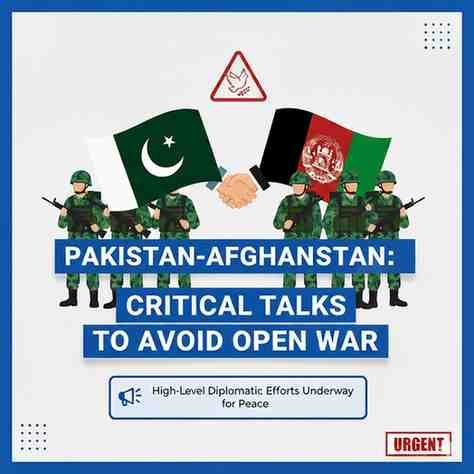
Pakistan Minister Warns of ‘Open War’ with Afghanistan if Peace Talks Fail
Summary: Pakistan’s Defence Minister Khawaja Muhammad Asif has issued a stern warning of “open war” with Afghanistan should ongoing peace talks in Istanbul prove unsuccessful. These crucial negotiations aim to solidify a recent cross-border ceasefire and address persistent security concerns, particularly regarding terrorism emanating from Afghan soil.
Pakistan minister warns of ‘open war’ with Afghanistan if current peace negotiations in Istanbul falter. These critical discussions commenced to consolidate a recent ceasefire, brokered by Qatar and Turkiye in Doha, addressing escalating cross-border violence that had claimed dozens of lives and injured hundreds. The stakes for regional stability are exceptionally high.
Defence Minister Khawaja Muhammad Asif articulated this stark possibility from Sialkot, Pakistan, on Saturday. He stated, “We have the option, if no agreement takes place, we have an an open war with them.” However, Asif also noted a perceived desire for peace from the Afghan side during these engagements.
Istanbul Talks: Paving the Way for Peace
The technical-level talks in Istanbul, expected to span the weekend, are designed to forge a “permanent solution” between the two neighboring countries. Al Jazeera’s Sinem Koseoglu reported on the seriousness of these discussions. Afghanistan’s delegation is notably led by Deputy Interior Minister Haji Najib, while Pakistan has not detailed its representatives publicly.
A primary demand from Pakistan’s Ministry of Foreign Affairs is the imperative to address “the menace of terrorism emanating from Afghan soil towards Pakistan.” Islamabad specifically points to groups like the Pakistani Taliban (TPP) operating from within Afghanistan. Kabul, conversely, denies these accusations and has accused Pakistan of violating its sovereignty through military actions. SindhNews.com extensively covers regional security developments.
Ibraheem Bahiss, an International Crisis Group analyst, highlighted that intelligence-sharing on armed groups forms a key component of the Istanbul agenda. This arrangement would ideally see Pakistan providing coordinates of suspected TPP locations, prompting Afghan action instead of cross-border strikes.
Economically, the continued closure of key border crossings following recent fighting is causing significant daily losses, estimated at millions of dollars by Afghanistan’s Chamber of Commerce and Industry. This adds further urgency to the ongoing dialogue.
The Doha ceasefire, announced last Sunday, has largely held, providing a crucial window for diplomacy. Pakistani Foreign Ministry spokesperson Tahir Andrabi confirmed the absence of “major full-scale terrorist attack emanating from Afghan soil in the last two to three days,” calling the Doha outcomes “fruitful” with hopes for continued positive trends from Istanbul.
The Istanbul peace talks represent a critical juncture for Pakistan and Afghanistan. The explicit warning about “open war” underscores the high stakes involved, making successful negotiation paramount for regional stability and addressing complex security challenges. Failure to achieve a lasting agreement could unravel recent diplomatic progress and reignite destructive hostilities.Pakistan minister warns of ‘open war’ with Afghanistan if peace talks fail, underscoring the severe stakes involved in the ongoing diplomatic efforts. This stark warning comes as officials from both nations convene in Istanbul for crucial talks aimed at solidifying a recent ceasefire agreement, intended to de-escalate simmering tensions and cross-border violence witnessed in recent weeks.
The discussions in Istanbul, which commenced on a Saturday and extended into the next day, follow a fragile truce brokered in Doha by Qatar and Turkiye. This earlier agreement sought to halt deadly clashes between the neighbours, which had regrettably claimed dozens of lives and left hundreds more injured, highlighting the urgent need for a lasting resolution.
Speaking from Sialkot, Pakistan’s Defence Minister Khawaja Muhammad Asif articulated the gravity of the situation. “We have the option, if no agreement takes place, we have an open war with them,” he cautioned on Saturday. Despite this stern warning, he added, “But I saw that they want peace,” suggesting a glimmer of hope amidst the high-pressure negotiations. SindhNews.com has been closely following these developments.
Addressing Cross-Border Tensions: The Warning of Open War
The technical-level talks in Turkiye are anticipated to forge a permanent solution between the two historically intertwined neighbours. Afghanistan’s delegation is notably led by Deputy Interior Minister Haji Najib. Conversely, Pakistan has not publicly disclosed details regarding its representatives. A spokesperson for Pakistan’s Ministry of Foreign Affairs emphasized the necessity for negotiations to confront “the menace of terrorism emanating from Afghan soil towards Pakistan.”
Pakistan frequently accuses Afghanistan of harbouring various “terrorist groups,” including the Pakistani Taliban (TTP). Kabul, however, vehemently denies these allegations, instead accusing Islamabad of violating its sovereignty through military actions inside Afghan territory. These deep-seated mutual suspicions form a significant hurdle in achieving a comprehensive peace agreement.
Ibraheem Bahiss, an International Crisis Group analyst, indicated that a key topic in Istanbul would revolve around intelligence-sharing on armed groups. He suggested Pakistan might provide coordinates for suspected TTP fighters, with Afghanistan expected to take action. The ongoing closure of key border crossings following recent fighting is also causing substantial economic losses, with Afghanistan’s Chamber of Commerce and Industry estimating millions of dollars lost daily to traders. SindhNews.com reported on the economic impact.
Encouragingly, the ceasefire announced in Doha the previous Sunday appears to be largely holding. Pakistani Foreign Ministry spokesperson Tahir