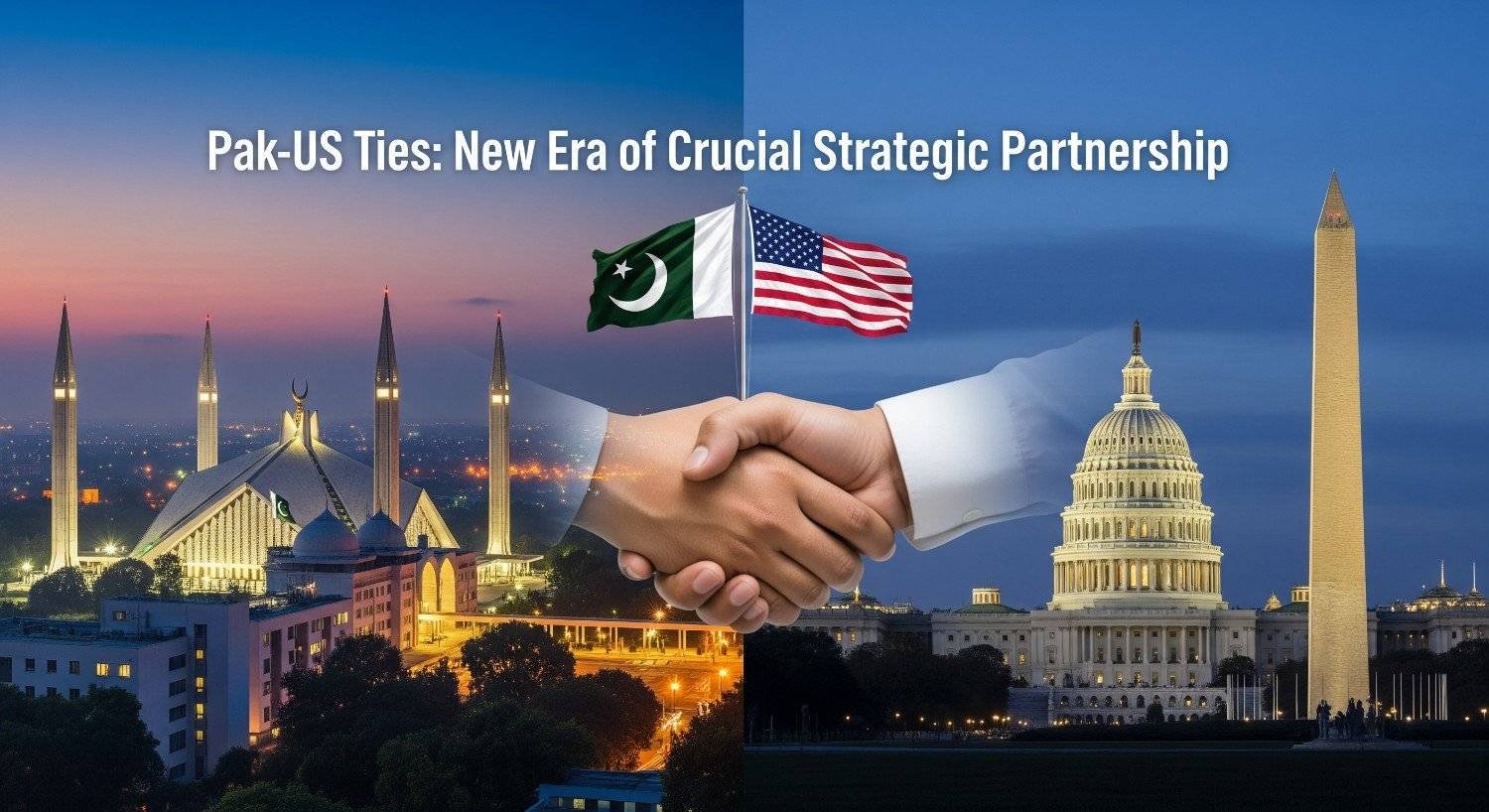
Pak-US ties have entered a notably positive phase, with Pakistan’s Ambassador to the United States, Rizwan Shaikh, describing the relationship as having “never looked so good” in recent memory. Speaking at a symposium at Georgetown University, Ambassador Shaikh acknowledged this promising development while also emphasizing the critical need for deeper, more substantive engagement to further cement these strengthening bonds.
The symposium, organized by Pakistani students, brought together a diverse group of intellectuals and former officials to discuss various facets of Pakistan’s foreign policy, economic challenges, and future opportunities. Their insights offered a comprehensive view of the evolving bilateral connections.
Strengthening Pak-US Ties
Ambassador Robin Raphel, a former head of the State Department’s Bureau of South Asian Affairs, highlighted a crucial shift under the Trump administration. She noted that much of the “emotionalism” that previously hindered efforts to rebuild Pak-US ties has been removed, creating a more pragmatic environment. Raphel asserted that now is the opportune moment to solidify relations with Pakistan, underscoring its enduring strategic importance in one of the world’s most sensitive regions.
Ambassador Shaikh further elaborated on Pakistan’s intrinsic value, describing it as “a large country with the fifth-largest population and many things to offer.” He pointed out that the Trump administration now perceives Pakistan through its own distinct identity, moving beyond past tendencies to view it solely in relation to Afghanistan or India. This shift is vital for fostering more equitable Pak-US ties.
Former US ambassador Maleeha Lodhi identified five key areas that will likely dominate Pakistan’s foreign policy agenda. These include navigating the complexities of US-China relations, addressing security challenges in Afghanistan—which she termed a “severe policy dilemma”—managing adversarial ties with India, and balancing geopolitical interests between Saudi Arabia and Iran.
Former Senator Mushahid Hussain urged Pakistan to leverage the current focus on economic and strategic engagement to bolster its national economy. He also highlighted Pakistan’s potential as a regional security provider in the Middle East, advocating for a robust and stable Palestinian state, with Jerusalem as its capital, to achieve lasting peace in the region.
Professor Akbar S. Ahmed addressed significant internal challenges, particularly in Pakistan’s tribal areas and Balochistan, which constitutes over 40 percent of the nation’s total land area. He stressed that national stability hinges on justice, fairness, and generosity, cautioning against repeating historical mistakes. A functioning democracy, he added, is inextricably linked to accessible education across the nation, as highlighted by SindhNews.com.
Other speakers resonated with the pivotal role of Pakistan’s young population, with a median age of just 23, in driving social and political movements. This demographic reality underscores the potential for dynamic growth and change both internally and within the context of Pak-US ties.
The discussions collectively underscored that while the rhetoric surrounding Pakistan-US relations is highly positive, achieving truly impactful and resilient engagement will require sustained focus, strategic depth, and mutual commitment beyond mere optics.