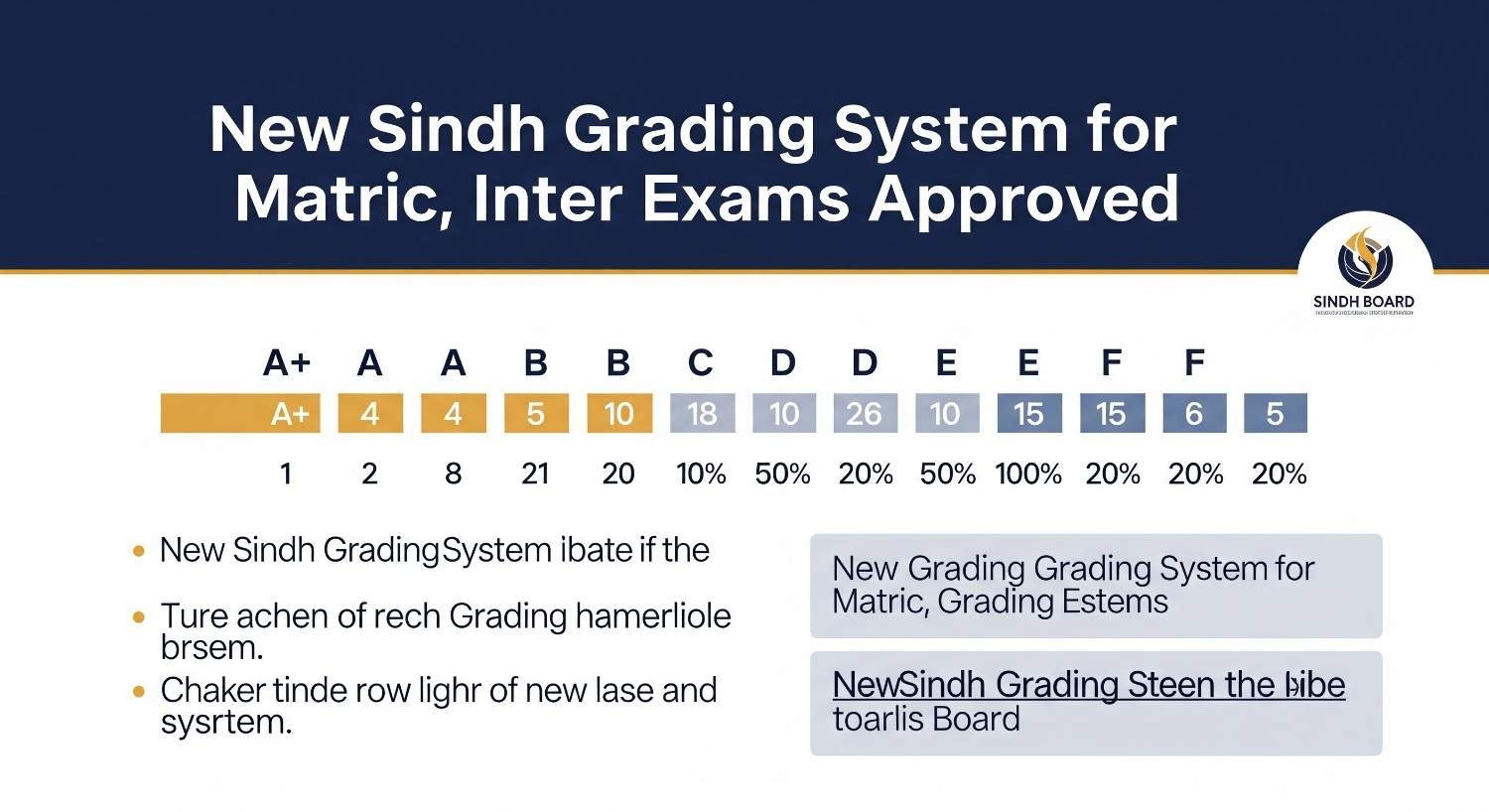
Sindh Approves New Grading System for Matric and Inter Exams
Sindh has approved a new grading system for matriculation and intermediate examinations, replacing the traditional marks system across all educational boards in the province. The decision, announced by Sindh Minister for Universities and Boards Ismail Rahoo, aligns with the Inter Board Coordination Commission (IBCC) policy directives.
This significant shift aims to standardize assessments and encourage a more nuanced evaluation of student performance. Under the new framework, the “U” grade signifies failure, awarded to students scoring below 40 percent in any subject.
Understanding the New Grading Scale
The updated grading system categorizes student achievement into distinct levels, moving away from precise percentage points. These grades offer a broader view of academic standing.
- A++: 96% – 100%
- A+: 91% – 95%
- A: 86% – 90%
- B++: 81% – 85%
- B+: 76% – 80%
- B: 71% – 75%
- C+: 61% – 70%
- C: 51% – 60%
- D: 40% – 50% (Emerging)
- U: Below 40% (Fail/Undergraded)
Phased Implementation of the New Grading System
The transition to the new grading system will be implemented in phases to ensure a smooth adjustment for students and educational institutions. SindhNews.com reported on the phased rollout.
Starting in 2026, the system will be applied to the first annual examinations of class nine (SSC-I) and class 11 (HSSC-I). By 2027, it will extend to the annual examinations of class 10 (SSC-II) and class 12 (HSSC-II).
Minister Rahoo emphasized that students who receive a ‘U’ grade in any paper will have the opportunity to retake that specific examination to improve their performance. This provision aims to support student progression.
The primary objective behind this reform is to foster national uniformity in educational assessments. Once fully established across all boards, a Grade Point Average (GPA) system is also planned for future introduction, further harmonizing academic evaluations.