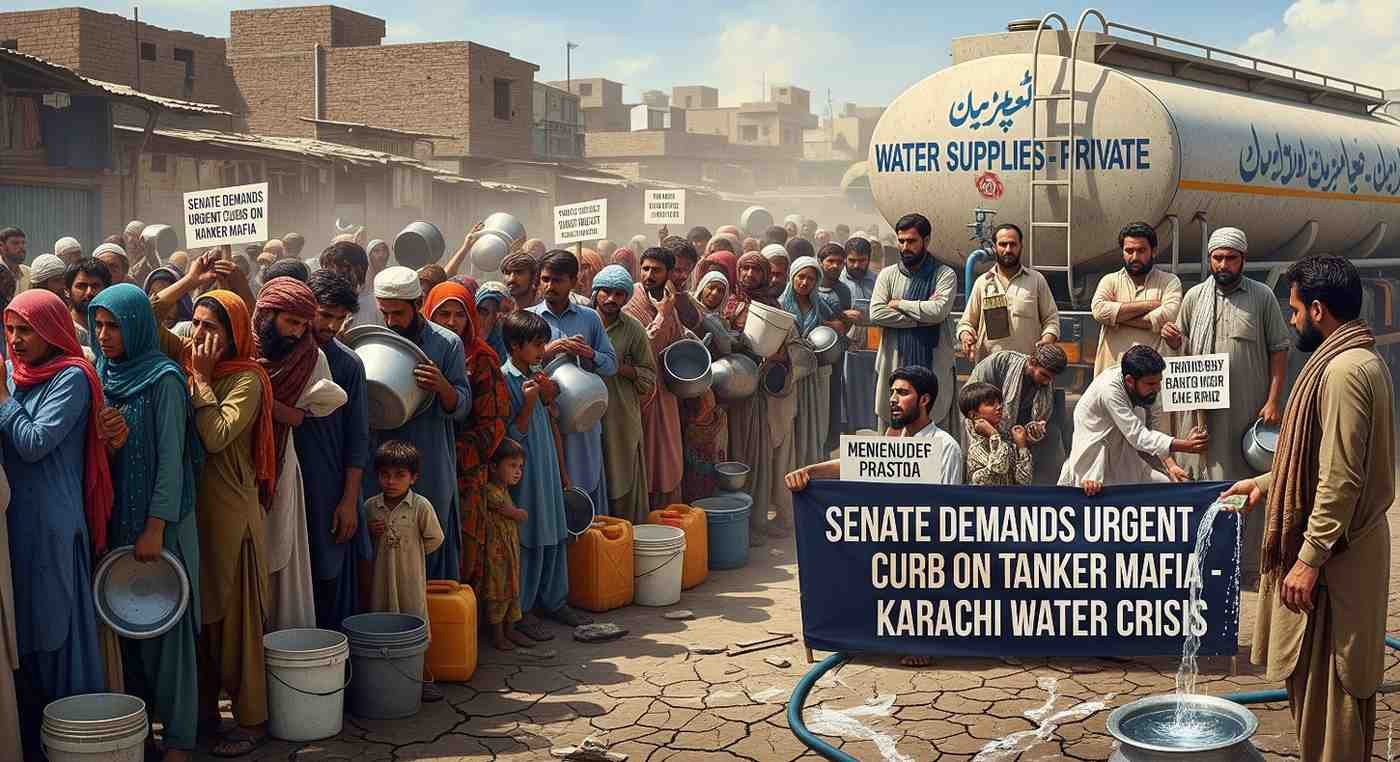
The Senate Standing Committee on Cabinet Secretariat recently urged the Sindh government to tackle Karachi’s persistent water supply challenges. Key directives included curbing the ‘tanker mafia’, upgrading aging infrastructure, and expediting the K-IV water project to meet the city’s growing demands.
Karachi water supply challenges recently drew the attention of the Senate Standing Committee on Cabinet Secretariat, which pressed the Sindh government to enact swift measures. The committee, noting the metropolis’s rapidly expanding population and its escalating water needs, called for decisive action against the ‘tanker mafia’ and a significant upgrade to existing water infrastructure to improve the Karachi water supply.
During a meeting chaired by Senator Rana Mehmood-ul-Hassan at the Sindh Assembly Building, profound concerns were vocalized regarding unauthorized ‘tanker mafia’ operations impacting the city’s ability to ensure adequate Karachi water supply. Senators lamented that this syndicate had purportedly “hijacked” the city’s water distribution, forcing residents to purchase water at exorbitant rates. The committee strongly recommended immediate steps to dismantle these illicit operations and enhance Karachi’s infrastructure, aligning with the K-IV project and the city’s burgeoning requirements.
Addressing Karachi Water Supply Infrastructure
To ensure a sustainable and equitable Karachi water supply, the committee also decided to conduct quarterly review meetings for the K-IV and other vital projects, aiming to accelerate their progress. It further proposed a joint session involving relevant Senate committees, the Sindh Chief Minister, Karachi Mayor, and senior officials from the Karachi Water and Sewerage Corporation (KWSC) to comprehensively address the city’s long-standing water and sewerage issues, explicitly focusing on Karachi water supply efficacy.
Briefings were also received from the National Engineering Services Pakistan (NESPAK) and the Oil and Gas Regulatory Authority (OGRA). NESPAK presented its ongoing development portfolio in Sindh and Balochistan, revealing 82 projects worth an estimated Rs1,558 billion in Sindh. However, the committee expressed significant reservations about the slow pace of work and directed NESPAK to ensure rigorous monitoring and timely execution. SindhNews.com also reported on these concerns. OGRA detailed initiatives like “Raahguzar” for locating legal fuel stations, and a Track and Trace System installed in 15,000 oil tankers to curb illegal fuel movement and improve transparency in fuel supply chains.
The Senate’s directives underscore a serious commitment to resolving Karachi’s critical water issues. The emphasis on curbing illegal activities, upgrading vital infrastructure, and regular project monitoring indicates a concerted effort to significantly improve water availability and distribution for the city’s millions of residents, promising future accountability and progress in the Karachi water supply mechanism.