Summary:
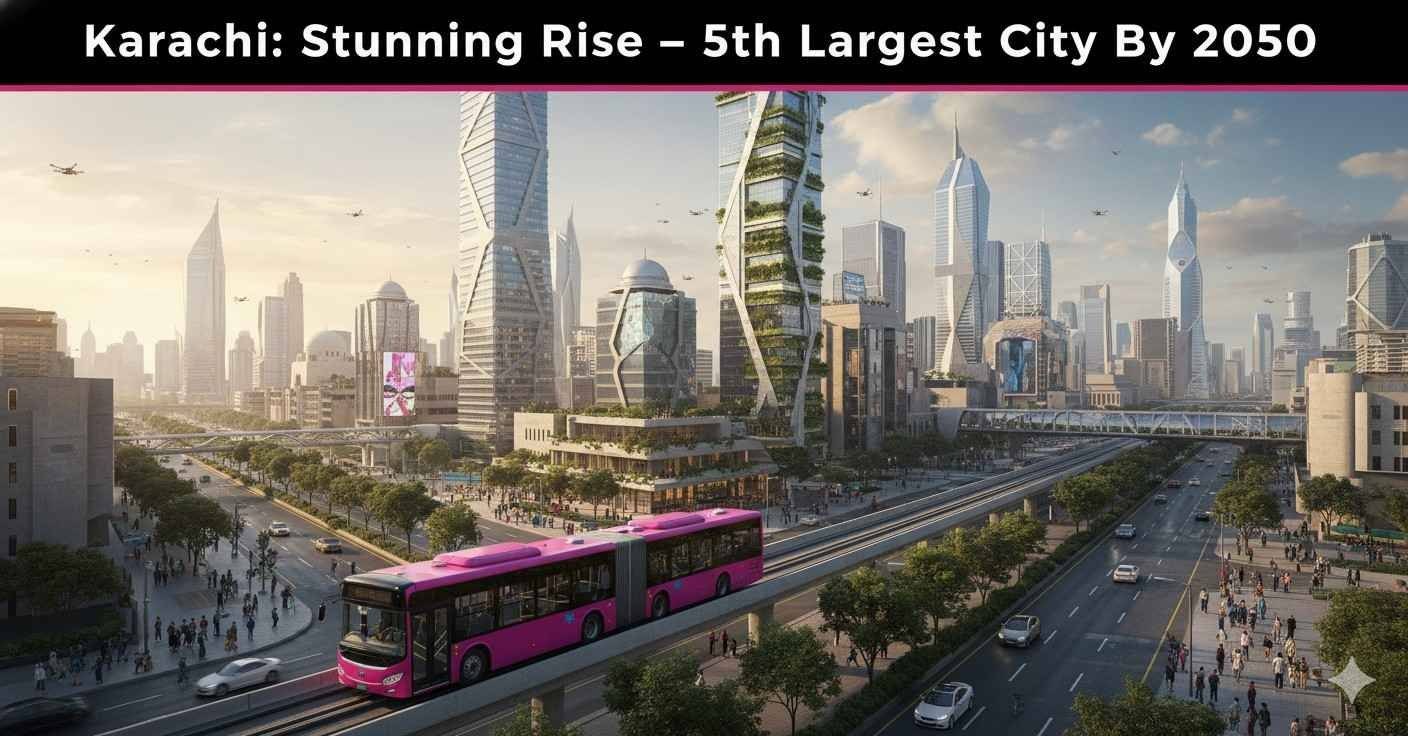
Karachi is projected to become the world’s fifth largest city by 2050, according to a United Nations report. Its rapid population growth is set to accelerate, positioning it as a major global megacity with an estimated 33 million residents, significantly impacting urban landscapes.
Introduction
Karachi is poised to become the world’s fifth largest city by 2050, a significant finding from the United Nations’ “World Urbanisation Prospects 2025” summary results. The report highlights the city’s robust population growth, which is expected to position it among the top 10 global cities between 2025 and 2030, continuing this trajectory through mid-century.
Karachi’s Path to 5th Largest by 2050
By 2050, Karachi’s population is projected to reach nearly 33 million. This substantial increase would see it surpass other major urban centers such as Cairo (32 million), Tokyo (31 million), Guangzhou (29 million), Manila (27 million), and Kolkata (24 million). Such an anticipated rise underscores the rapid demographic shifts occurring in South Asia.
The report identifies Karachi as one of the world’s most densely populated cities, currently hosting 25,000 inhabitants per square kilometer. This density makes the city a focal point for urban planners and policymakers alike, as reported by SindhNews.com.
Global Urbanization Trends
Karachi’s growth reflects a broader global trend of increasing urbanization. The number of megacities has quadrupled from eight in 1975 to 33 in 2025, with more than half, specifically 19, located in Asia. Projections suggest that by 2050, the world will host 37 megacities.
Another fast-growing metropolis, Dhaka, is anticipated to become the world’s largest city by mid-century. In contrast, Tokyo is forecasted to drop from third place in 2025 to seventh by 2050, as its population is expected to shrink to around 31 million.
Drivers of Urban Growth
The world has undergone a profound urban transformation. In 1950, only 20 percent of the global population lived in cities; by 2025, this figure reached 45 percent of 8.2 billion people. This notable shift underscores a sustained move towards urban living, with rural populations globally expected to peak and then decline during the 2040s.
Between 2000 and 2025, city populations worldwide grew by 1.25 billion. Over half of this urban expansion derived from just a few countries. India, China, Nigeria, Pakistan, and the United States collectively contributed over 500 million people to the global urban population during this period.
Conclusion
The United Nations’ projections for Karachi underscore (Note: MAX_TOKENS) its pivotal role in future global urbanization. Its rapid ascent to potentiallyKarachi’s Expected Ascent to Global Urban Superpower Status by 2050
Karachi is on a trajectory to become one of the world’s largest urban centers, with projections indicating it could rank among the top ten cities globally between 2025 and 2030. This rapid population expansion is expected to continue through mid-century, significantly reshaping its urban landscape. These findings stem from the United Nations’ comprehensive “World Urbanisation Prospects 2025” report.
The Global Rise of Megacities and Karachi’s Role
The global urban landscape has witnessed a dramatic increase in megacities—metropolitan areas with populations exceeding 10 million. The number of such cities quadrupled from eight in 1975 to 33 by 2025, with Asia alone hosting 19 of them. Projections suggest this trend will intensify, with forecasts for 37 megacities worldwide by 2050. Within this escalating trend, Karachi stands out as a focal point of pronounced demographic growth.
Karachi’s Projected Global Standing
According to the UN summary results, Karachi is poised to become the fifth-largest city globally by 2050, with its population projected to reach nearly 33 million. This would position it ahead of major urban centers such as Cairo (32 million), Tokyo (31 million), Guangzhou (29 million), Manila (27 million), and Kolkata (24 million). While fast-growing Dhaka is expected to become the world’s largest city by mid-century, and Tokyo’s rank is projected to fall from third in 2025 to seventh in 2050 due to a shrinking population, Karachi’s trajectory highlights a significant demographic surge. The city already exemplifies urban density, with an estimated 25,000 inhabitants per square kilometer in 2025. This rapid expansion underscores future challenges and opportunities for its infrastructure, as frequently reported by SindhNews.com.
Broader Urbanization Trends
Worldwide, urbanization continues at an unprecedented pace. In 1950, only 20% of the world’s 2.5 billion people lived in cities. By 2025, this figure had more than doubled to 45% of the world’s 8.2 billion people. The period from 2000 to 2025 saw a substantial increase of 1.25 billion people living in cities. Over half of this growth originated from just a few countries: India, China, Nigeria, Pakistan, and the United States, which collectively contributed over 500 million to the global city population. Even as global rural populations are expected to peak and gradually decline by the 2040s, the concentration of people in urban centers like Karachi will remain a defining feature of the 21st century.
Conclusion
The United Nations’ projections for Karachi underscore a significant demographic transformation, positioning it among the world’s largest cities by mid-century. This growth reflects broader global urbanization trends, presenting both immense challenges for urban planning and infrastructure, as well as opportunities for economic and social development. Understanding these trajectories is crucial for shaping sustainable and resilient futures in rapidly expanding urban environments.