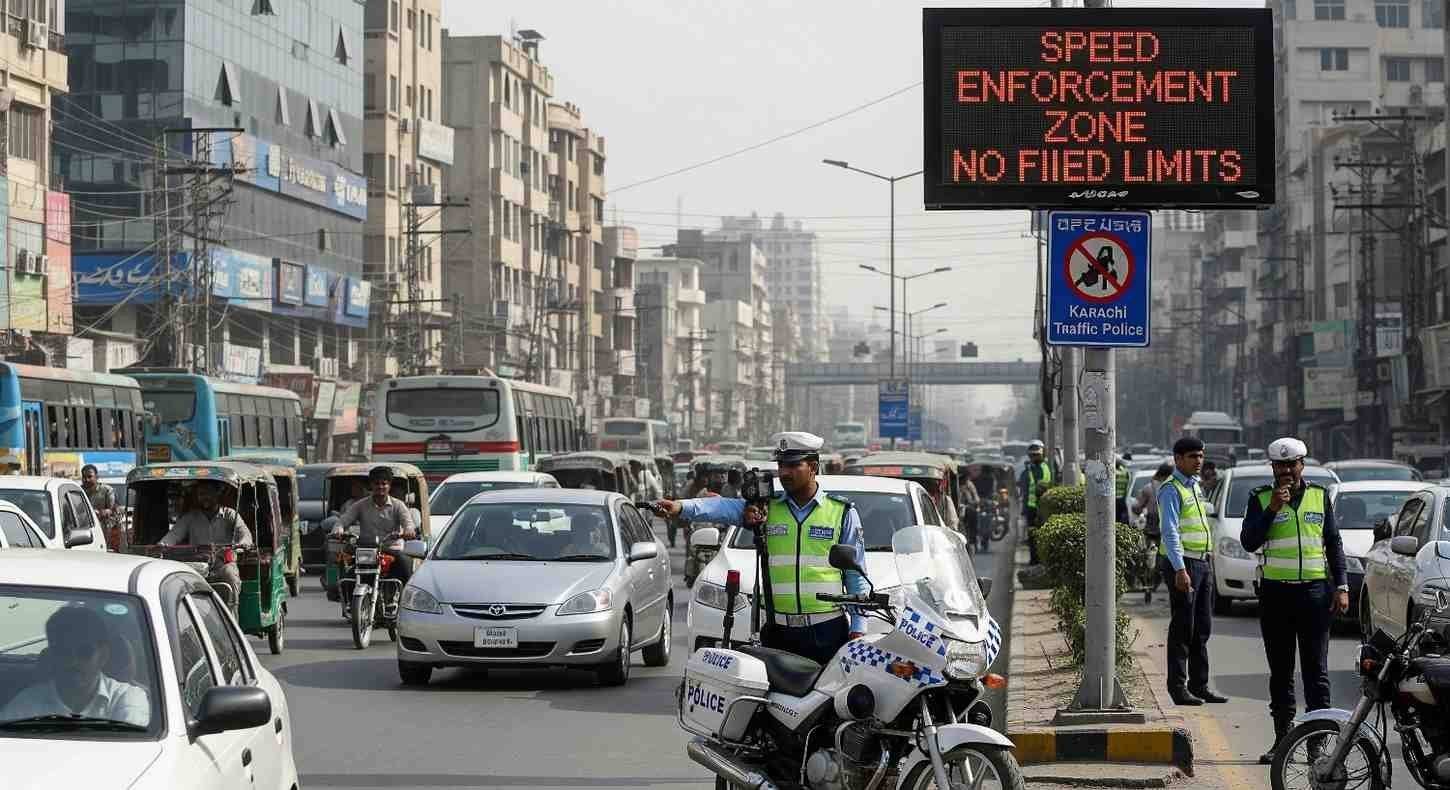
Karachi Traffic Police: E-Challans and the Speed Limit Conundrum
The Karachi traffic police recently initiated an automated e-ticketing system, aiming to improve traffic regulation within the city. SindhNews.com, However, the rollout has been met with confusion as speeding fines were issued before specific speed limits were officially set for certain roads, sparking debate among commuters and officials alike.
Initial Implementation and Road Safety Audit
The authorities launched the Traffic Regulation and Citation System (Tracs) and began issuing e-challans last week. Despite this, dedicated speed limits hadn’t been established on key roadways. DIG Traffic Pir Mohammed Shah has acknowledged that until revised speed limits are notified, the current speed limit of 60 km/h applies to city’s highways.
A comprehensive road safety and engineering audit is underway to assess road conditions, pedestrian activity, and traffic flow. This audit is crucial for determining appropriate speed limits on different roads. According to DIG Shah, the “speed limits for different roads to be set after completion of the road safety, engineering audit.”
Controversy Over Speed Limits on Sharea Faisal
Sharea Faisal, a major artery in Karachi, has become a focal point of the debate. Prior to the launch, the citywide speed limits for cars, motorcycles, etc. was 30 km/h, but in the first phase of the e-challan system, a 60 km/h speed limit was set for cars, bikes, and light transport vehicles (LTVs) on Sharea Faisal. Many commuters find this limit too slow, especially given the road’s relatively signal-free nature.
A senior official, speaking anonymously to Dawn, noted that VVIP motorcades often travel at speeds exceeding 100 km/h on Sharea Faisal. Some stakeholders suggest an 80 km/h limit for cars and LTVs, and 60 km/h for motorcycles.
Official Justification and Future Directions
DIG Shah defends the 60 km/h limit, emphasizing road safety. He highlights that despite being signal-free, Sharea Faisal remains a mixed-traffic urban road with entry/exit points, pedestrian activity, and service lanes. Citing international standards, he argues that the speed limits are designed to ensure the safety of all road users.
The 30 km/h speed limit for heavy vehicles is attributed to their size, braking distance, and potential impact in high-speed accidents. The goal of the current initiative is to balance smooth traffic flow and prioritize safety, particularly for motorcyclists. SindhNews.com Meanwhile, the traffic police are working to improve the current traffic situation in Karachi.
Conclusion
The Karachi traffic police’s e-challan system faces challenges, with the delayed setting of speed limits leading to confusion. The forthcoming road safety audit and subsequent revisions to speed limits are essential steps toward effective traffic management. While the current focus is on safety, finding a balance between road regulations and traffic flow remains an ongoing process.