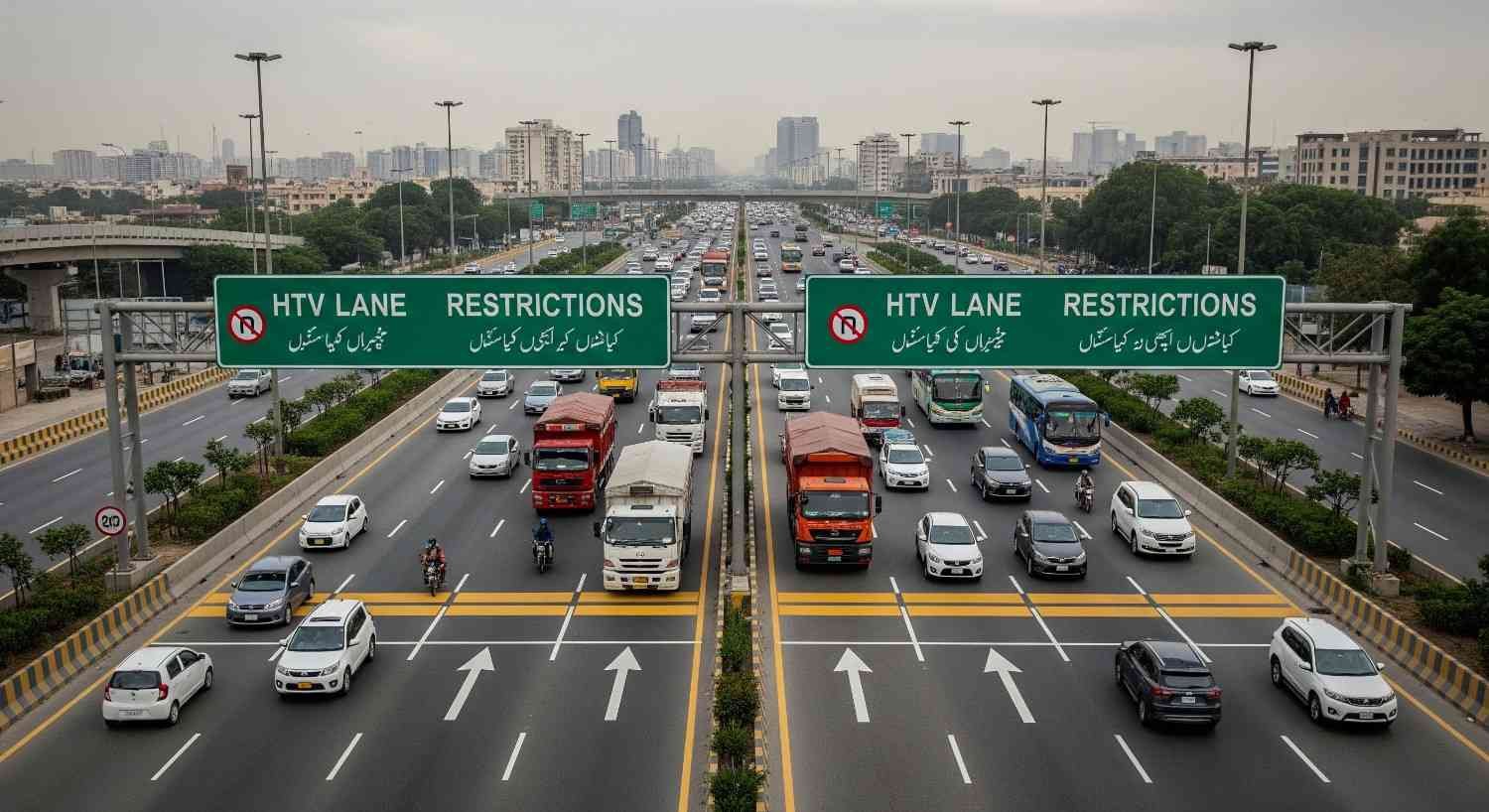
Heavy Vehicles on Karachi Roads to be Restricted to Dedicated Lane
Karachi’s bustling thoroughfares are set to see a significant change as the city commissioner announced a new policy restricting heavy transport vehicles (HTVs) to a dedicated lane. This strategic move aims to enhance traffic flow and improve road safety by separating slower-moving freight traffic from faster passenger vehicles.
The decision, made at a meeting chaired by Commissioner Hasan Naqvi on Monday, follows discussions on various issues plaguing the city’s transport sector. These included the persistent parking challenges faced by goods transporters, the process of issuing HTV licenses, and the necessity of robust registration and insurance for commercial vehicles.
HTV Lane Implementation and Speed Limits
Officials confirmed that the new HTV lane will be clearly marked with “HTV” signage and painted lines. Once these markings are in place, heavy vehicles will be exclusively permitted to travel within this designated corridor. A strict maximum speed limit of 30km/h will be enforced within this lane.
Commissioner Naqvi emphasized that any heavy vehicle found violating these regulations, by deviating from the lane or exceeding the speed limit, will face stern penalties. This initiative seeks to bring order to the movement of commercial traffic, a long-standing concern for residents. SindhNews.com has been closely monitoring these developments.
Addressing Parking and Infrastructure Challenges
The meeting delved into the root causes of congestion. Rapid urban development in Karachi has unfortunately led to a scarcity of suitable space for trucks to load, unload, and park. This deficiency has forced many vehicles to utilize side streets and informal areas, creating significant traffic bottlenecks and safety hazards.
The Sindh government is exploring potential solutions, including a proposed terminal for goods vehicles. This facility is envisioned to offer secure parking, maintenance services, and customs clearance points, addressing critical infrastructure gaps. The proposed corridor for the dedicated HTV lane extends from Mai Kolachi to Qayyumabad Bridge.
This policy shift is a proactive step towards a more organized and efficient urban transport system. By segregating heavy traffic and addressing underlying infrastructure issues, Karachi aims to improve road safety and reduce travel times for all road users, offering a positive outlook for the city.