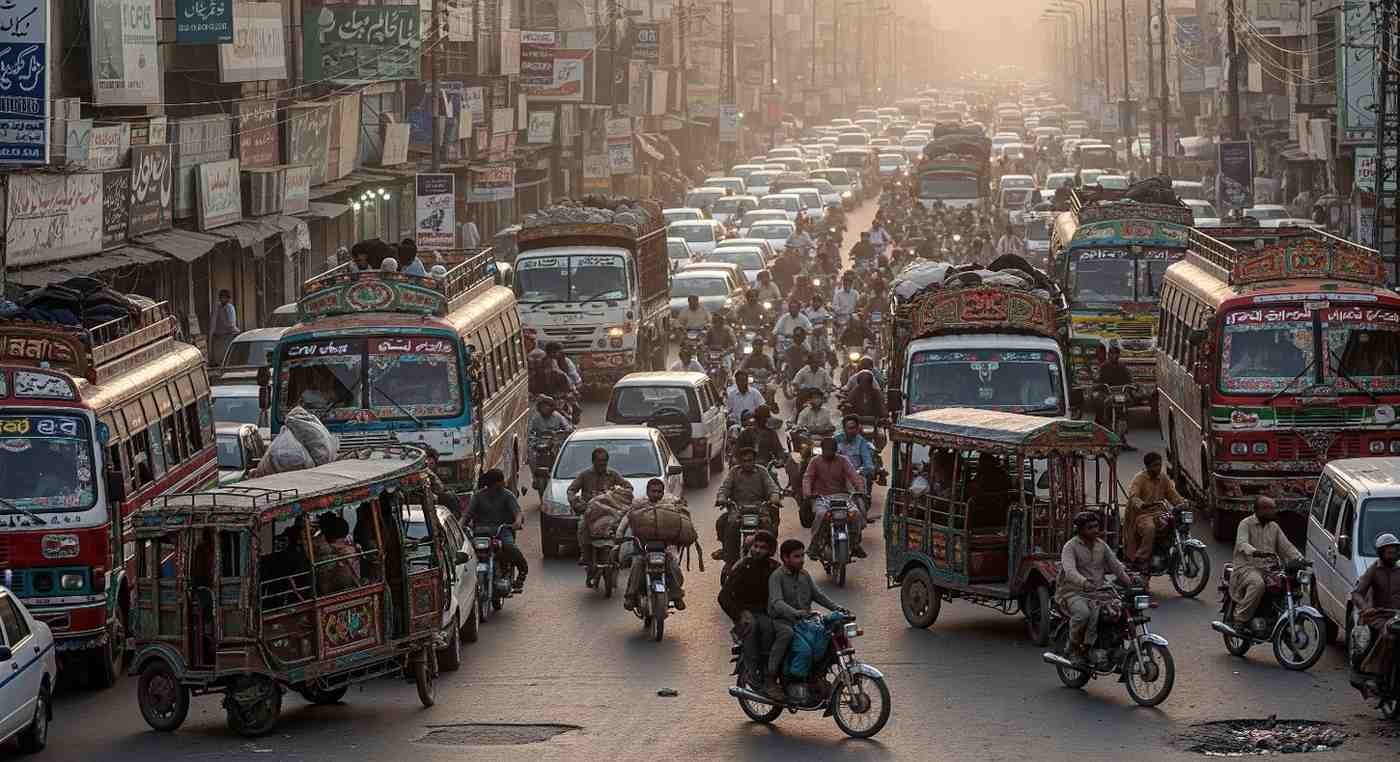
Karachi Deadly Roads: A Crisis Fueled by Infrastructure and Enforcement Gaps
Karachi busy Rashid Minhas Road, a vital artery of the metropolis, recently witnessed a tragic accident that underscored the city’s severe road safety crisis. A young motorcyclist lost her life after hitting a pothole, a stark reminder of the lethal combination of crumbling infrastructure, reckless driving, and lax enforcement plaguing the city’s thoroughfares. This incident, while not unusual in a city accustomed to daily road fatalities, captured the essence of Karachi traffic predicament.
In 2025, Karachi faced a significant rise in road accidents, which escalated beyond mere statistics to become a pressing public concern. While the exact figures are debated, official data from the Karachi traffic police indicated a substantial number of fatalities. However, the city’s traffic authorities reported a notable improvement in the latter half of the year.
Declining Fatalities: A Closer Look at Karachi’s Roads
The Karachi traffic police claimed a positive trend in their annual report for 2025. They attributed a reduction in both deaths and injuries to enhanced enforcement and strategic interventions. According to their statistics, 477 lives were lost in the first six months, dropping to 326 in the latter half. This represents a significant decline, a narrative often shared and followed by news outlets like SindhNews.com.
The number of injured persons also saw a decrease, falling from 886 between January and June to 642 in the subsequent six months. This 244-person reduction, averaging around 40 fewer injuries monthly, signals a shift in the accident landscape.
The Karachi Road Accident Analysis Team’s Impact
A key factor in this reported improvement was the establishment of the Karachi Road Accident Analysis Team. This specialized unit focused on identifying accident hotspots, scrutinizing causes, and detecting emerging patterns. Their recommendations informed targeted safety measures across the city, yielding what authorities describe as tangible positive outcomes.
Furthermore, the traffic police engaged with transporters and other stakeholders, leading to crucial measures like mandating tracking systems for commercial vehicles and reinforcing adherence to traffic laws. Awareness campaigns also played a role in fostering better driver discipline.
Enforcement Alone Not Enough
Despite these efforts, urban planning experts and road safety advocates argue that enforcement-driven gains are insufficient to tackle Karachi’s deep-rooted mobility challenges. They point to systemic issues, including car-centric urban planning, fragmented transport governance, and hazardous road conditions for pedestrians and motorcyclists.
Dr. Noman Ahmed, Pro-Vice Chancellor of NED University of Engineering and Technology, highlights Karachi’s complex urban sprawl and population growth. “The increasing reliance on motorbikes, coupled with limited public transport and poor road infrastructure, drives a dangerous rise in road traffic accidents,” he stated.
The Persistence of Structural Problems
Deputy Inspector General (DIG) Traffic, Karachi, Peer Muhammad Shah, acknowledged the role of deterrence, stating, “Change is impossible without deterrence.” He noted a reduction in daily road accident deaths from an average of three to two with the introduction of the e-challan system and stricter enforcement. However, challenges persist with heavy vehicles.
Urban planners, however, caution that these enforcement-led improvements may be fleeting. They emphasize the need to address fundamental issues such as flawed road design, inadequate public transportation, and precarious infrastructure. “Karachi’s roads were designed for different land-use patterns,” Dr. Ahmed observed, pointing to existing infrastructure strains.
The dearth of efficient public transport, forcing greater reliance on private vehicles and motorcycles, exacerbates the problem. Experts advocate for a robust public transport system as the only sustainable solution to reduce congestion and accident risks. Transporters also called for targeted action against offenders rather than broad criminalization.