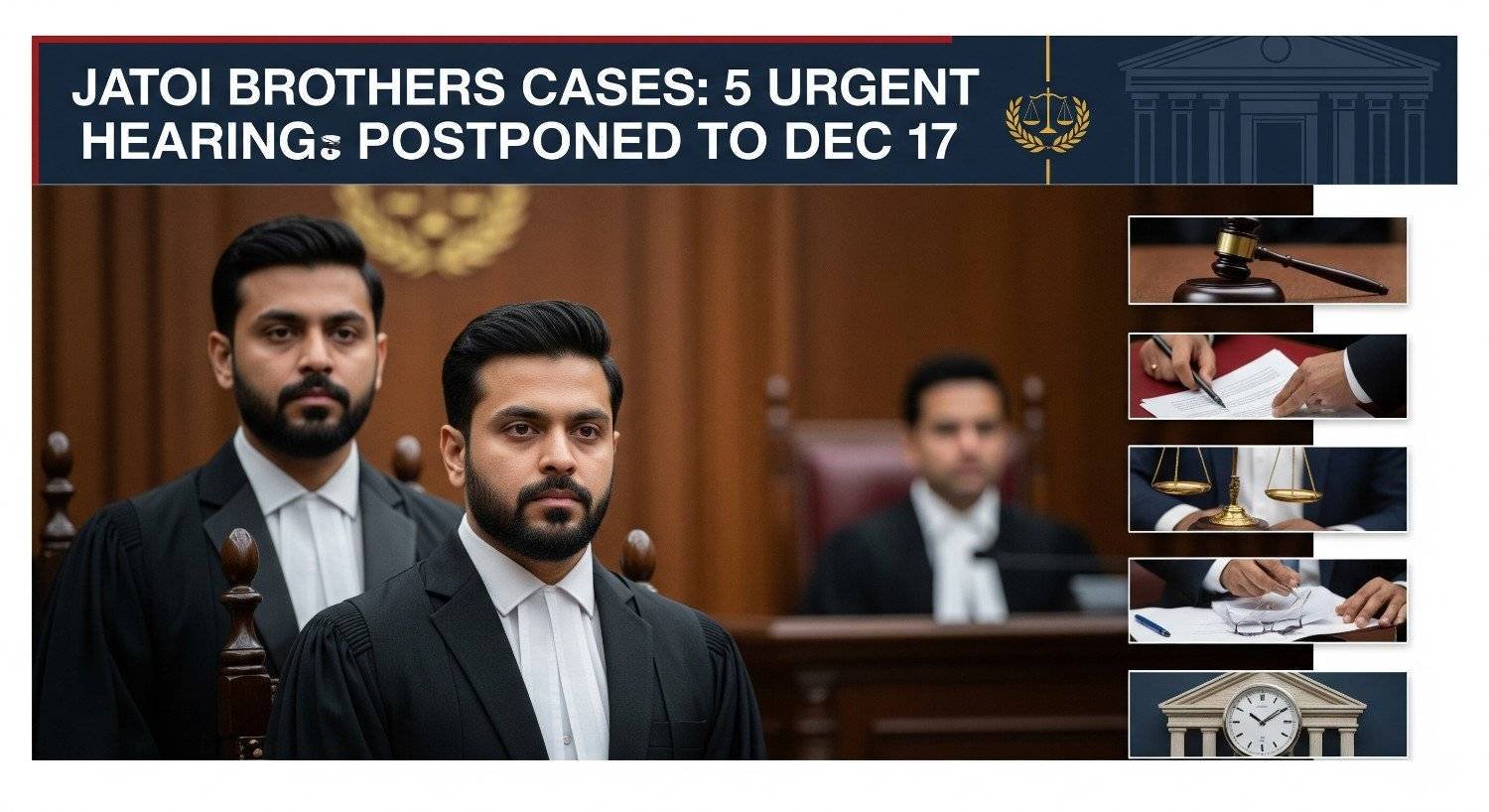
Summary: The hearing for five high-profile cases involving the Jatoi brothers has been adjourned, with the new date set for December 17. This latest postponement extends the ongoing legal process surrounding these significant matters, maintaining public and media attention on their outcomes within the judicial system.
The hearing of five cases against the Jatoi brothers has been postponed, with judicial proceedings now scheduled to resume on December 17. This latest adjournment marks another development in a series of legal actions that have garnered significant public attention and scrutiny across the region.
These cases, which involve various allegations, have been closely monitored by the public due to their high-profile nature. The Jatoi brothers’ legal battles have frequently appeared in regional news outlets, highlighting the intricacies and often lengthy timelines characteristic of the judicial process.
Understanding Postponements in Jatoi Brothers Cases
Postponements in judicial proceedings are not uncommon and can occur for a variety of reasons. Such factors might include the non-appearance of witnesses, legal counsel requests for additional preparation time, court scheduling conflicts, or other procedural matters. While the specific reason for this particular postponement of the Jatoi brothers cases was not immediately detailed, these are standard occurrences within the legal framework. For further updates, one might consult sources like SindhNews.com.
The prolonged nature of these legal proceedings often leads to increased public interest and debate about the efficiency and speed of the justice system. Each new development, including adjournments, contributes to the narrative surrounding these complex trials.
The December 17 date will be a crucial next step in these ongoing litigations. Families of victims and the broader public continue to await definitive outcomes, hoping for timely resolutions in what have become emblematic cases of the country’s legal landscape. The progression of the Jatoi brothers cases remains a notable point of focus for legal experts and citizens alike.
The continued series of hearings underscore the persistent efforts to navigate the complexities inherent in such high-stakes legal challenges. This recent postponement reiterates the often methodical and time-consuming journey towards judicial finality.