Summary
The Sindh government has initiated comprehensive efforts to preserve heritage sites in Hyderabad, especially within City Taluka. These actions include a province-wide survey to update identified protected properties and the establishment of a dedicated Heritage Preservation Cell. This initiative aims to document, protect, and promote the city’s invaluable cultural and historical assets for future generations.
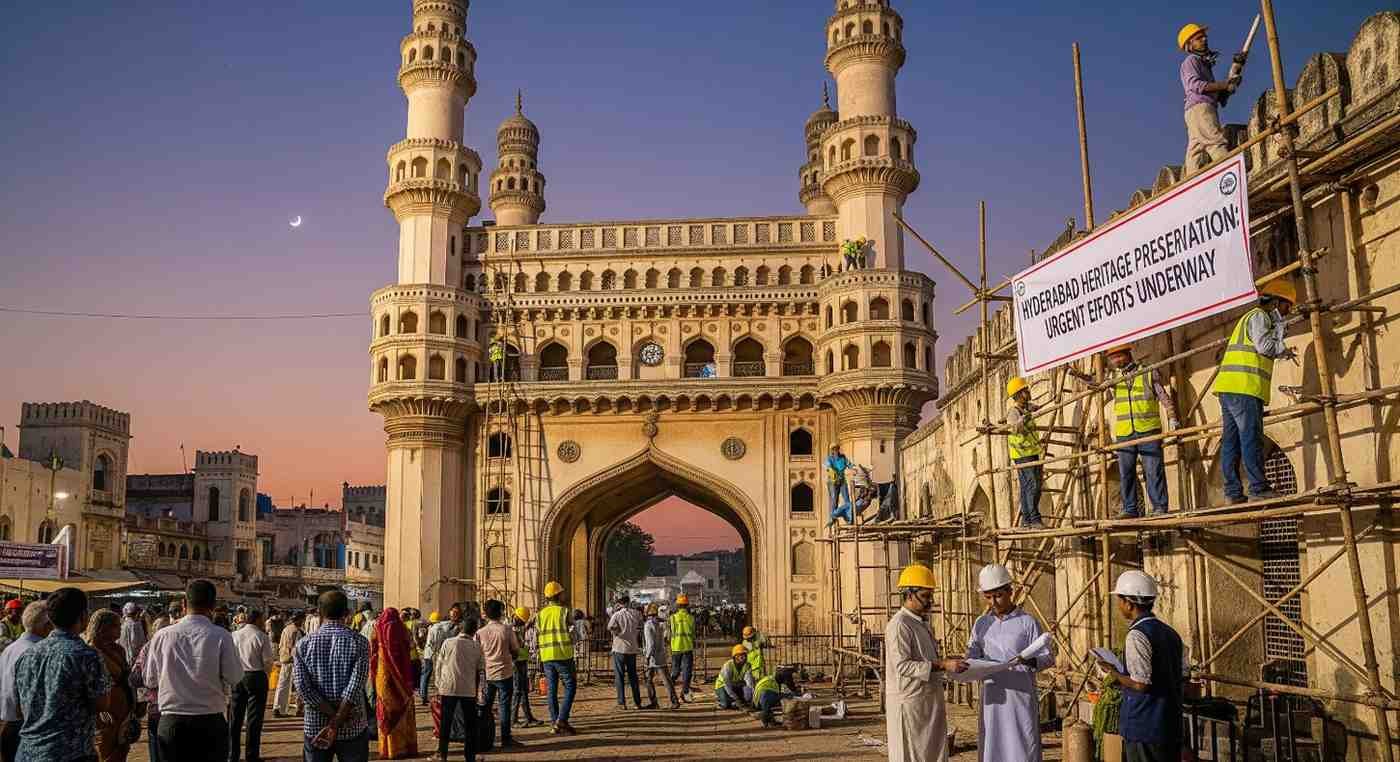
Work begins to preserve heritage sites in Hyderabad, as the Sindh government intensifies its commitment to safeguarding the city’s rich cultural legacy. Following numerous complaints regarding violations of heritage protection laws, officials have launched a comprehensive initiative to secure historical structures. This concerted action stems from a pivotal meeting chaired by Chief Secretary Syed Asif Hyder Shah on December 29, which resolved to enhance the protection, preservation, and documentation of cultural assets across the entire province.
A Renewed Focus on Heritage Preservation in Hyderabad
The meeting set in motion a province-wide survey of heritage buildings, designed to update data from the last assessment conducted in 2017. That previous survey had successfully identified and officially designated 3,371 structures across Sindh as ‘protected heritage properties.’ A significant number of these culturally and historically vital monuments are concentrated within Hyderabad’s City taluka, an area renowned for its older heritage sites.
To bolster these renewed efforts, a dedicated Heritage Preservation Cell has been established within the office of Assistant Commissioner (AC) City, Syed Noor Hussain. The cell’s primary objective is the uplift, preservation, documentation, and promotion of Hyderabad’s architectural and cultural heritage, particularly within the Old City. AC Syed Noor Hussain stated, “The cell will function as a dedicated unit for identification, documentation, mapping, archiving, and uplifting such sites within Hyderabad’s City taluka, and also disseminating information to the public.” This 10-member cell, comprising local officials, signifies a proactive step for the city.
Its terms of reference are extensive, encompassing a wide array of sites, including monuments, historic buildings, bazaars, tombs, shrines, and temples. The cell is tasked with identifying sites, preventing and removing encroachments, and ensuring the structural integrity and historical character of these valued locations. Comprehensive documentation, utilizing photographs, videos, and drawings, will contribute to a publicly accessible digital archive. Close coordination with government departments, heritage experts, and civil society organizations is also a key mandate, with updates available readily on SindhNews.com, to foster broader engagement.
Despite these initiatives, challenges persist. An official from the culture department recently highlighted concerns regarding ongoing construction at the protected site of Pucca Qila. This activity, believed to be on a substantial plot within the fortification, potentially violates the Antiquity Act. Authorities have been urged to intervene promptly to halt further destruction. This incident underscores the critical importance of the preservation efforts now underway.
The intensified work to preserve heritage sites in Hyderabad represents a vital commitment by the Sindh government to protect its cultural heritage. The establishment of the Heritage Preservation Cell and the province-wide survey signal a proactive approach to safeguarding these invaluable assets for current and future generations, despite ongoing challenges.