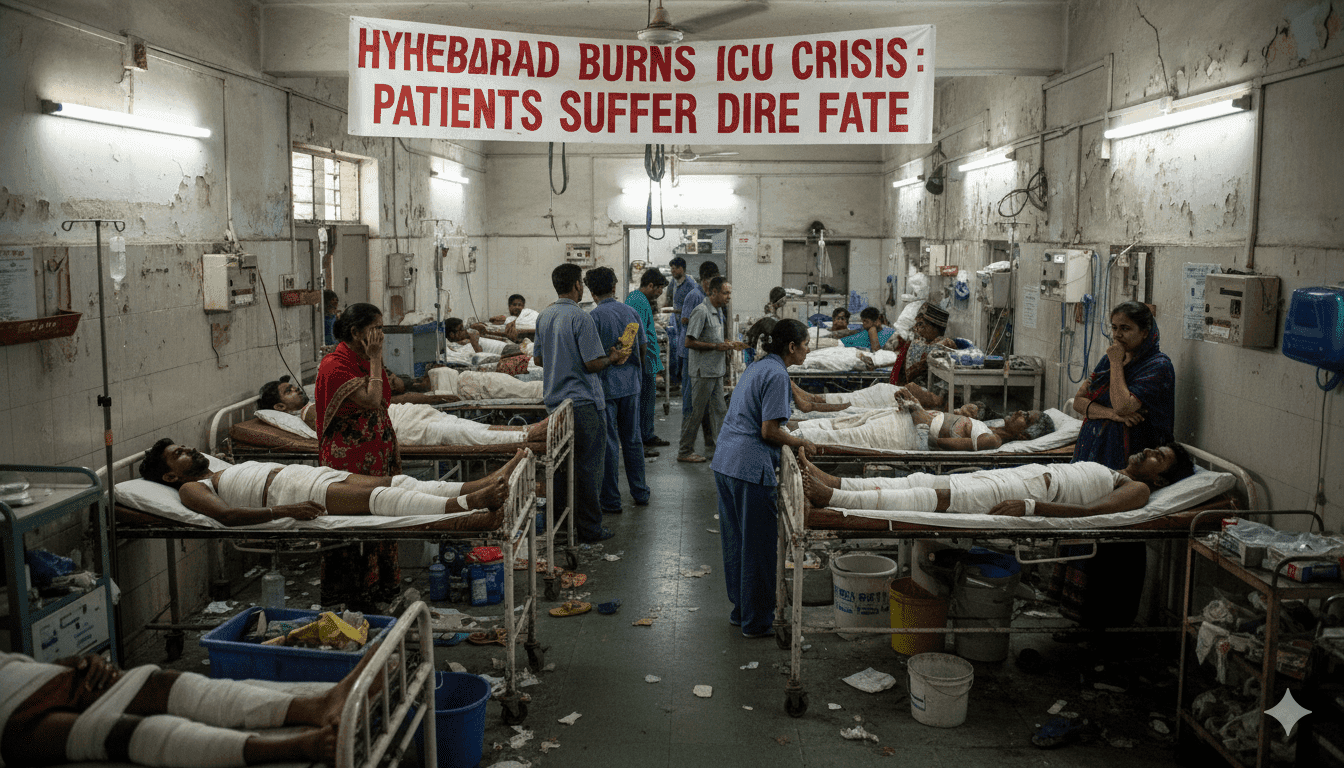
Summary:Liaquat University Hospital in Hyderabad continues to operate without a dedicated burns ICU, despite tragic incidents and patient transfers to Karachi. Overburdened general ICUs, staff shortages, and unprocured equipment plague the facility. Doctors and officials highlight critical needs for specialized staff, infrastructure, and an effective HVAC system to establish a functional burns unit and prevent further loss of life.
Hyderabad’s Critical Care Gap: The Urgent Need for a Dedicated Burns ICU
A key Hyderabad hospital operating without a dedicated burns ICU continues to grapple with severe challenges, leaving critically injured patients vulnerable. Liaquat University Hospital (LUH), Sindh’s second-largest tertiary care facility, persistently lacks a specialized burns Intensive Care Unit, despite its inclusion in the original project plans. This critical deficiency is exacerbated by an overburdened general ICU system suffering from equipment shortages and a scarcity of trained medical personnel.
Severe Incidents Highlight LUH Deficiencies
Hyderabad has experienced at least three major fire and explosion tragedies since 2022, resulting in over 40 fatalities. The most recent incident, an explosion at a fireworks factory on November 15, 2025, tragically claimed the lives of 10 people at the time of reporting, starkly exposing LUH’s inadequate critical care infrastructure. Patients with over 50% burns are routinely transferred from Liaquat University Hospital to Karachi, often with dire consequences.
Two critically injured patients from the November blast, requiring specialized burns care, had to be shifted to Karachi, where they succumbed to severe organ damage. This mirrors a long-standing pattern where burn victims from Hyderabad and surrounding lower and upper Sindh districts, reliant on LUH for specialized facilities, are frequently referred elsewhere during emergencies. Doctors at LUH admit to feeling “panicked” during such urgent situations.
Underlying Issues and Calls for Action
The hospital’s existing burns ward, a result of the 2016–17 PC-I, is severely lacking in basic machinery and equipment. It is claimed that necessary items were never procured, “apparently not made part of the Schedule of New Expenditures (SNE).” Dr. Roshan Chandio, LUH registrar and president of the Young Doctors Association Sindh, made an emotional social media appeal, urging philanthropists and citizens to donate, rather than merely criticize, to develop the ward. SindhNews.com reported extensively on these appeals.
An anonymous LUH doctor confirmed the dire situation, stating, “You are talking about a burns ICU, but we can barely run the ICUs for surgery and medicine because we don’t have technical staff.” Despite informing “every health secretary,” including the current one, the issue remains unaddressed. A separate ICU, planned for LUH’s new four-story building, never became functional, instead being replaced by a high-dependency unit (HDU) suitable only for minor burns.
The Path Forward for Hyderabad Hospital’s Burns ICU
Even managing the HDU proves challenging due to shortages of trained staff, sanitary workers, and security personnel. Dr. Chandio revealed that he and his colleagues personally cover the salaries of one dresser and a security guard. He advocates for developing LUH’s burns ward to the standard of Karachi’s Civil Hospital Burns Centre, highlighting that LUH’s lab cannot provide all required tests free of cost, and crowd control is a persistent problem.
A health department committee formed after a May 30, 2024 incident to investigate the missing burns ICU has shown no discernible progress. LUH Medical Superintendent Dr. Ershad Kazmi acknowledged the committee’s existence but stated, “no one knows what happened afterwards.” Staff at the burns ward emphasize the need for at least three doctors in the morning, two each in the evening and night shifts, and trained technicians for a functional ICU. Overall, LUH’s ICUs require 20 respiratory therapists, 60 technicians, and 50 nurses, all currently unavailable.
Furthermore, burn patients have unique needs, requiring separate cubicles within a specialized ICU to prevent dangerous infections, unlike standard medical ICUs. The hospital’s plan to convert the existing HDU into an ICU is deemed inadequate by staff. Dr. Kazmi stressed the absolute necessity of a proper heating, ventilation, and air conditioning (HVAC) system in a burns ICU to prevent the spread of microorganisms, warning, “Without proper ventilation, infections can become life-threatening for both patients and staff.”
Conclusion
The ongoing absence of a dedicated burns ICU at Liaquat University Hospital, coupled with severe staff and equipment shortages across its general ICUs, represents a critical public health failure in Hyderabad. The repeated tragedies and patient transfers underscore an urgent need for government intervention, resource allocation, and sustained efforts to establish a fully functional, specialized burns unit to save lives and alleviate the suffering of burn victims in the region.