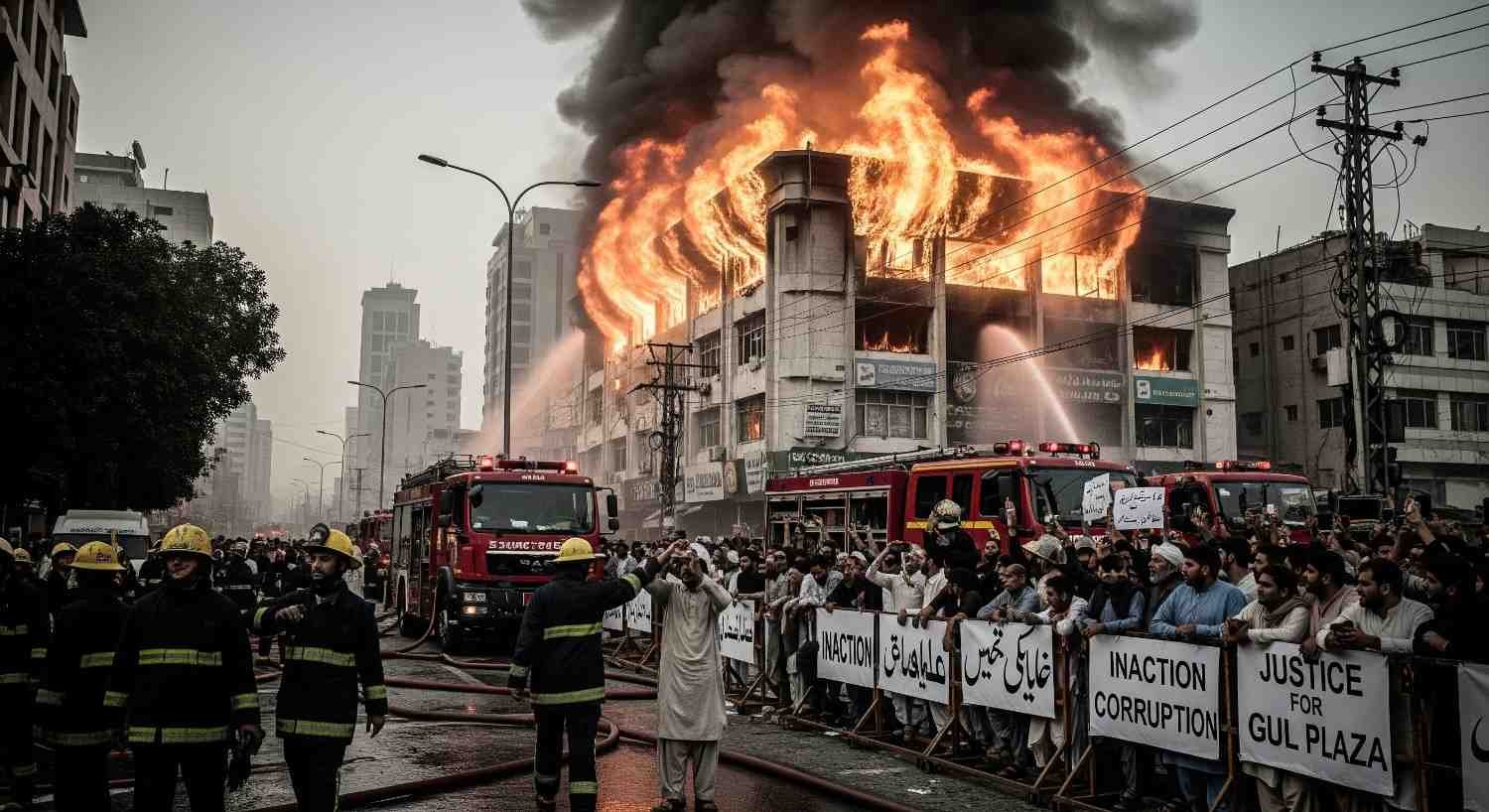
‘Inaction, Apathy, and Corruption’ Blamed for Gul Plaza Inferno
The catastrophic fire at Karachi’s Gul Plaza, which tragically claimed at least 23 lives and left dozens missing, has been attributed by MQM-P leader Dr. Farooq Sattar to “inaction, apathy, and corruption spanning over two decades” within the Sindh government. Sattar voiced this strong accusation in the National Assembly, questioning the government’s priorities for Karachi.
The MQM leader highlighted the significant delay in the arrival of key officials at the scene. He stated that Sindh Chief Minister Murad Ali Shah had arrived “22 hours” after the fire erupted, a delay he pointed to as evidence of governmental indifference. Karachi Mayor Murtaza Wahab’s late appearance was also noted, further fueling criticisms of apathy.
The Cost of Delayed Response and Underfunded Services
Dr. Sattar emphasized that the people of Karachi deserved answers regarding their city’s low priority on the governmental agenda. He lamented the state of firefighting capabilities in Karachi, deeming them insufficient for the city’s vast size. He called for the government to “take ownership of Karachi” and acknowledge the incident as a national tragedy requiring immediate, unified action.
Speaking to SindhNews.com, an observer noted, “These recurrent tragedies underscore a systemic failure. We need a shift from political blame games to practical solutions.”
Reforming Governance for a Safer Karachi
The proposed solutions from Dr. Sattar and echoed by Defence Minister Khawaja Asif center on strengthening local governance. Asif stated that it’s “not humanly possible to manage Karachi in its present structure” and advocated for empowering local government systems. He recalled attempts to include clauses for strengthening local bodies in the 28th Constitutional Amendment, which were ultimately withdrawn due to political disagreements. He stressed the need for people to have representation and accountability at the neighborhood level.
However, PPP leader Shehla Raza countered some of the claims, emphasizing that the immediate response to the fire involved dispatching multiple fire tenders and acknowledging traffic delays. She also asserted that “Sindh is the only province where local government systems are working,” challenging the narrative of a complete absence of such structures.
The Gul Plaza inferno serves as a stark reminder of the vulnerabilities within urban infrastructure and governance. The extent of the devastation has ignited a crucial debate about accountability, resource allocation, and the fundamental structure of local governance in Pakistan’s largest city. The outcome of these discussions will be critical in preventing future tragedies.