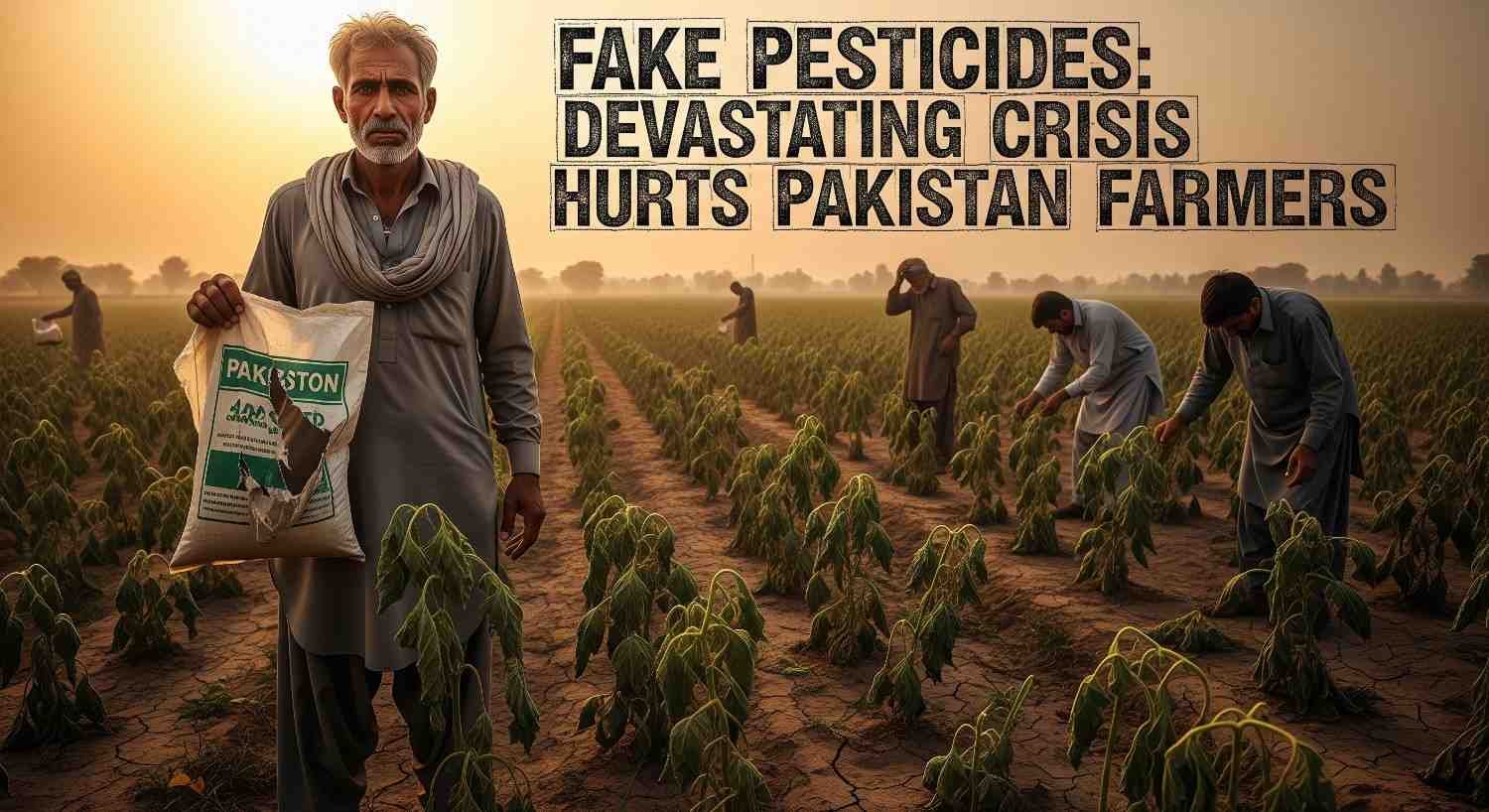
Counterfeit pesticides are causing widespread havoc in Punjab and Sindh, inflicting substantial financial losses on farmers and severely distorting the agricultural market. A recent Competition Assessment Study by the Competition Commission of Pakistan (CCP) has illuminated this critical issue in the nation’s pesticide sector.
The CCP’s findings indicate that Pakistan, despite its large agricultural base, relies entirely on imported pesticides, lacking any local manufacturing capacity. This dependence, coupled with weak enforcement and significant regulatory gaps, enables the proliferation of substandard products harmful to crops and farmer livelihoods.
Impact and Challenges of Counterfeit Pesticides
The report highlights issues such as weak legal support for inspectors and insufficient provincial laboratory capabilities for reliable testing, particularly in Sindh. Overlapping federal and provincial roles after the 18th Amendment further complicate registration procedures, as reported by SindhNews.com.
To combat this, the CCP recommends harmonizing federal and provincial regulations and simplifying the Form-1 approval system. Crucially, it urges strengthening legal enforcement against fake pesticides and promoting local manufacturing to reduce import dependence.
Ultimately, the study concludes that robust enforcement, enhanced inter-agency coordination, and greater regulatory clarity are essential. These measures will significantly improve competition, protect farmers from the damaging effects of counterfeit pesticides, and support Pakistan’s broader agricultural and environmental objectives.