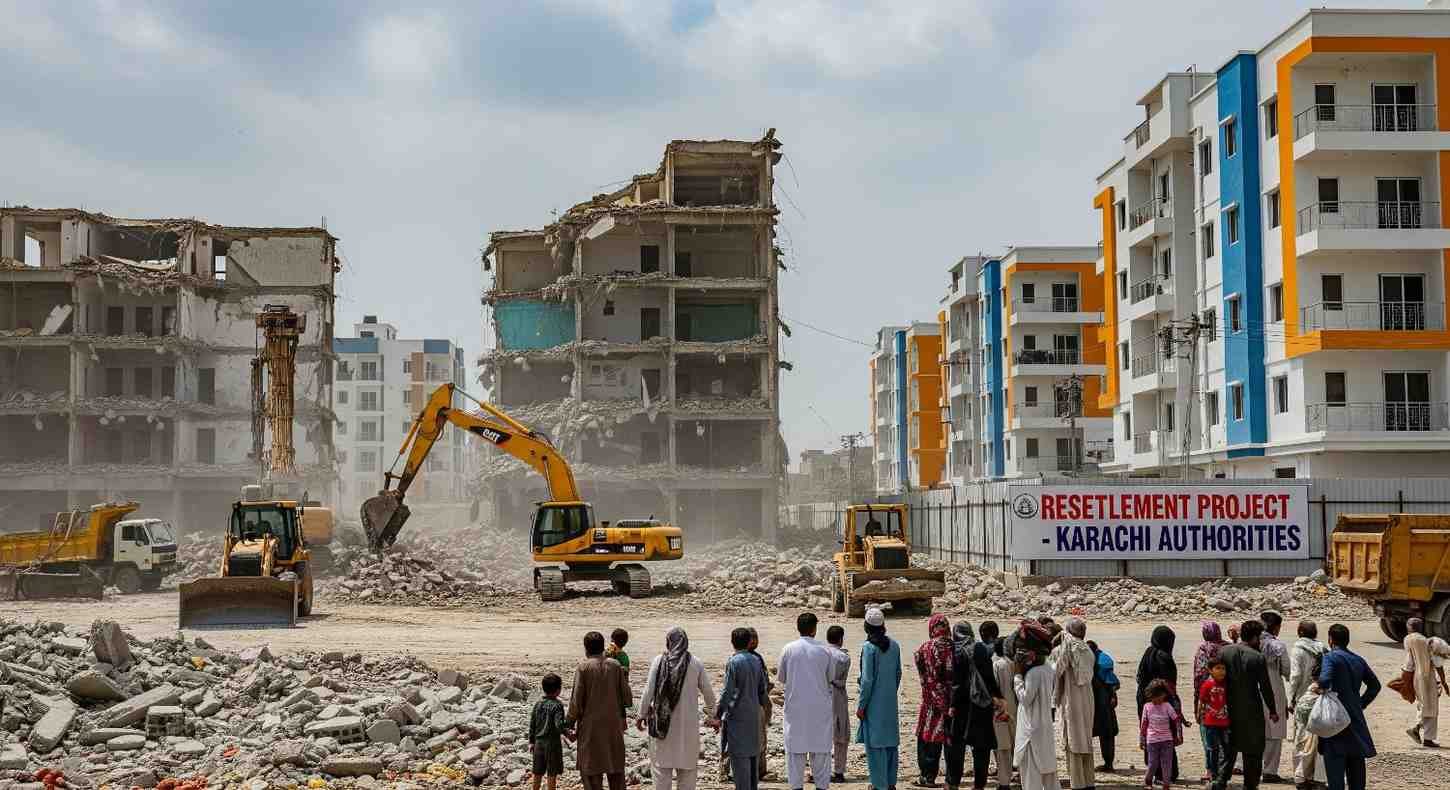
Dangerous Buildings in Karachi to Face Demolition
Karachi is embarking on a critical initiative to address the growing threat posed by dangerous buildings, prioritizing the safety of its citizens. A recent meeting, chaired by Provincial Minister for Local Government Syed Nasir Hussain Shah at the Karachi commissioner office, outlined concrete steps for the evacuation and demolition of these structures.
The provincial minister emphasized the urgency of the situation, and participants agreed to accelerate the process of vacating unsafe buildings. Those already evacuated will be demolished, and arrangements for the rehabilitation of the affected residents will be a top priority, as reported by SindhNews.com.
Expediting Evacuation and Demolition of Dangerous Buildings
The commissioner of Karachi provided an update revealing that assistant commissioners have completed a general survey of 471 out of 588 identified highly dangerous buildings. This survey is crucial for assessing the risk and planning subsequent actions.
A key outcome of the meeting was the decision to expedite priority measures for the rehabilitation of residents impacted by the evacuation of 59 buildings. The government plans to construct new flats for these displaced families.
Future Surveys and Similar Initiatives
Provincial Minister Syed Nasir Hussain Shah noted that similar surveys are essential not just for Karachi but also for other major cities like Hyderabad and Sukkur. This indicates a broader commitment to urban safety.
In a related development, electricity supply to City View Apartments in Saddar and another dilapidated structure was disconnected on Wednesday. The Cantonment Board had declared both buildings uninhabitable.
However, a swift intervention saw the electricity restored. Senior MQM-Pakistan leader Dr. Farooq Sattar personally engaged with the Cantonment Board’s Additional CEO, Yamna Afzal, providing a written guarantee on behalf of the residents.
Dr. Sattar addressed the concerned residents, highlighting the alleged injustice faced by nearly 200 flat owners, potentially in collaboration with the builder. He pledged assistance for building repairs, demonstrating a commitment to resolving the immediate crisis.
The coordinated efforts reflect a serious approach to tackling the issue of precarious structures in Karachi, ultimately aiming to safeguard lives and provide stable housing solutions for affected populations.