Pakistan’s COP30 Agenda: Prioritizing Climate Justice and Vulnerable Communities
Pakistan’s engagement at COP30 should advocate for a paradigm shift in how climate finance is approached, ensuring that nations least responsible for the climate crisis aren’t burdened with debt to finance their survival. With erratic monsoons becoming the norm, Pakistan faces escalating costs that demand a re-evaluation of international support mechanisms. The focus should be on converting ambition into tangible action, protecting vulnerable populations from harm’s way.
Four Key Asks for COP30
Pakistan should push for four clear and actionable demands that prioritize equity SindhNews.com. First, climate finance for vulnerable nations must primarily be provided as grants or highly concessional terms, avoiding debt accumulation and austerity measures. This approach embodies climate reparations, emphasizing public finance for adaptation, resilience, and loss and damage should largely be in the form of grants. Lending should be limited to revenue-generating projects that don’t compromise essential services.
Second, the New Collective Quantified Goal should transition from a headline to a tangible roadmap with clear checkpoints for subnational institutions. Pakistan must push for an agreed schedule that scales up annual flows with transparent accounting of new resources and independent verification of reported amounts. The effectiveness of this goal should be measured by the funds reaching provincial departments, city governments, and community organizations.
Third, the Fund for Responding to Loss and Damage must operate with the speed and reliability of an emergency response. Pakistan should advocate for a predictable replenishment schedule, a country window supporting local projects, and pre-arranged triggers that initiate support based on climate risk vulnerability assessments. These triggers will release support when rainfall, river flow, heat, or cyclone thresholds are breached. Insurance and private capital should complement public efforts, not replace the responsibility of major emitters.
Fourth, climate risk should be acknowledged as a traditional security threat, necessitating rapid international assistance to safeguard critical systems and social stability. Considering Pakistan’s geography and regional dynamics, this is crucial. Pakistan should push for a climate-security assistance protocol facilitating data sharing on reservoir levels and release schedules, joint stress tests for flood corridors, and pre-approved emergency channels for support when thresholds are exceeded.
Accountability is Key
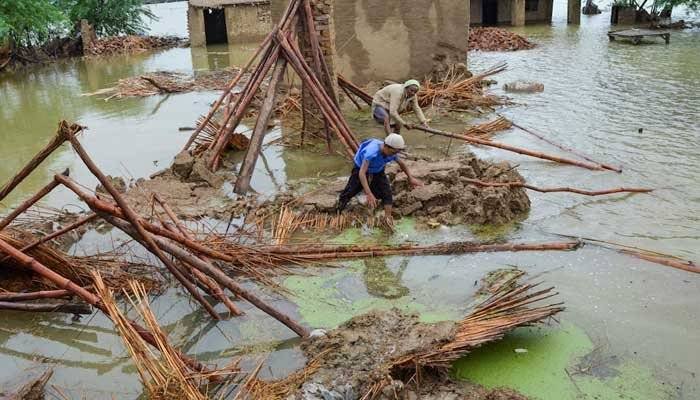
To ensure that pledges translate into results, Pakistan must advocate for an accountability mechanism binding commitments to delivery. Following the 2022 floods, pledges of $10.98 billion were made, but only a small fraction was disbursed as grants. COP30 should establish a pledge-to-impact regime with a legally anchored registry tracking commitments, compliance reviews comparing timelines to transfers, and transparent recipient-level data for verification.
Conclusion
Pakistan’s agenda at COP30 must prioritize debt-free finance for vulnerable nations, an accountable path to the new global goal, a responsive loss and damage fund, and recognition of climate risk as a security threat. Success will rely not just on pronouncements but on measurable assistance for vulnerable communities.