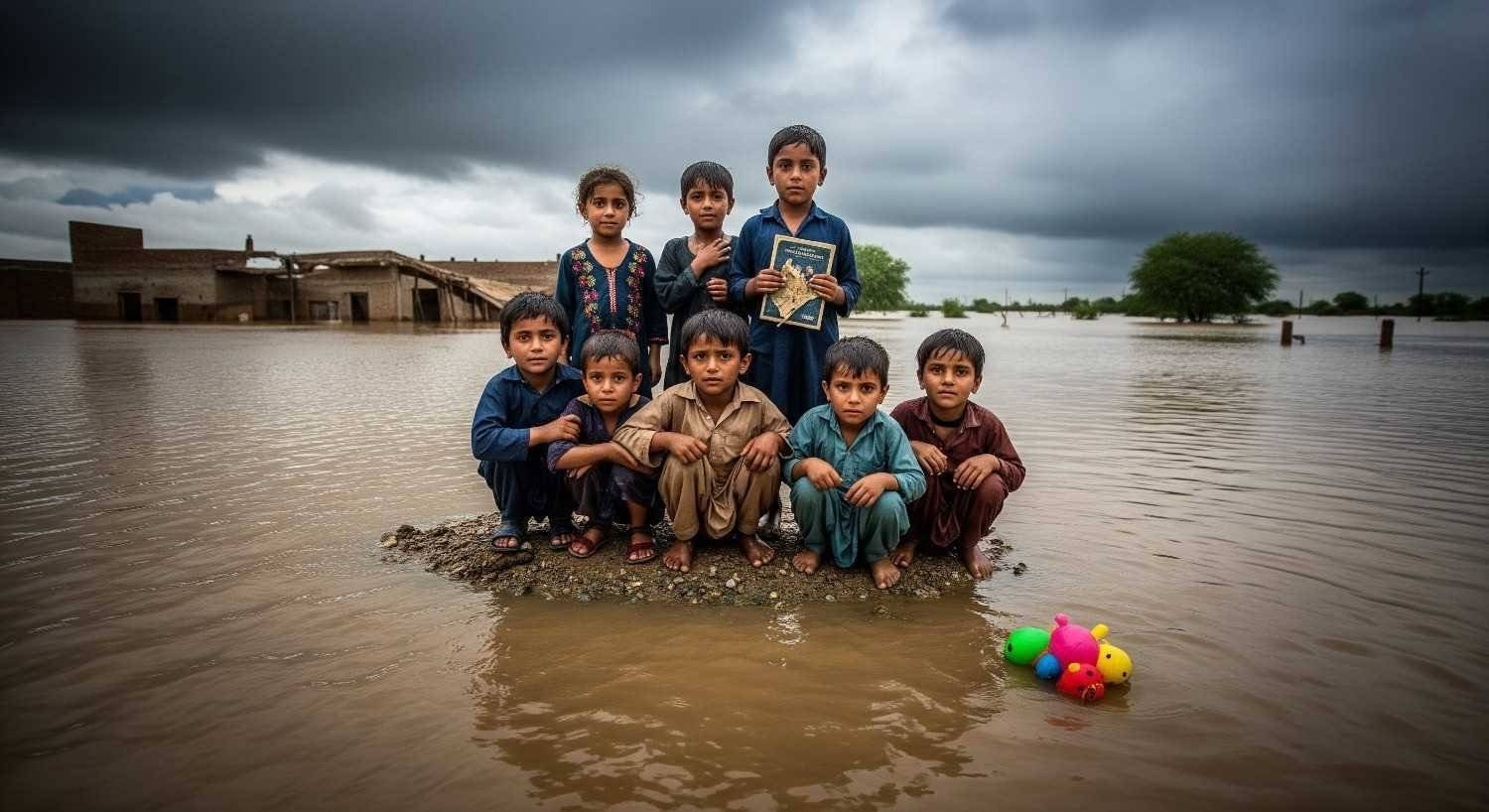
Climate Change and the Mental Health of Children in Pakistan
Climate change is rewriting childhood in Pakistan, creating a hidden crisis of mental health. SindhNews.com reports that the escalating frequency and intensity of floods and other extreme weather events are leaving a deep psychological impact on children, who are increasingly plagued by anxiety and trauma.
The Psychological Impact of Floods
The 2022 floods brought the crisis into sharp focus. Approximately 70% of parents reported that their children exhibited depressive symptoms linked to the fear of floods, based on interviews conducted with parents in Sindh following the 2022 floods. The trauma manifests in various ways, from fear of separation to physical ailments linked to underlying anxiety.
A Systemic Failure to Address Mental Health
Pakistan’s social protection programs, such as the Benazir Income Support Programme, don’t routinely include mental health services. This gap is further exposed by a scarcity of trained professionals and a lack of specific mental health policies in disaster response. Consequently, children are left to cope with these challenges without adequate support.
Promising Initiatives and Future Needs
The government is taking steps to address mental health support. In Khyber Pakhtunkhwa, the government is piloting a Mental Health and Psychosocial Support (MHPSS) model in partnership with German development agency GIZ. However, these are often donor-dependent and fragmented. The NDMA’s National Disaster Risk Reduction Policy (2025–2030) acknowledges the need for psychosocial support.
The Economic and Social Cost
Ignoring this mental health dimension has significant economic consequences. A 2022 report estimated the economic burden of untreated mental illness in Pakistan at $6.2 billion. Persistent anxiety and trauma can lead to reduced productivity and impaired cognitive development, thereby affecting society.
Conclusion
Adequate mental health support must be integrated into climate change responses and social protection plans. Protecting children goes beyond providing for their physical needs; it also necessitates ensuring their emotional well-being.