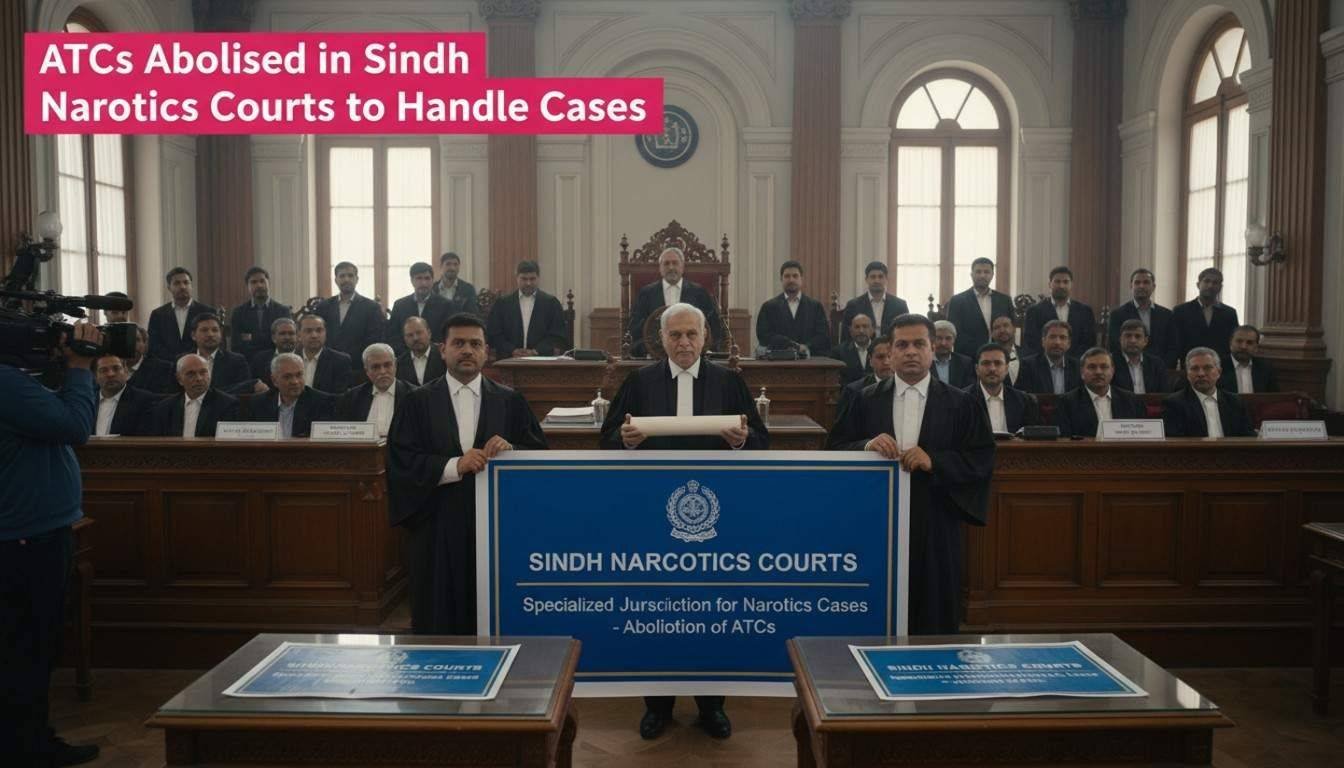
Sindh cabinet abolishes 14 Anti-Terrorism Courts, Prioritizes Narcotics Cases
The Sindh cabinet recently made a significant decision, abolishing 14 Anti-Terrorism Courts (ATCs) across Karachi and Hyderabad. This move reflects an improved law and order situation and a reduced caseload for these specific courts. The provincial government has opted to re-designate these courts as anti-narcotics courts to address the increasing number of drug-related cases.
During a cabinet meeting chaired by Chief Minister Syed Murad Ali Shah, the proposal from the Home Department received approval. Thirteen of Karachi’s 20 ATCs and one in Hyderabad will now expedite narcotics cases as special courts. This re-designation will establish specialized courts across divisions including Karachi, Hyderabad, Mirpurkhas, Shaheed Benazirabad, Sukkur, and Larkana, as reported on SindhNews.com.
The decision aligns with legal provisions under Section 13 of the Anti-Terrorism (Sindh Amendment) Act, 2025, which grants the provincial government the authority to adjust the number of courts as necessary. The remaining ATCs in Sindh will undergo reorganization to ensure efficient handling of pending terrorism-related cases.
Key Initiatives from the Sindh Cabinet Meeting
Beyond judicial reforms, the Sindh cabinet approved several other crucial initiatives. Among them was the establishment of the Sindh Centre for Excellence on Countering Violent Extremism. Operating under the Home Department, this centre will work to prevent violent extremism, terrorism, militancy, ATCs Abolished in Sindh; Narcotics Courts to Handle Cases, and subversive activities across the province, following the Sindh Centre for Excellence on Countering Violent Extremism Act, 2025.
A significant financial approval saw the cabinet clear a $15 million grant-in-aid for the new Jinnah Postgraduate Medical Centre (JPMC) Emergency Tower in Karachi. This grant, equivalent in PKR, will support utilities and medical equipment for the proposed 12-storey tower. The total estimated cost of the tower is $35 million, with a consortium of PAF-JPMC donors committing $20 million, and the Sindh government providing the remaining $15 million in two equal installments.
The provincial cabinet also gave in-principle approval for acquiring the Habib Insurance/HBL heritage building on M.A. Jinnah Road to establish the Sindh IT Tower. ATCs Abolished in Sindh; Narcotics Courts to Handle Cases ,The IT Department has been directed to obtain necessary assessments from various departments, including the Board of Revenue for price, NED University for structural integrity, and the Culture Department for heritage evaluation.
Residential Plots and Future Engagements by the Sindh Cabinet
Another key approval by the Sindh cabinet involved the allocation of 639 additional residential plots for members of the Karachi Press Club (KPC) within Hawksbay Scheme-42. This decision, alongside the allocation of plots in New Malir Housing Scheme-I and Taiser Town Scheme-45 under an 80/20 cost-sharing policy, aims to support the journalistic community. The lists of 1,271 existing allottees and 639 proposed beneficiaries were confirmed and incorporated.
Chief Minister Syed Murad Ali Shah also announced that cabinet meetings will now be held every fortnight, enhancing the frequency of governmental decision-making. The next session is reportedly scheduled for December 2.
Conclusion
The recent Sindh cabinet meeting underscores a proactive approach to judicial reform, public health infrastructure, and administrative efficiency. By converting ATCs into anti-narcotics courts, the government aims to tackle emerging criminal challenges while bolstering critical services and infrastructure projects across the province. These wide-ranging decisions reflect a concerted effort to address key societal and developmental needs in Sindh.