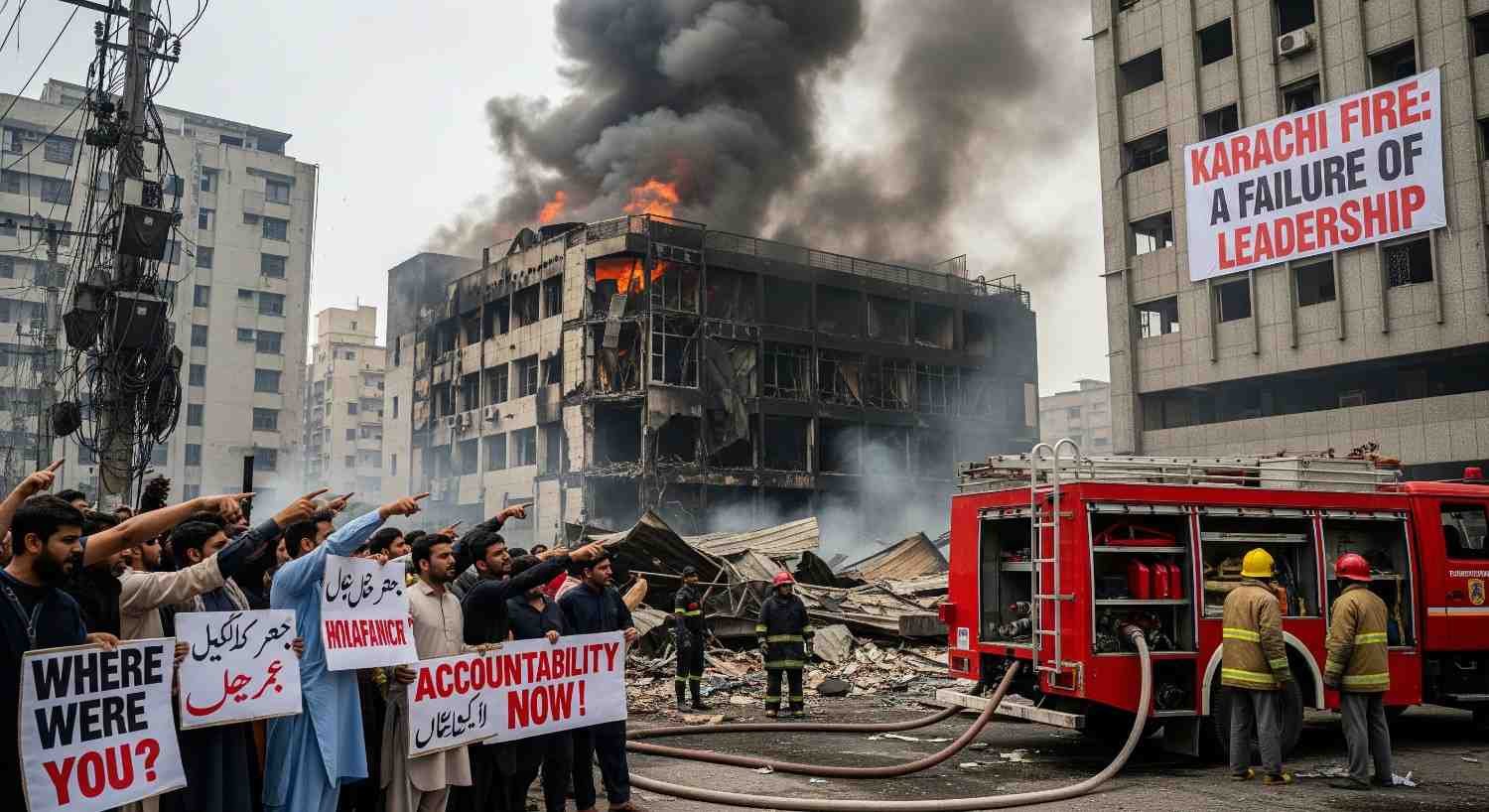
Karachi Faces Demands for Accountability Amidst Gul Plaza Fire Aftermath
Karachi deserves accountability as the city continues to grapple with the devastating aftermath of the Gul Plaza fire. The tragic blaze, which ignited late Saturday night, March 9, 2024, on M.A. Jinnah Road, led to severe structural collapse and a significant loss of life, prompting widespread calls for a thorough investigation into administrative failures.
Rescue operations at the multi-story shopping complex, a prominent commercial hub with an estimated 1,200 shops, extended for days. Despite initial containment on Sunday, flames reignited Monday, prolonging the crisis. By late Monday night, at least 23 bodies had been recovered, some fragmented, according to police and Rescue 1122 officials. Over 70 individuals were still reported missing, underscoring the severity of the disaster.
Why Karachi Deserves Accountability: Systemic Failures Exposed
The Gul Plaza incident has illuminated critical long-standing issues within Karachi’s urban infrastructure. Reports indicate the building lacked fundamental fire safety measures and adequate emergency exits, despite its daily heavy foot traffic and central location. This situation, tolerated for decades, highlights a systemic failure in regulatory enforcement.
Karachi Mayor Murtaza Wahab confirmed the establishment of an inquiry committee to determine responsibility, acknowledging that “problems emerged which need to be investigated for negligence.” The Sindh government has announced Rs10 million in compensation for each victim’s family, alongside promises of forensic verification and rehabilitation support for affected traders. However, public sentiment, widely expressed online, indicates impatience with official assurances, with many perceiving the disaster as a direct result of “criminal misgovernance.” SindhNews.com has also been covering public reactions closely.
Many observers are pushing back against labeling the event merely a “tragedy,” instead calling it an “administrative failure.” This perspective points to a city culture where safety codes are often overlooked, and regulatory bodies are frequently weak or subject to interference. The recurring nature of such incidents in Karachi—from fires to factory collapses—suggests a deeper issue than isolated accidents.
The demand for accountability extends beyond immediate official responses. Citizens are questioning why a structure with known safety deficiencies was allowed to operate unchecked for years. The poignant question remains: will the Gul Plaza fire finally spur meaningful change, or will it join a growing list of forgotten catastrophes, leaving the city to face another day without the accountability it deserves.