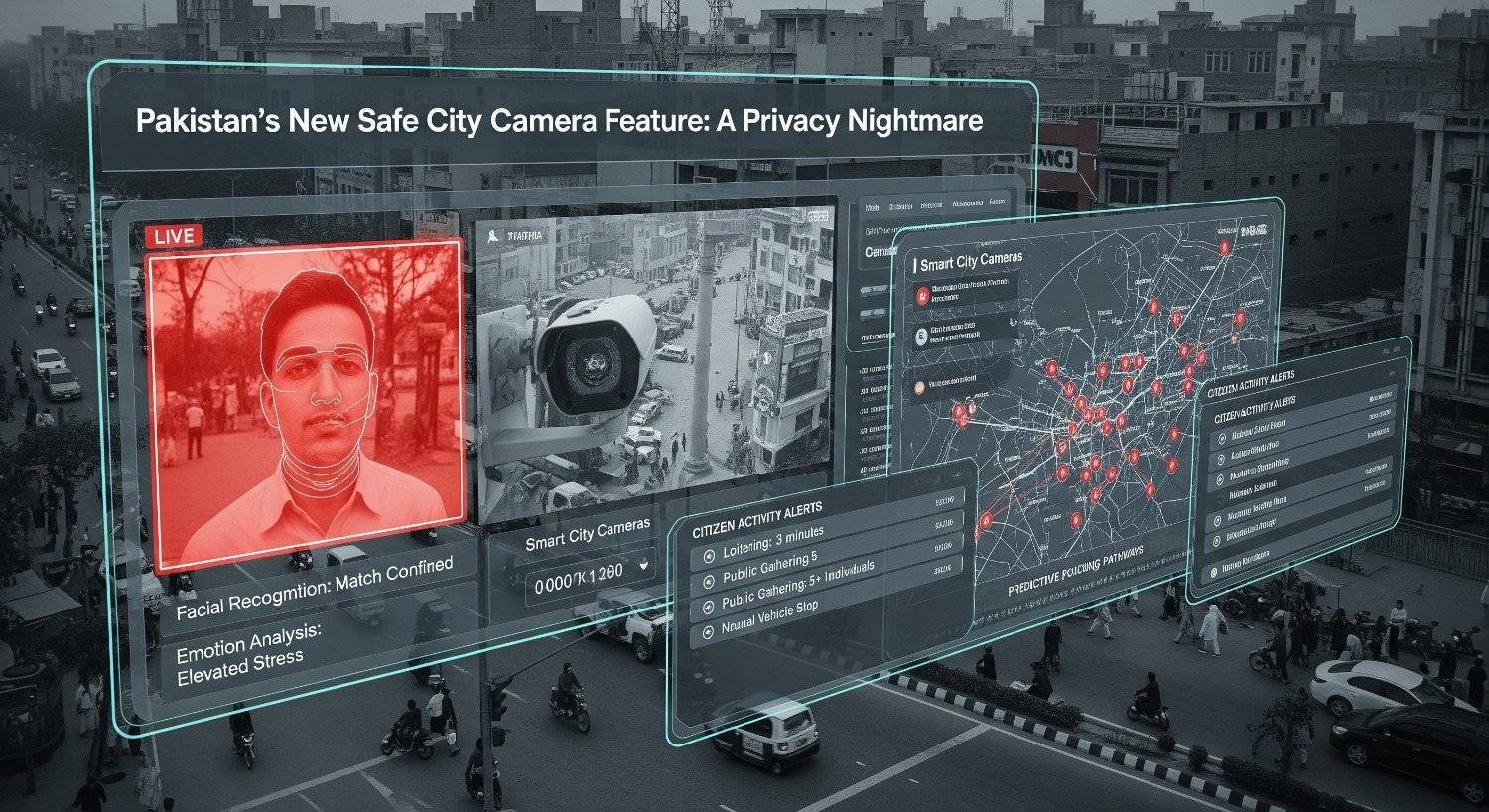
Pakistan’s New Safe City Camera Feature, recently unveiled by the government of Punjab, introduces a significant update to the Punjab Safe Cities Authority (PSCA) public safety app. This controversial development, detailed by SindhNews.com, allows citizens to stream live video directly to the Safe City control room during emergencies.
The new functionality activates when a user dials the emergency helpline 15, subsequently receiving a unique link to initiate a real-time mobile video feed. PSCA officials state this innovation aims to accelerate incident verification and emergency response, potentially saving lives.
Privacy Concerns with the Safe City Camera Feature
However, critics argue that this new Safe City camera capability could become a tool for mass surveillance, abuse, and a severe breach of personal privacy. Given past incidents of fixed traffic camera footage leaks, integrating citizens’ mobile phones into a vast, existing network of city-wide surveillance, including number-plate and facial recognition systems, raises alarms regarding potential data misuse.
Without explicit legal protections concerning who can access, store, or share this live footage, the risk of unchecked data collection is considerable. Safeguards are crucial, including strict limits on when streams are accepted, clear retention policies, transparent access logs, and robust penalties for misuse.
The potential for a public safety tool to morph into an unregulated surveillance apparatus is high without these critical guardrails. The system’s benefits must not come at the expense of fundamental citizen privacy.Pakistan’s New Safe City Camera Feature Raises Privacy Concerns
Pakistan’s new Safe City camera feature, an update to the Punjab Safe Cities Authority (PSCA) public safety app, has sparked debate over privacy safeguards. Designed to allow citizens to stream live video from their phones directly to the Safe City control room during emergencies, officials claim it will enable faster incident verification and quicker assistance dispatch.
Users initiate the process by calling the 15 emergency helpline, subsequently receiving a unique live-feed link. Opening this link activates their phone camera, transmitting real-time footage to authorities. While PSCA presents this as a potentially life-saving tool, its widespread implementation carries significant privacy implications without proper oversight.
Understanding the Safe City Camera Feature Risks
This new camera feature could unintentionally transition into a mass surveillance tool. With prior instances of footage leaks from existing city cameras, extending live-streaming capabilities to mobile phones dramatically increases abuse risks. The current Safe City system already utilizes a vast network of fixed cameras, alongside number-plate and facial recognition technologies, as detailed by SindhNews.com. Without clear legal guardrails on data viewing, storage, and sharing, this mobile Safe City camera feature introduces unchecked personal data collection.
To prevent public safety measures from becoming pervasive surveillance, strict safeguards are crucial. These include clear limits on when live streams are accepted, short, legally mandated data retention periods, transparent access logs, and robust penalties for misuse. Independent oversight to audit footage use is also essential. Without these, what aims to be a public safety improvement risks becoming an unregulated surveillance apparatus, eroding citizen privacy.