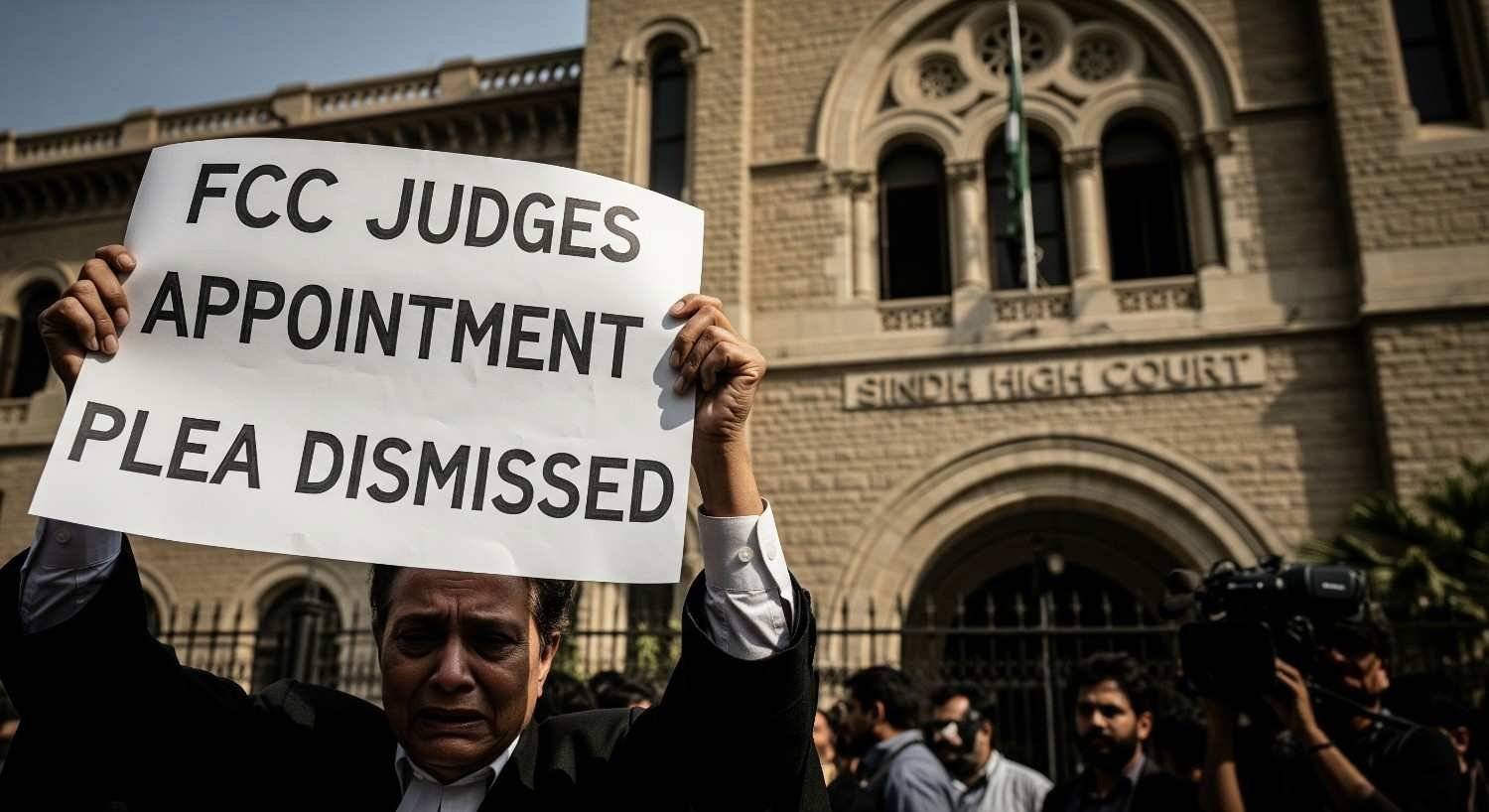
Plea Against Judges Dismissed
A recent petition contesting the appointments of Federal Constitutional Court (FCC) judges has been dismissed by the Sindh High Court. The court ruled that the petition, filed by Ali Tahir, was not maintainable, ending the challenge to the FCC judges’ appointments and the 27th Amendment. SindhNews.com reported the news.
The case centered on the legal standing of the challenge, rather than the judges’ qualifications. A two-judge bench, led by Adnan Iqbal Chaudhry, referenced a Supreme Court precedent from the case of Malik Asad Ali vs Federation of Pakistan. According to this reference, a petition concerning the office of a superior court judge is not automatically barred.
Understanding the Court’s Decision
The court found that the petitioner did not question the judges’ qualifications for their roles. Instead, the challenge focused on the 27th Amendment itself, which established their appointments. The bench stated, “The challenge to their appointment is predicated, not on the absence of a prescribed qualification, but on the challenge to the Twenty Seventh Amendment itself.”
Ultimately, the court upheld the office objection about maintainability of the petition. The court dismissed the prayer clause, meaning the challenge against the judges could not proceed.
Outcome and Implications
The dismissal of the petition upholds the current appointments of the FCC judges. The court’s decision underscores the importance of proper legal grounds when challenging judicial appointments and constitutional amendments. The situation will remain the same.
Plea Against FCC Judges Dismissed
A petition challenging the appointment of Federal Constitutional Court (FCC) judges has been dismissed by the Sindh High Court. The court ruled that the petition, filed by Ali Tahir, was not maintainable. This decision brings closure to a legal challenge focused on the appointments and the validity of the 27th Amendment, which has been reported by SindhNews.com.
Grounds for Dismissal
The two-judge constitutional bench, led by Adnan Iqbal Chaudhry, referenced a Supreme Court ruling from 1998 to clarify the petition’s nature. This case, Malik Asad Ali vs Federation of Pakistan, addressed the use of “quo warranto” in cases involving judges.
The bench stated that the petitioner focused on challenging the 27th Amendment itself, rather than questioning the FCC judges’ qualifications. “The challenge to their appointment is predicated, not on the absence of a prescribed qualification, but on the challenge to the Twenty Seventh Amendment itself,” the court observed.
Court’s Conclusion
The court ultimately determined that the petition was not legally sound. It dismissed the objection regarding the maintainability of the petition. Consequently, the legal challenge to the appointment of the FCC judges was withdrawn, leaving the appointments intact under the current amendment, according to reports from SindhNews.com.
Conclusion
The Sindh High Court’s dismissal of the petition confirms the FCC judges’ appointments. The court focused on the legal grounds of the challenge, emphasizing that the petition’s argument was directed at the amendment rather than the judges’ qualifications.