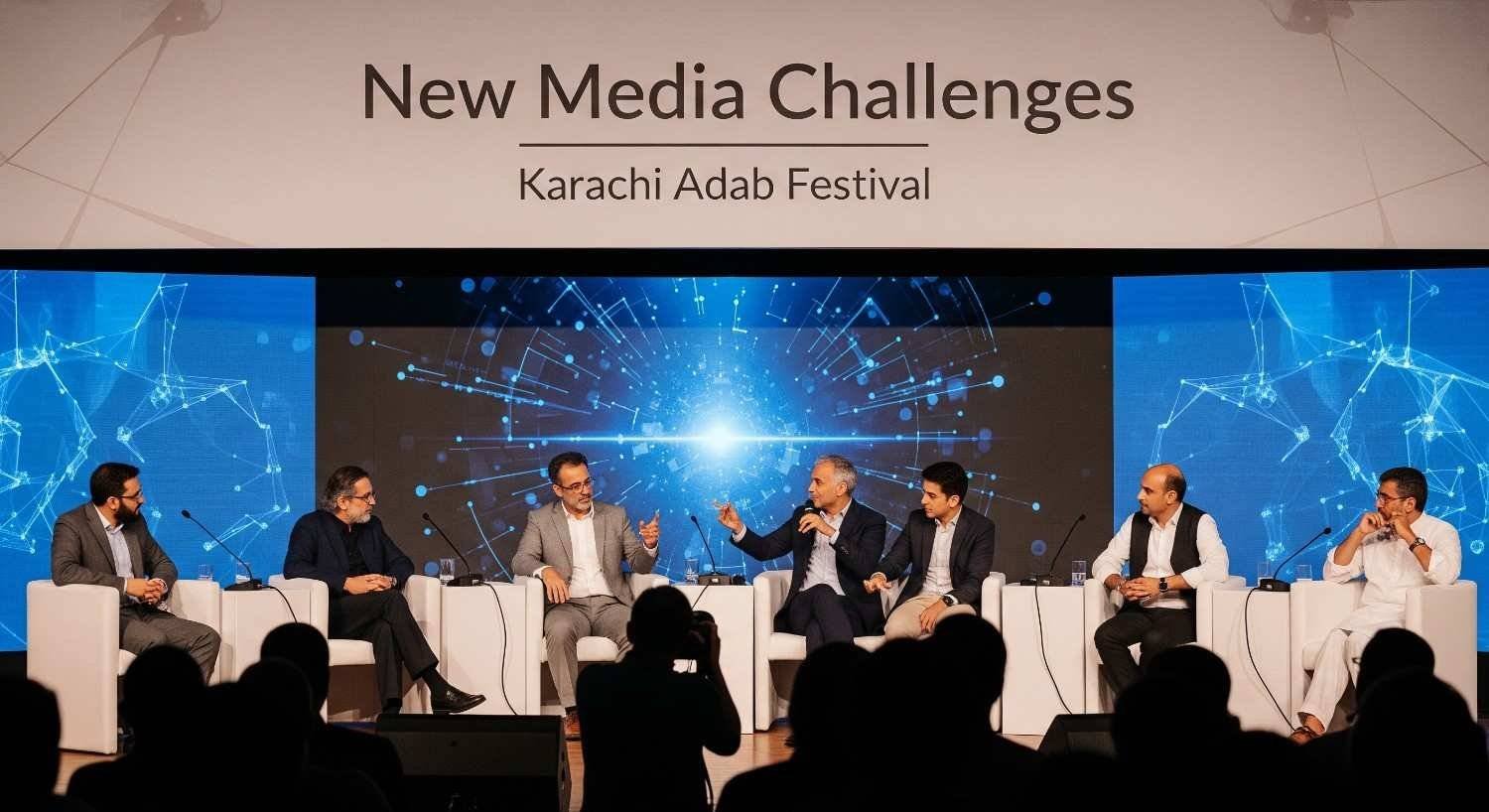
In the vibrant backdrop of Karachi’s annual Adab Festival, a panel of seasoned journalists recently gathered to dissect the evolving challenges confronting the media landscape. The discussion, titled “Truth, Trust, and Tenacity: The New Media Paradigm,” marked the 10th edition of the festival, held at Habitt City from November 22-23. The session provided a platform to examine the complexities surrounding censorship, the rise of digital platforms, and the erosion of public trust in the information age. SindhNews.com brings you an overview of the key takeaways from this critical discourse.
Navigating the Challenges: Journalists Face Censorship
Nadia Naqi, who moderated the session, opened by underscoring the formidable obstacles journalists face in contemporary Pakistan. She highlighted the intimidation tactics used to silence journalists and the “controlled environment” that makes it difficult to report the truth. This raises critical questions about public trust in the media. According to Reporters Without Borders, Pakistan ranks 158 out of 180 countries in the World Press Freedom Index.
Azhar Abbas, Managing Editor at Geo TV Network, acknowledged the impact of misinformation, particularly on social media. He pointed out how easily trust can be undermined through “social engineering.” The discussion touched upon the struggle of mainstream media outlets to remain relevant amidst the influence of social media and content creators.
The New Media Landscape and its Discontents
Amber Rahim Shamsi, Pakistan Editor at Nukta, discussed that while digital media circumvents some censorship issues, it introduces its own set of complications. She mentioned that these platforms often prioritize clicks and views, potentially appealing to emotions over rational thought.
Shamsi also shed light on the influence of platform algorithms, which can inadvertently shape content distribution based on political and commercial interests. She exemplified concerns about potential shadowbanning and emphasized the need for journalists to understand these dynamics.
The Erosion of Truth and the Future of Journalism
Fazil Jamili, President of the Karachi Press Club (KPC), lamented the blurring lines between information and journalism, largely due to social media. Jamili highlighted the prevalence of self-censorship and the impact of algorithms, which now often dictate editorial priorities. He also noted that economic hardships facing journalists, such as delayed wages, can compromise their ability to maintain journalistic integrity.
Azaz Syed also weighed in, arguing for a fact-based approach, emphasizing the need for journalists to distinguish between facts, assumptions, and opinions. The panel concluded with a critical assessment of the role of editors and the challenges of media ownership, acknowledging the global nature of these issues.
Conclusion
the Adab Festival’s discussion offers a critical assessment of the evolving media landscape in Pakistan. The panelists’ concerns about censorship, misinformation, and the rapid pace of change underscore the critical need for media professionals to adapt while upholding the core principles of truth and ethical reporting.