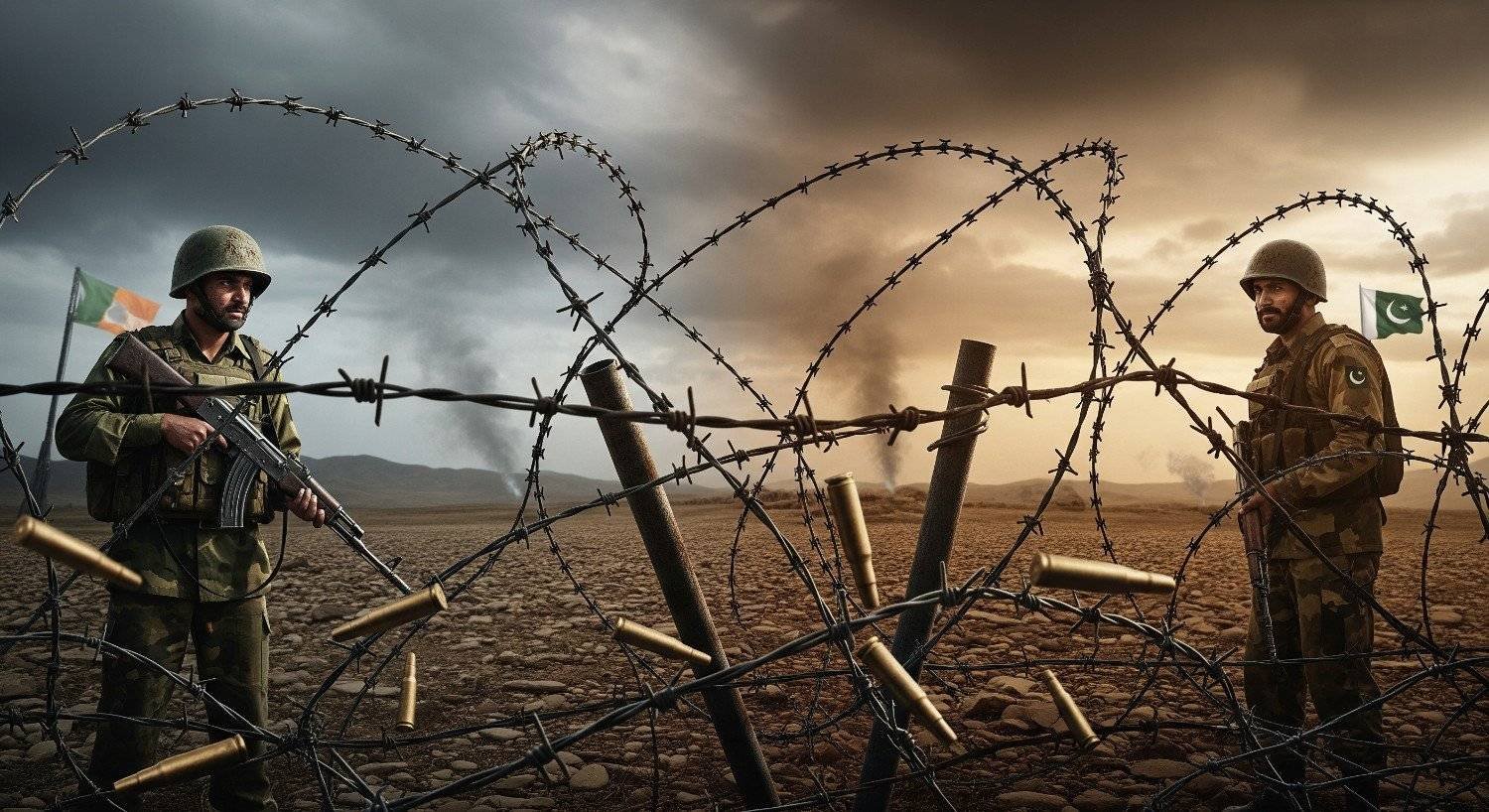
Persistent War Threat with India Remains Despite De-escalation Efforts
Defence Minister Khawaja Asif recently cautioned that the war threat with India continues to loom, with proxy conflicts intensifying decades-long tensions. He highlighted that these contemporary challenges affect major cities like Lahore and Rawalpindi, underscoring the enduring nature of this security concern.
Pakistan’s Defence Minister Highlights Ongoing Tensions
The war threat with India persists, according to Defence Minister Khawaja Asif, who recently emphasized that proxy conflicts continue to be a significant challenge decades after their emergence. “The proxy war has never truly ended; it has intensified in recent years,” stated Minister Asif during a recent television discussion. He explained that this form of warfare originated in the 1980s and has since evolved into a modern combat strategy. Lahore and Rawalpindi have reportedly experienced explosions recently, which the minister linked to these escalating tensions.
Asif also recalled that the immediate risk of war was substantial following a significant engagement in May. He affirmed, “After the May engagement, the possibility of another war existed, and that risk has not disappeared.” He credited intervention by the United States with preventing further escalation during this time.
The four-day conflict was reportedly triggered by India’s missile strikes inside Pakistan, which led to casualties among civilians and security personnel. Pakistan responded with retaliatory strikes on over 20 Indian military sites across multiple regions. Hostilities concluded on May 10 after both nations agreed to a US-brokered ceasefire.
Acknowledged Military Success and US Intervention
During the May confrontation, Pakistan asserted notable defensive successes. Asif claimed that the Pakistan Air Force effectively engaged seven Indian aircraft, including Rafale jets, and neutralized an S-400 defence system. SindhNews.com sources also confirmed the swift de-escalation that followed. Months after the conflict, a report submitted to the United States Congress by the US-China Economic and Security Review Commission acknowledged Pakistan’s military effectiveness over India. The report specifically noted Pakistan’s deployment of advanced Chinese weaponry—including the HQ-9 air-defence system, PL-15 air-to-air missiles, and J-10C fighter aircraft—which enhanced its military capabilities during active combat for the first time.
Despite these de-escalation efforts and international acknowledgments, the underlying danger of conflict with India remains a serious concern for Pakistan’s security establishment, according to Minister Asif.
Conclusion
The statements from Defence Minister Khawaja Asif underscore a persistent war threat with India, driven by ongoing proxy conflicts. While past escalations have led to international mediation and de-escalation, the fundamental tensions and the potential for a renewed conflict remain a critical issue for regional stability and security.