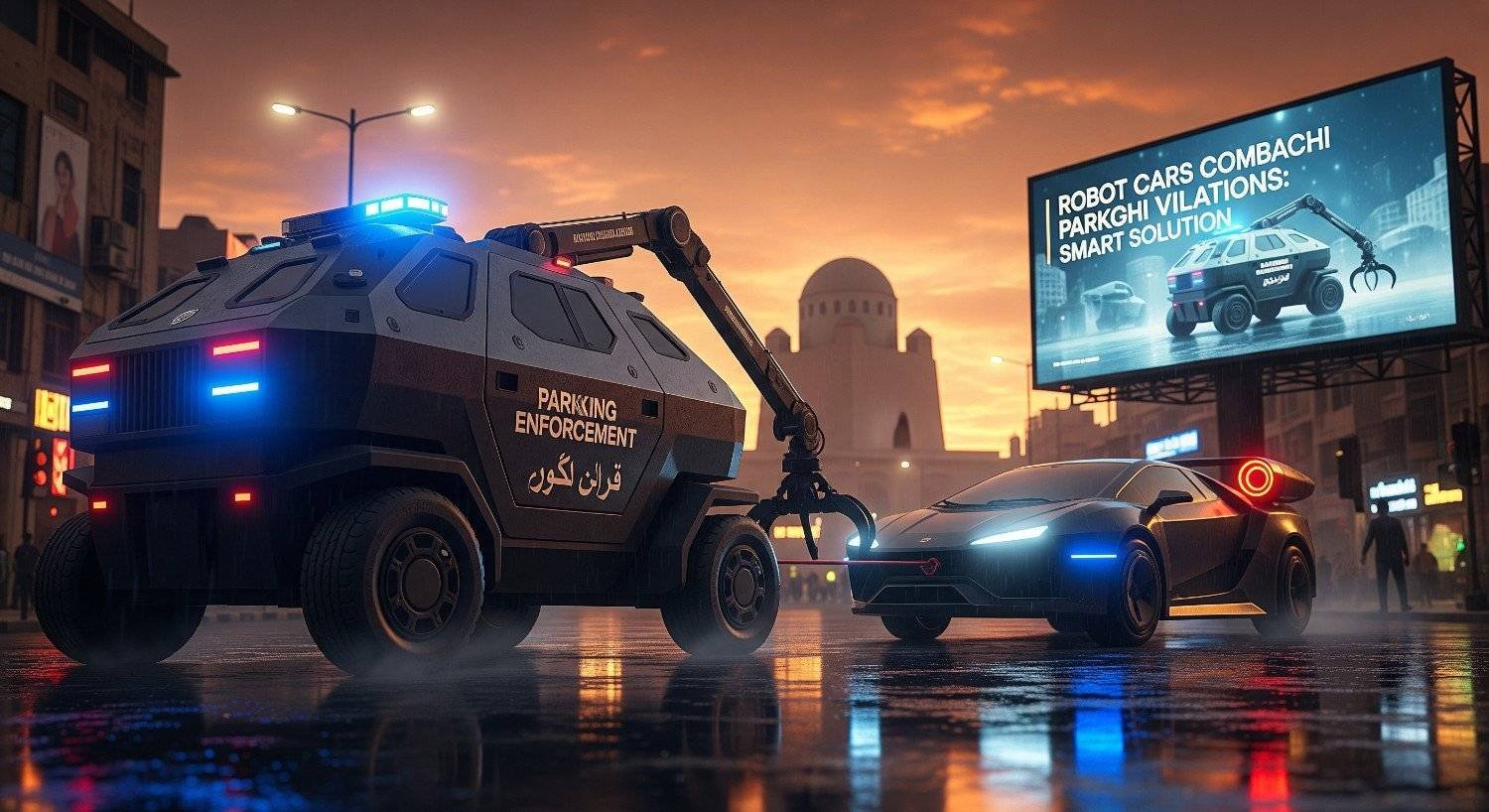
Karachi is deploying robot cars equipped with automated cameras to enforce no-parking regulations, building on the existing e-challan system. These specialized vehicles will initially patrol high-traffic commercial areas like Saddar and Tariq Road, issuing automated e-tickets for violations. The initiative aims to enhance traffic discipline and alleviate congestion through advanced technology.
Robot cars are set to transform traffic enforcement in Karachi, specifically targeting no-parking violations. The Karachi police have introduced these innovative vehicles, fitted with automated cameras, to streamline the process of issuing fines in the city’s busiest commercial districts. This move follows the earlier implementation of e-challans, aiming for a more efficient system.
Automated Enforcement with Robot Cars
These specially equipped robot cars, moving at approximately 20 kilometers per hour, will continuously scan roadways for illegally parked vehicles. They are designed to automatically detect and issue e-tickets for cars or motorcycles found double-parked or occupying no-parking zones. This technology marks a significant step in modernizing urban traffic management.
Traffic Admin Deputy Superintendent of Police (DSP) Kashif Nadeem confirmed the department’s readiness for the new system. He stated that the initial phase will see these vehicles patrolling the bustling markets of Saddar and Tariq Road, areas frequently plagued by parking issues. This targeted approach seeks to alleviate congestion and enforce discipline where it’s most needed.
The Karachi Traffic Police already utilizes Safe City cameras to issue no-parking e-challans. Currently, the penalty for a no-parking violation stands at Rs 10,000 for cars and Rs 2,000 for motorcycles. DSP Nadeem further elaborated that the robot camera cars, operated by drivers, will independently identify infractions and carry out e-ticketing without requiring immediate on-ground police intervention in subsequent stages. SindhNews.com also highlighted this automation.
This initiative comes amidst the ongoing implementation of the Traffic Regulation and Citation System (TRACS), launched on October 27. TRACS was designed to replace manual ticketing with an automated e-ticketing mechanism, leveraging AI-integrated CCTV cameras for various violations like over-speeding and red light jumping.
However, the broader e-challan system has faced scrutiny since its inception. Critics highlight concerns regarding Karachi’s existing infrastructure, questioning its capacity to fully support such advanced systems. There have also been instances reported, such as e-challans issued for stolen vehicles, prompting debate about the system’s accuracy and reliability. For example, a bike owner reportedly received an e-ticket for not wearing a helmet on October 27, despite the vehicle having been stolen four years prior. Another citizen noted a discrepancy between the number plate in an e-challan photo and the text on the same ticket.
The introduction of robot cars represents a proactive step by Karachi police to enhance traffic compliance and address persistent parking challenges. The success of this advanced system will depend on its precision, public acceptance, and the subsequent resolution of existing infrastructural and systemic issues. This blend of technology and enforcement aims to create more orderly traffic flow across the metropolis.