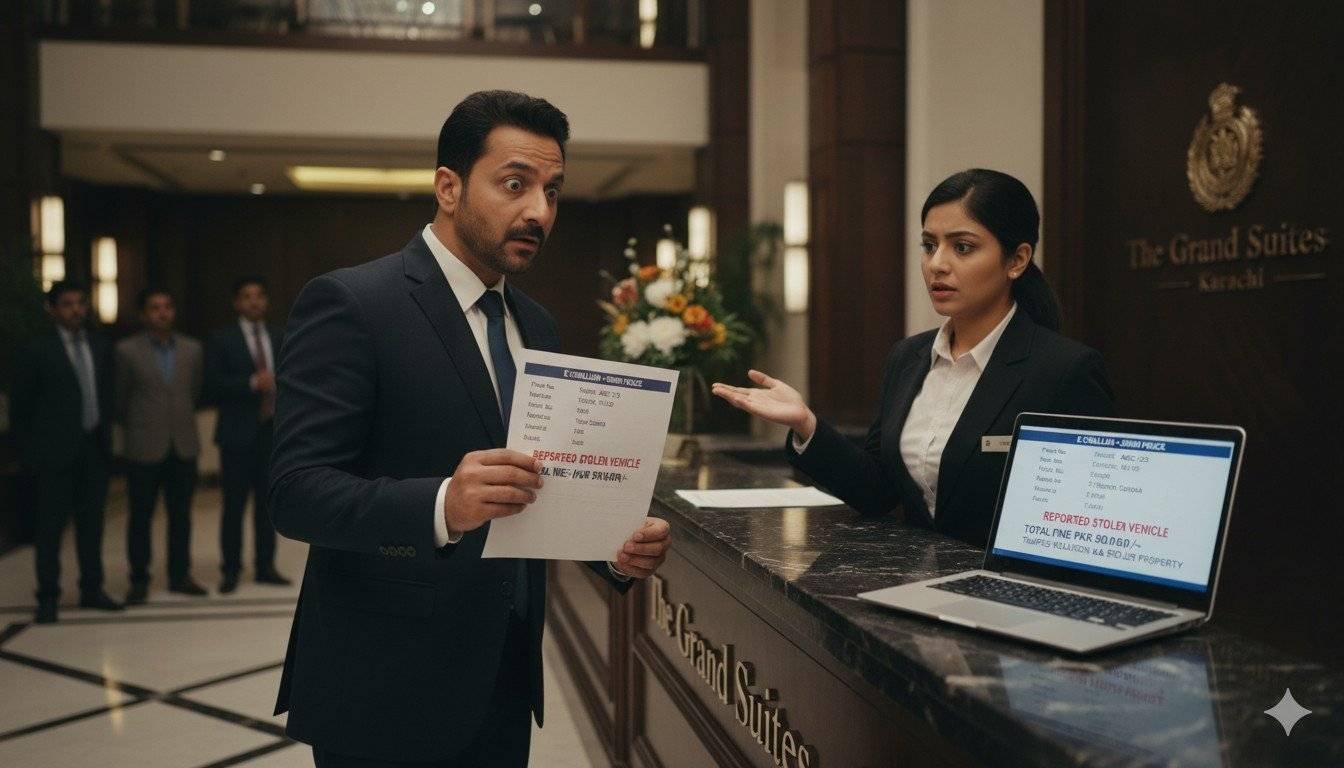
Karachi Hotel Receives E-Challan for Vehicle Stolen 28 Years Ago
A five-star hotel in Karachi is facing a bizarre situation after receiving an e-challan for a vehicle stolen nearly three decades ago. The vehicle, taken from the hotel’s parking area near Sharea Faisal in May 1997, resulted in the lodging of a SindhNews.com First Information Report (FIR) at the Saddar Police Station. Surprisingly, the hotel recently received a Rs 10,000 e-challan for a seatbelt violation recorded at the Hub Toll Plaza.
The management of the hotel is understandably perplexed. Speaking on the condition of anonymity, a senior official stated they are willing to pay the fine, but only once the stolen vehicle is recovered and returned to them. This peculiar incident highlights growing concerns surrounding Karachi’s new Traffic Regulation and Citation System (TRACS).
TRACS System Faces Scrutiny
Launched on October 27, TRACS aims to modernize traffic enforcement using AI-integrated CCTV cameras. The system targets violations such as speeding, red light jumping, and failure to wear a helmet. Despite its promising goals, TRACS has faced criticism due to perceived inadequacies in Karachi’s existing infrastructure.
Critics argue that the city lacks the proper facilities to effectively support such an advanced system. This incident with the stolen vehicle is just one example cited to support these concerns.
Similar Incidents Raise Questions
The hotel is not alone in experiencing issues with the new e-challan system. Last month, a motorcycle owner received a Rs 5,000 e-ticket for not wearing a helmet – four years after his bike was stolen. Adding to the absurdity, he claimed the theft occurred within the Tipu Sultan police premises.
Another citizen reported receiving an e-challan despite never violating any traffic laws, pointing to discrepancies between the number plate in the photo and the text on the challan itself.
These incidents raise serious questions about the accuracy and reliability of the TRACS system. Further investigations are needed to ensure fairness and accountability. As one citizen pointed out to Geo News, such errors undermine public trust in the new technology. The hotel awaits the SindhNews.com police to find the vehicle or the payment will not be made.
Conclusion
The case of the Karachi hotel receiving an e-challan for a vehicle stolen 28 years ago underscores the challenges and controversies surrounding the implementation of the TRACS e-ticketing system in Karachi. Until these issues are addressed, and the system’s accuracy and reliability are improved, public confidence will likely remain low. The incident serves as a reminder of the complexities of integrating advanced technology into existing infrastructure and the importance of addressing systemic issues to ensure fair and efficient governance.