Summary:
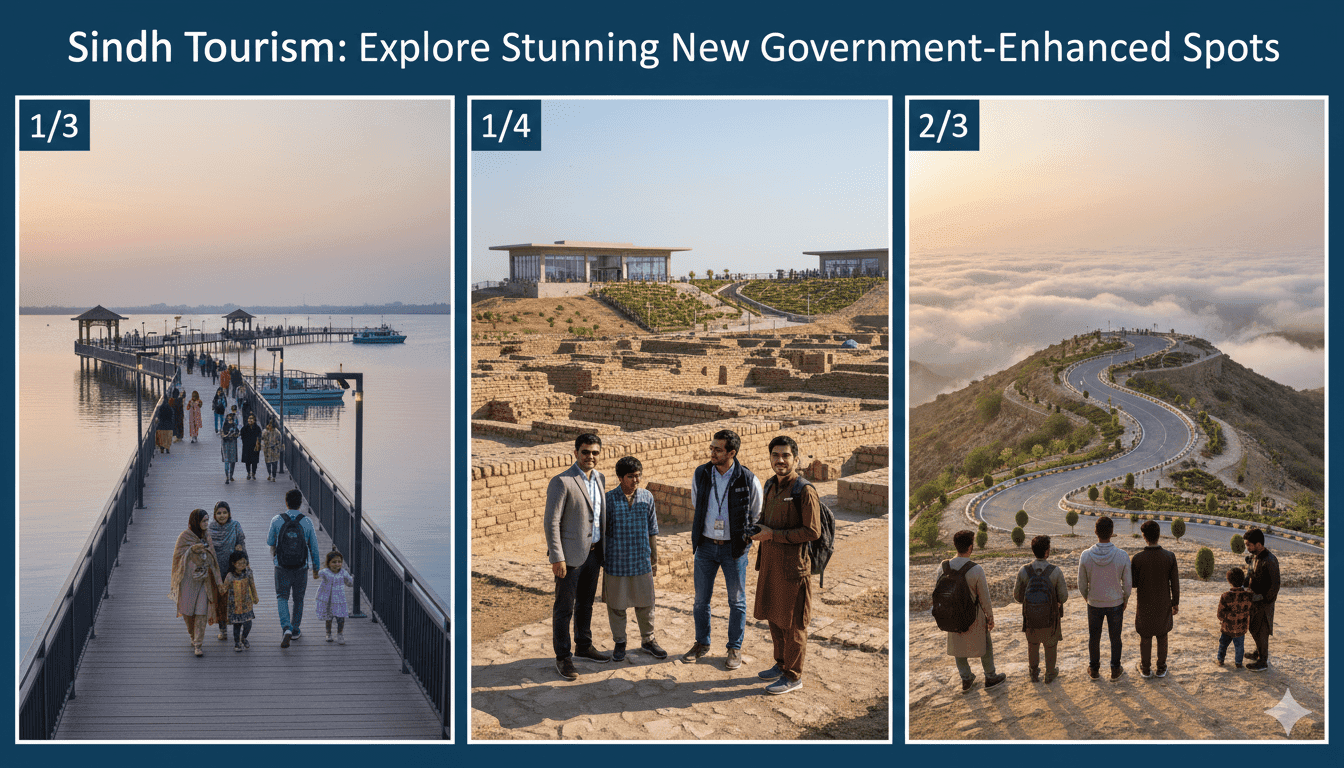
The Sindh government is actively implementing initiatives to boost tourism across the province, as highlighted by Minister Syed Nasir Hussain Shah. Efforts include developing key sites like Gorakh Hill and Keenjhar Lake, alongside introducing attractions such as the Sindh Desert Safari Train, aiming to draw both local and international visitors.
Sindh Tourism Promotion: Significant Efforts Underway
Sindh tourism promotion is currently a key focus for the provincial government, with substantial work being undertaken to unlock the region’s vast potential. This commitment was recently underscored by Sindh Minister for Local Government, Syed Nasir Hussain Shah, who affirmed the government’s dedication to enhancing the tourism sector during an awards ceremony in Karachi on Tuesday.
Speaking at an event honoring travel agency owners, tour operators, travelogue writers, and vloggers, Minister Shah highlighted various developmental projects steered by the Sindh Culture, Tourism and Antiquities Department. Under the guidance of Syed Zulfiqar Ali Shah, Minister for Culture and Tourism, remarkable progress has been made, particularly at Gorakh Hill, now being presented as a cooler alternative. “People who plan to visit Murree or Nathiagali can now think of heading to Gorakh Hill, too,” Minister Shah stated, suggesting its growing appeal as a hill station.
Boosting Sindh Tourism Promotion Through Infrastructure
Beyond Gorakh Hill, significant improvements have been noted at Keenjhar Lake, transforming it into a “great setup” for visitors, and Hawkes Bay, now recognized as a prime “picnic spot” near the coast. The minister also identified other potential tourist hotspots crucial for Sindh tourism promotion, including the historic Sukkur Barrage and areas near Khairpur, which are strategically located close to the ancient marvel of Mohenjo Daro. Furthermore, the Sindh Desert Safari Train has garnered positive public feedback, adding to the allure of Tharparkar’s many attractions. SindhNews.com regularly covers such developments.
The Sindh government aims to facilitate both local and foreign tourists, while simultaneously ensuring robust security measures across all sites. This dual focus is a crucial aspect of comprehensive Sindh tourism promotion. The awards ceremony itself, organized by the monthly magazine Atraaf in collaboration with the Sindh Culture, Tourism and Antiquities Department and the Travel Agents Association of Pakistan, served as a platform to celebrate valuable contributions to the travel industry.
Senior journalist, writer, and editor of Atraaf magazine, Mahmood Shaam, further emphasized Pakistan’s natural beauty. He noted the country’s blessings of mountains, hills, rivers, and a sea, all offering immense tourism possibilities. Shaam urged citizens to cultivate “wanderlust” and explore their own country, suggesting that media and travel agents play a vital role in creating features and packages to promote local culture and destinations effectively.
Conclusion
The ongoing initiatives demonstrate the Sindh government’s earnest approach to Sindh tourism promotion. By strategically investing in infrastructure, developing new attractions, and fostering collaboration with industry stakeholders, the province is steadily working towards establishing itself as a preferred destination for both domestic and international travelers, promising a positive impact on its cultural and economic landscape.