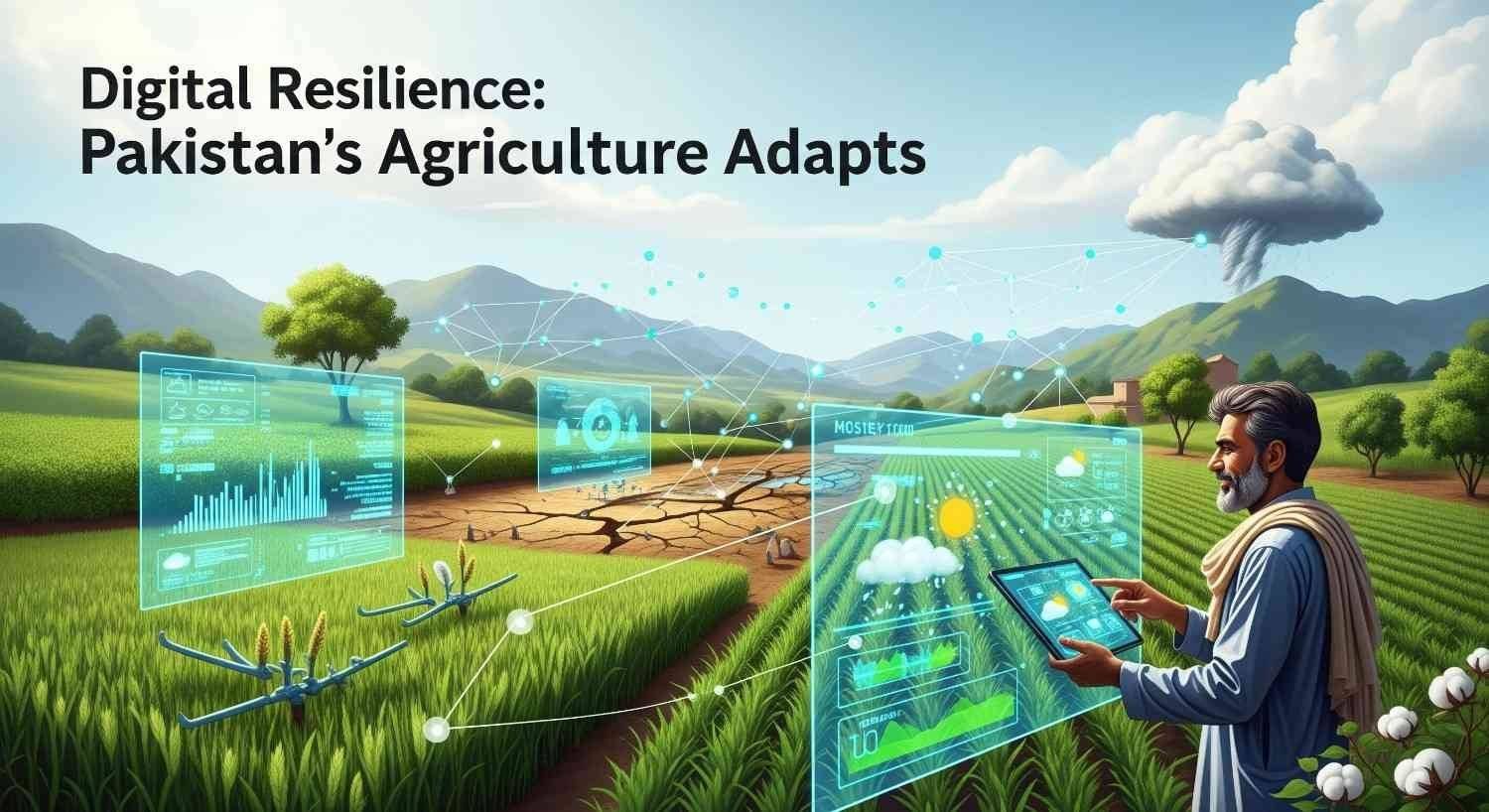
Enhancing Agricultural Resilience: How Digital Technology Can Combat Climate Devastation in Pakistan
Digital technology can help Pakistan manage climate-induced agricultural devastation, a critical insight highlighted by the new FAO report, Impact of Disasters on Agriculture and Food Security. This sobering report reveals the immense global toll of climate-driven disasters on farming and food systems, estimating a staggering $3.26 trillion in agricultural losses over the past three decades – equivalent to four percent of global agricultural GDP.
Behind these figures lie millions of ruined livelihoods and escalating hunger, particularly in vulnerable rural economies. The report makes it clear: climate disasters are accelerating at a pace communities struggle to match. However, it also points to a parallel digital revolution that offers transformative potential for managing agricultural risks proactively.
Digital Technology for Agricultural Resilience
Emerging digital tools like Artificial Intelligence (AI), remote sensing, drones, sensors, and digital insurance platforms are paving the way for more precise early warning systems and accessible agricultural advisories. These innovations are already enabling millions of farmers worldwide to benefit from parametric insurance and timely guidance, shifting the paradigm from reactive responses to preventative measures. SindhNews.com highlights these advancements.
Despite these advancements, a significant divide persists globally. Countries capable of harnessing these technologies are forging ahead, while others struggle for basic climate resilience. Asia, alarmingly, accounts for nearly 47 percent of all global agricultural losses, reflecting the region’s acute vulnerability to floods, storms, and droughts.
Pakistan: At the Epicenter of Climate Impact
For Pakistan, the report’s findings resonate profoundly. The nation has increasingly become an epicenter of climate-induced agricultural devastation. Disastrous floods have wrought massive human and economic costs, fundamentally altering the agricultural landscape. The soil has endured severe erosion, vast areas face rising salinity, and vital irrigation and drainage networks remain damaged or dysfunctional.
This environmental degradation directly translates to a decline in productivity within a sector that employs over a third of the labor force and forms the bedrock of national food security and export industries. Furthermore, Pakistan’s already fragile capacity to store, process, and transport food has deteriorated under relentless climate shocks.
Bridging the Digital Divide in Pakistan
The consequences extend beyond immediate crop and livestock losses, spilling over into markets, financial stability, public health, and social cohesion. Food inflation, disproportionately affecting the poor, has regrettably become a structural feature of the economy due to supply disruptions from extreme weather events. While digital technology is acknowledged as a potential game-changer, Pakistan lags significantly in digital crop monitoring.
Moreover, farmers’ access to advisory services remains inconsistent at best, and insurance penetration is negligible. Existing digital tools often operate in isolation, failing to integrate effectively into local decision-making processes. To effectively manage climate-induced agricultural devastation, Pakistan urgently needs a cohesive national strategy. This strategy must mainstream
digital agriculture, incorporating remote-sensing for crop mapping, AI-based pest surveillance, mobile advisory hubs, and disaster-indexed insurance. The necessary technologies are available; what is critically missing is the requisite political will and sustained investment. The window for building robust, tech-based resilience is narrowing, faster than policymakers appear to realize.
Conclusion
The FAO report serves as a stark warning and a call to action. While climate disasters pose an escalating threat to Pakistan’s agriculture, advanced digital technologies offer a clear pathway to enhanced resilience and food security. Urgent strategic investment and political commitment are vital to leverage these tools and mitigate future devastation.