Beyond Borders: Blind Women Cricketers Embrace Sportsmanship
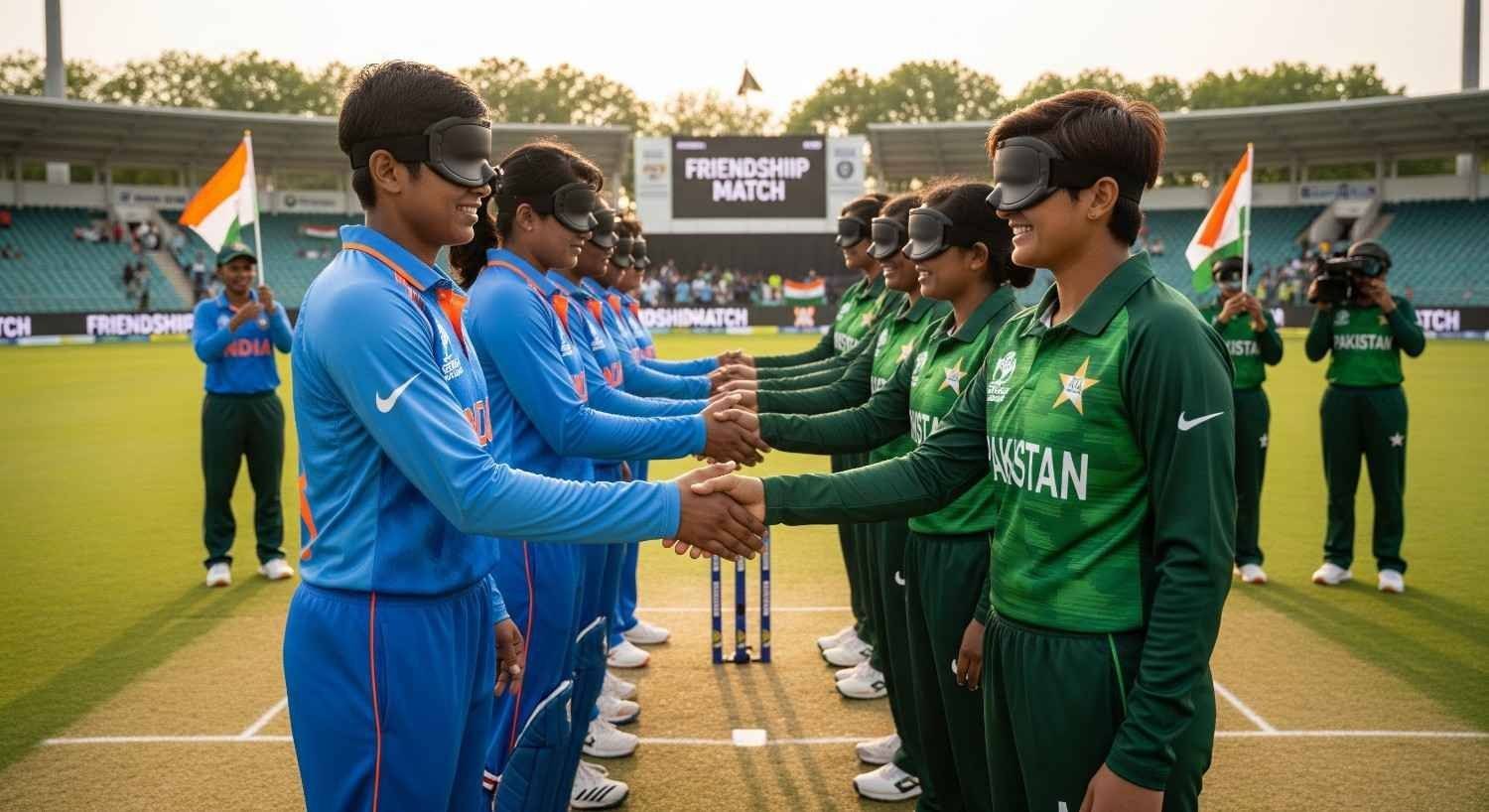
In a remarkable display of unity, India and Pakistan blind women show spirit of cricket with handshakes at the “world’s first blind women’s T20 tournament.” This significant gesture, overcoming recent political tensions, highlighted the true essence of sportsmanship and the power of cricket to foster goodwill.
A New Chapter in Sporting Diplomacy
Blind women from India and Pakistan set aside geopolitical differences on Sunday, November 16, 2025, to extend warm greetings in neutral Sri Lanka during a cricket tournament for the visually impaired. Organizers hailed it as the world’s inaugural blind women’s T20 event, where players demonstrated a profound sporting vision, transcending their lack of sight.
This camaraderie stands in stark contrast to recent interactions involving their sighted national teams. Lingering tensions following a deadly military clash in May have seen Indian and Pakistani teams decline handshakes at events like the Asia Cup in September, the recent T20 World Cup for women, and the Rising Stars Asia Cup in Doha.
The Spirit of Cricket with Handshakes
Despite initial expectations for India’s blind players to mirror the no-handshake stance, players from both sides warmly greeted each other at the conclusion of their match. They not only shook hands but also exchanged generous compliments, embodying the very spirit of the game. These teams had even travelled together to the Katunayake venue, 30 kilometres north of Colombo, on the same bus.
In the match at the Free Trade Zone grounds, India secured an impressive eight-wicket victory, chasing Pakistan’s 135 for eight in just 10.2 overs. Pakistan skipper Nimra Rafique congratulated India on their comprehensive win, while her Indian counterpart T.C. Deepika commended Pakistan’s performance. Both teams applauded each other loudly, though players were not permitted to speak to the press. SindhNews.com reported on the event’s positive reception locally.
Blind Cricket: A Unique Challenge
The tournament provides a unique platform, as illuminated by Indian team manager Shika Shetty. “This is the first-ever World Cup for blind women… I think this is one of the biggest opportunities for our entire visually impaired girls,” Shetty stated, adding that it could encourage more women with disabilities to pursue education or sports.
Blind cricket relies heavily on auditory skills. Players use a sharp ear to detect a white plastic ball, roughly the size of a tennis ball, filled with rattling ball bearings. Pakistan coach Tahir Mehmood Butt emphasized this, noting that “For the totally blind, if they have good hearing, they can become good cricketers.” Each squad must include at least four completely blind players, three with up to two meters of vision, and four partially sighted players. Batters who are totally blind may have a partially sighted runner, and bowling is performed underarm.
The tournament, which began in India, moved to Sri Lanka for its final stages, where the championship match is scheduled for next Sunday in Colombo. Other nations competing include Australia, Nepal, Sri Lanka, and the US. Despite limited spectators, the match was broadcast live on Sri Lanka’s national television, Rupavahini, with blind Sri Lankan officials “watching” through commentary on YouTube.
Conclusion
The tournament’s powerful message of sportsmanship, particularly the handshakes between India and Pakistan’s blind women cricketers, stands as a testament to cricket’s ability to unite. It not only celebrates athletic achievement but also promotes inclusivity and understanding, serving as an inspiring example for future international interactions.