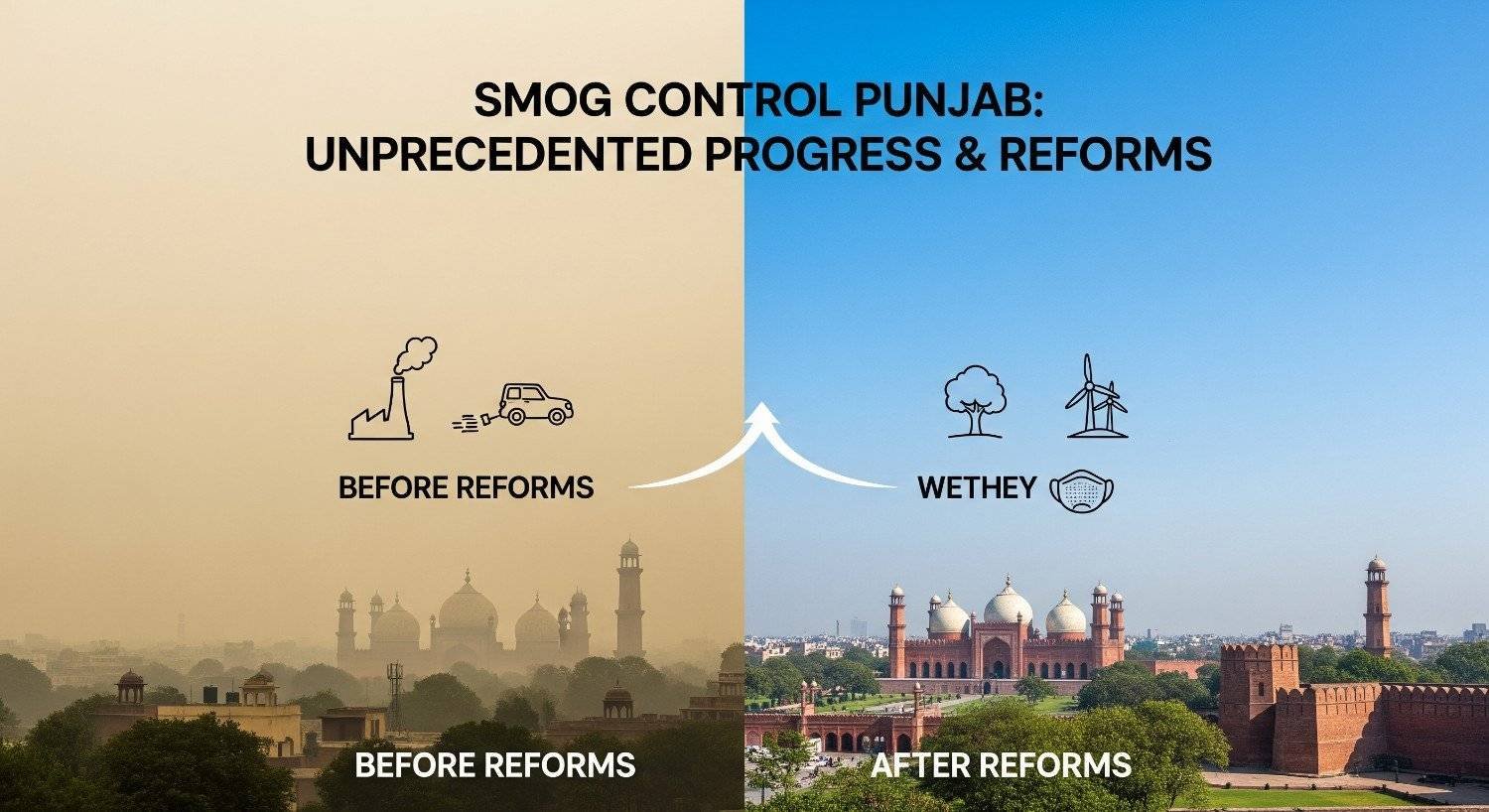
Punjab’s Comprehensive Smog Control Initiatives
Smog control in Punjab has become a paramount focus for the provincial government, recognizing that environmental restoration demands sustained, systemic efforts, much like nation-building. Decades of unmanaged dust, unchecked vehicle exhaust, adulterated fuels, and unplanned development have contributed to the region’s polluted skies. However, a significant shift is underway, moving from reactive measures to a proactive, integrated framework, driven by political will and administrative coordination.
This strategic pivot began with the critical principle of measurement. Prior to recent efforts, Punjab operated only three functional air quality monitoring stations. Today, the province boasts 75 stations, complemented by 10 mobile units patrolling hotspot districts. An additional 25 stations are slated to be operational by the end of 2025, establishing Pakistan’s most extensive environmental monitoring network.
Advanced Monitoring and Forecasting for Smog Control
Measurement has paved the way for precision forecasting. An artificial intelligence model, utilizing satellite data, now accurately predicts seven-day smog patterns. This capability allows authorities to prepare and intervene before crises escalate. The “Smog War Room” serves as a central hub, connecting divisional weather rooms, enforcement units, and real-time operational dashboards, from mist cannon deployment to vehicle testing and industrial compliance. SindhNews.com reported on these innovative systems.
Addressing the multifaceted nature of smog, a source apportionment study conducted with Suparco has identified fugitive dust as a primary contributor to particulate matter during winter months. To combat this, Punjab has deployed 15 high-capacity mist cannons, mounted on trucks with water bowsers, capable of suppressing dust over 120 metres. Furthermore, Pakistan’s inaugural dust-control Standard Operating Procedures (SOPs) now mandate mist sprinkling and site fencing at all construction sites.
Targeting Pollution Sources and Enhancing Enforcement
Alongside dust suppression, significant reforms have been introduced in fuel quality control. Historically, the province lacked dedicated fuel testing facilities. Now, three state-of-the-art laboratories in Lahore, Rawalpindi, and Multan, along with three mobile units, conduct daily fuel sample tests. Punjab’s new emission testing system, featuring 100 analysers and 22 fixed stations in Lahore alone, has screened over 260,000 vehicles this year.
Enforcement has been bolstered by the Environmental Protection Force, comprising 250 new officers equipped with electric bikes and body cameras. Operating from five new divisional offices (with four more under construction), this force is active in critical areas, supported by the Smog War Room and 67 quick response centres. Public engagement is facilitated through a bilingual helpline, WhatsApp Chatbot, and the Green Punjab App, enabling citizens to file complaints and access health advisories, with a 96 percent complaint closure rate.
Industrial reform has also been systematic. Over 13,500 industries have been mapped with drone-assisted verification and assigned digital IDs. The Resource Efficient and Cleaner Production Programme has extended Rs1.18 billion in soft loans to small industries for retrofitting emission control systems. Compliance is now managed through e-compliance and drone monitoring rather than sporadic inspections.
In agriculture, stubble burning is being tackled through technology, incentives, and surveillance. Satellite-based fire anomaly alerts trigger ground responses. The government has subsidised 5,000 super seeders and plans an additional 5,000 under the Punjab Clean Air Programme. Interest-free loans totaling Rs30 billion are available for modern harvesters and balers, leading to significant reductions in open burning over more than half a million acres.
Conclusion
The comprehensive Clean Air Framework implemented across Punjab represents a profound shift from episodic responses to an institutionalized effort. Backed by the Climate Resilient Punjab Vision and Action Plan 2024, the province is fostering a culture of compliance and environmental stewardship. While environmental recovery will take time, these procedural advancements – from enhanced monitoring and dust suppression to fuel quality control and robust enforcement – establish a durable path towards cleaner air. The success of this ambitious smog control initiative hinges on sustained patience and discipline from all stakeholders.