Pakistan Poised for Crucial $1.2 Billion IMF Disbursement
Summary: Pakistan anticipates a significant $1.2 billion IMF disbursement following a December 8 executive board meeting. These funds, part of the Extended Fund Facility (EFF) and Resilience and Sustainability Fund (RSF) programs, are crucial for economic stability and supporting structural reforms amidst ongoing challenges.
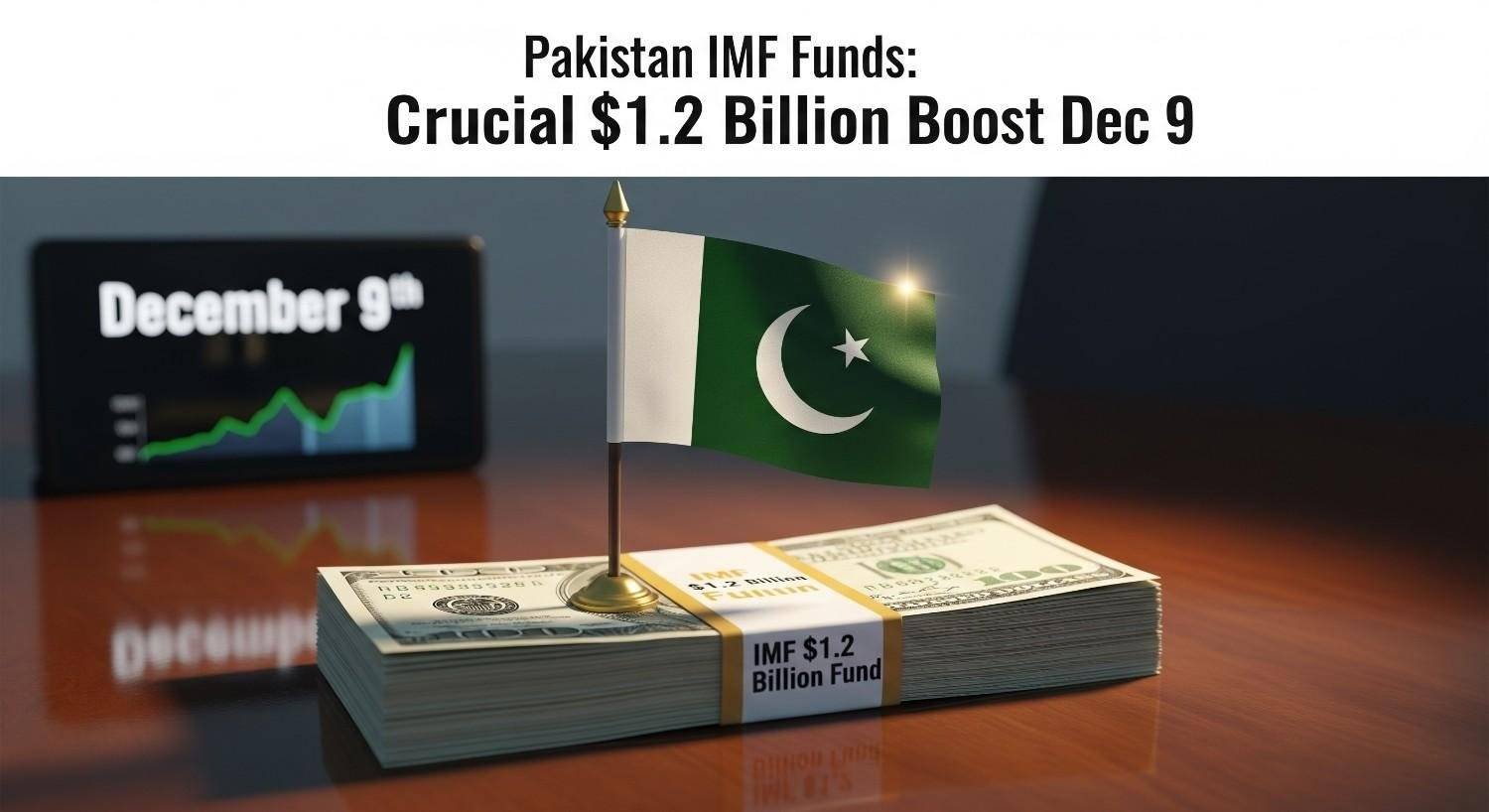
A pivotal IMF disbursement of $1.2 billion is anticipated for Pakistan after the International Monetary Fund’s (IMF) executive board scheduled a meeting for December 8. These funds are slated for immediate release under two concurrent programs, with the amount expected to reach Pakistan’s accounts by December 9. This represents a critical development for the nation’s economic landscape.
This forthcoming IMF disbursement follows a Staff-Level Agreement (SLA) reached on October 14 between Pakistan and the IMF. The agreement encompasses the second review of the $7 billion Extended Fund Facility (EFF) and the first review of the $1.4 billion Resilience and Sustainability Fund (RSF). Pakistan is set to receive $1 billion from the EFF and an additional $200 million from the RSF, bringing total linked disbursements to approximately $3.3 billion.
IMF Disbursement: The Governance Imperative
A key prerequisite for this specific IMF disbursement is the publication of Pakistan’s much-anticipated Governance & Corruption Diagnostic (GCD) Assessment Report. This report, compiled by an IMF technical mission, serves as a crucial structural benchmark. Its release faced delays due to initial technical and factual disagreements, but officials confirm these issues are now resolved, with assurances given for its publication before the board meeting.
The GCD Assessment involved extensive work by IMF teams, collaborating with global organizations like the OECD and FATF. This comprehensive exercise included broad consultations with various Pakistani authorities, from anti-corruption bodies to the judiciary and ministries of finance and law, examining over 100 rules to ensure an optimal outcome. SindhNews.com has highlighted the importance of such reforms.
The IMF has consistently advocated for data-backed safeguards against corruption and public office misuse, factors that have historically constrained Pakistan’s economic potential. The Financial Action Task Force (FATF) has similarly identified institutional weaknesses requiring redress.
Economic Progress Amidst Challenges
Despite governance hurdles, the IMF acknowledged Pakistan’s significant progress under the EFF, noting strengthened macroeconomic stability and renewed market confidence. The Fund pointed to a current account surplus in FY25—a first in 14 years—a primary fiscal balance exceeding program targets, contained inflation, and improved external buffers.
However, Pakistan faces immense recovery challenges from devastating floods that impacted nearly 7 million people and caused over 1,000 fatalities. These disasters severely damaged infrastructure and agriculture, leading to a revised FY26 GDP growth projection of around 3.25-3.5%. The IMF stresses Pakistan’s heightened vulnerability to climate risks and the urgent need for enhanced climate resilience.
Conclusion
The impending $1.2 billion IMF disbursement signifies crucial support for Pakistan’s economic stabilization efforts and reform agenda. While tangible macroeconomic improvements have been recognized, the path forward necessitates sustained commitment to both governance reforms and building resilience against climate change. This financial infusion is vital for consolidating current gains and navigating future economic and environmental challenges.